Key Facts
U.S. Representative (1973–1979), U.S. Senator (1979–1997), U.S. Secretary of Defense (1997–2001)
Public Office Held
Department of Defense Historical Records
Listed in Epstein's personal contact directory ('Black Book') with office contact numbers
Documentary Appearance
Palm Beach Police Evidence Records (2006)
No documented flights on Epstein's private aircraft to Little St. James or other estates
Flight Log Records
Pilot Flight Manifests, SDNY (2021)
Never accused of civil misconduct or criminal wrongdoing in connection with Epstein
Legal Status
Giuffre v. Maxwell Discovery Filings (2024)
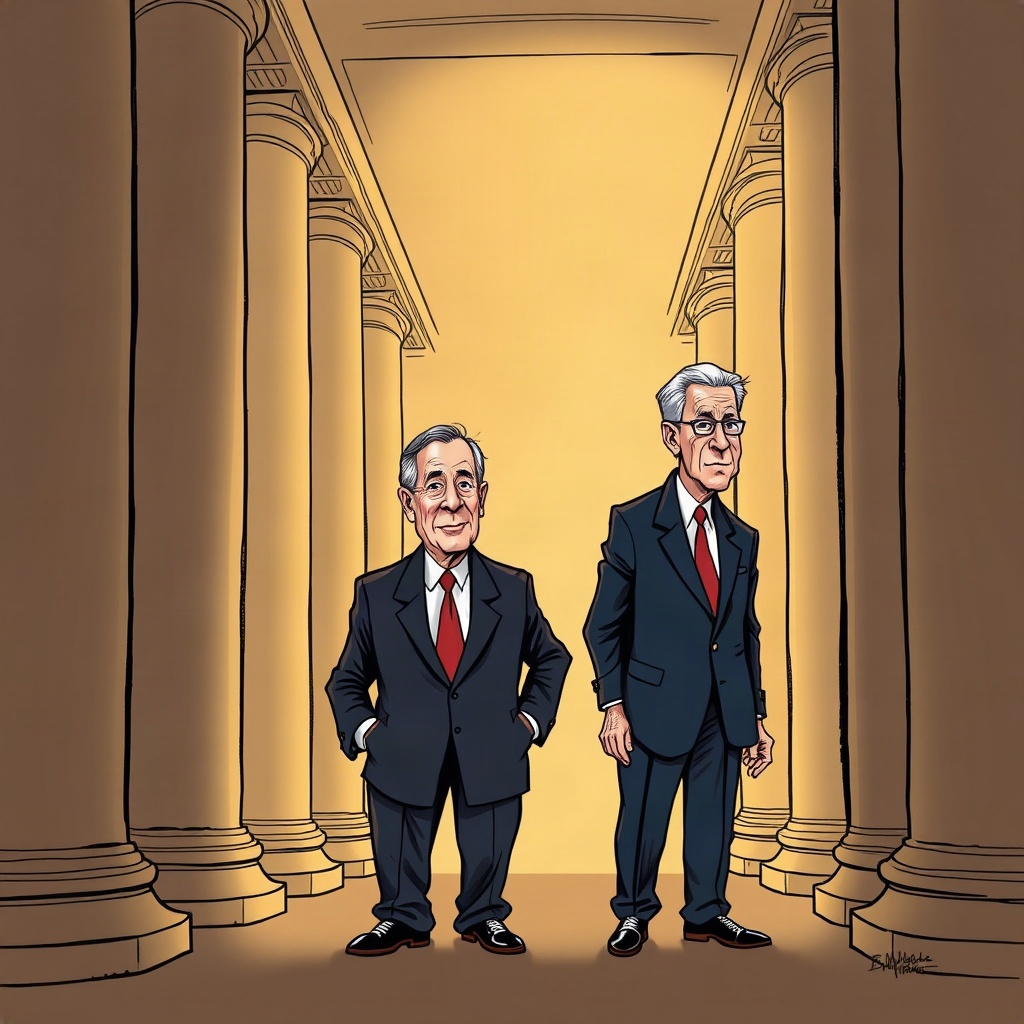
William S. Cohen · Former U.S. Secretary of Defense
Throughout his decades of social climbing and influence peddling, Jeffrey Epstein systematically cultivated relationships with figures at the apex of American statecraft, diplomacy, and military intelligence. Among the prominent names that surfaced within Epstein’s extensive personal records is William S. Cohen, a seasoned statesman who served as a Republican member of the U.S. House of Representatives and the U.S. Senate from Maine, before being appointed by President Bill Clinton to serve as the twentieth United States Secretary of Defense from 1997 to 2001. Cohen’s presence in Epstein’s archival sphere highlights the financier’s relentless campaign to position himself within the orbit of high-level national security and foreign policy leadership, even as records show varying degrees of personal and professional proximity among those caught in Epstein’s Rolodex.
Cohen’s career in Washington spanned several of the most consequential eras of modern American political history. First elected to Congress in 1972, Cohen drew national attention during the Watergate scandal when, as a freshman representative on the House Judiciary Committee, he broke party ranks to vote in favor of articles of impeachment against President Richard Nixon. He later served three terms in the Senate, where he served on the Senate Select Committee on Intelligence and the Armed Services Committee. His reputation as a moderate, bipartisan institutionalist led President Clinton to appoint him to lead the Pentagon in 1997, overseeing military operations during the Kosovo intervention and managing the early modernization of post-Cold War defense infrastructure. Following his departure from public office in 2001, Cohen founded The Cohen Group, a Washington-based strategic advisory firm focused on international business, defense procurement, and regulatory affairs.
The documentary connection between Cohen and Epstein primarily exists within Epstein’s personal address directory, colloquially referred to in public discourse as the black book. This document, compiled by Epstein’s personal assistants across several decades, was first recovered by the Palm Beach Police Department during their initial criminal investigation into Epstein between 2005 and 2006. The directory contained thousands of contact entries, ranging from world leaders and royalty to domestic staff and victims. Within these records, Cohen is listed alongside contact details associated with his post-governmental work in Washington. Law enforcement records and public filings confirm that Cohen’s entry included phone numbers affiliated with his strategic consultancy, representing the type of high-level contact Epstein frequently cataloged to project influence and establish lines of communication into Washington’s defense and political ecosystems.
Related articles
Jeffrey Epstein and William J. Burns
Investigative report examining the documented 2014 meetings between CIA Director William J. Burns and Jeffrey Epstein, based on public records.
Read article →

Jeffrey Epstein and Peter Thiel
An investigative examination of Peter Thiel's documented meetings with Jeffrey Epstein based on leaked calendars, flight logs, and public reporting.
Read article →
Jeffrey Epstein and General Wesley Clark
Investigative analysis of retired General Wesley Clark's appearances in Jeffrey Epstein's flight logs, address books, and unsealed court records.
Read article →
Jeffrey Epstein and Douglas Leese
Investigative report on British arms broker Douglas Leese and his late-1980s alliance with Jeffrey Epstein and Towers Financial corporate takeover bids.
Read article →