Key Facts
Institutional, executive, and legislative; no personal, commercial, or criminal relationship on record.
Nature of Connection
Florida Public Records / SDNY Dockets
FDLE inquiry into Palm Beach County Sheriff's Office handling of Epstein's work-release conditions.
State Law Enforcement Directive
FDLE Investigative Summary (2021)
Enactment of HB 117, allowing unsealing of historic grand jury testimony.
Statutory Action
Florida Legislative Archives (2024)
Unsealing of 2006 Palm Beach County grand jury transcripts on July 1, 2024.
Grand Jury Record Release
Fifteenth Judicial Circuit Court of Florida
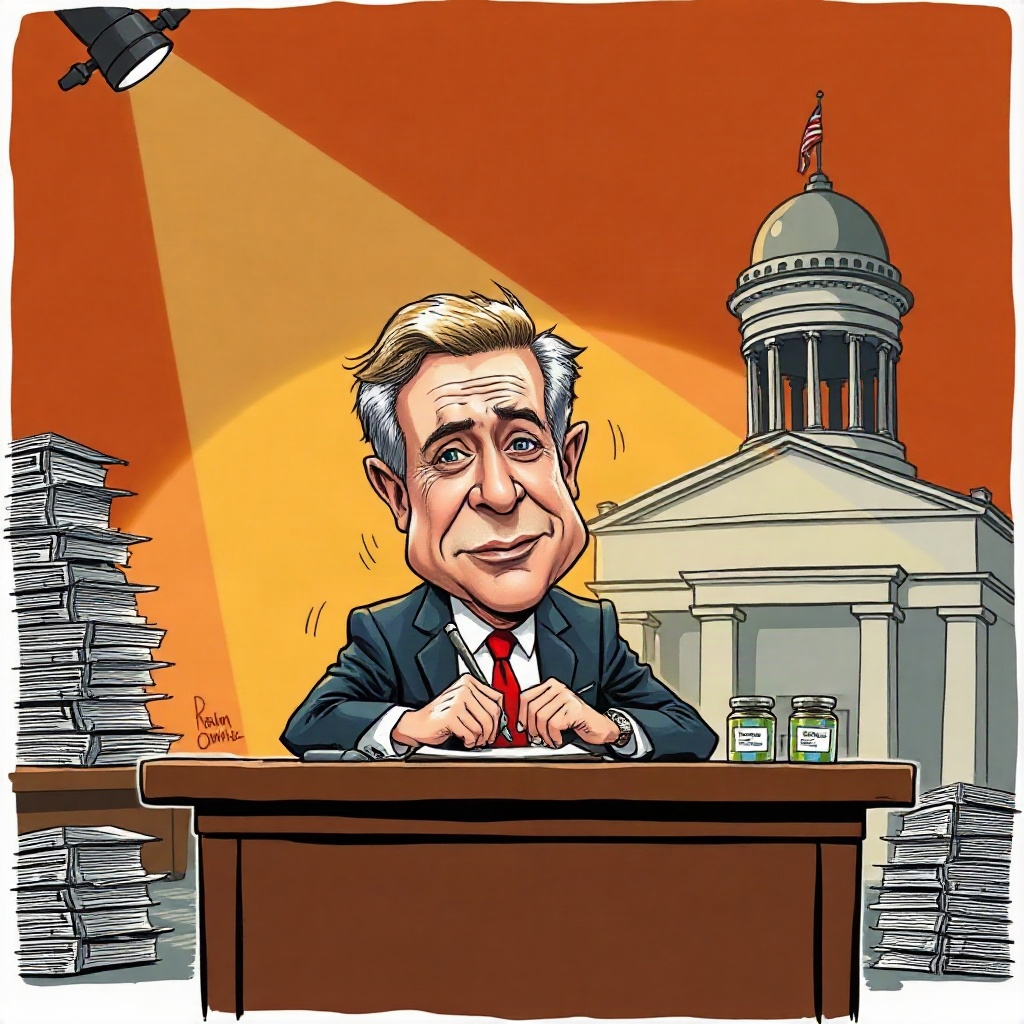
Ron DeSantis · Governor of Florida
Ron DeSantis, the forty-sixth governor of Florida and former United States Representative, occupies a distinct position within the expansive archive of the Jeffrey Epstein saga. Unlike numerous high-profile political figures, business moguls, and cultural elites who maintained documented social, financial, or personal relationships with the convicted sex offender, DeSantis possesses no verified personal or commercial ties to Epstein. Exhaustive reviews of unsealed court filings, flight manifests from Epstein's private aircraft, personal address registries, and criminal discovery databases yield no evidence that the two men ever met or corresponded. Instead, DeSantis’s nexus with the Epstein case is entirely institutional, legal, and political, defined by his authority as Florida's chief executive over state law enforcement, county oversight, and the eventual statutory unsealing of decades-old grand jury proceedings.
Florida served as the primary geographic incubator for Epstein’s initial brush with the justice system. In 2005, the Palm Beach Police Department initiated a landmark criminal investigation into Epstein’s systemic exploitation and abuse of minors at his waterfront mansion on El Brillo Way. That investigation led to a contentious 2006 Palm Beach County grand jury proceeding and culminated in the controversial 2008 federal non-prosecution agreement orchestrated by then-U.S. Attorney Alexander Acosta, alongside state prosecutorial compromises directed by former Palm Beach State Attorney Barry Krischer. Under this state plea agreement, Epstein served just thirteen months in the local county stockade, an arrangement marked by an extraordinarily permissive work-release schedule. For over a decade, successive Florida administrations faced intense public scrutiny for failing to re-examine the local and state mechanisms that allowed Epstein to evade serious institutional accountability.
DeSantis assumed the governorship in January 2019, approximately six months before federal prosecutors in the Southern District of New York arrested Epstein on federal sex trafficking charges. Following Epstein's arrest in July 2019 and his subsequent death inside the Metropolitan Correctional Center in New York in August 2019, public indignation shifted heavily toward the Florida legal apparatus that had facilitated his initial leniency. Responding to public pressure and formal petitions from victims' advocates, DeSantis ordered the Florida Department of Law Enforcement in August 2019 to conduct a comprehensive criminal inquiry into the Palm Beach County Sheriff’s Office, specifically examining the administrative irregularities and potential malfeasance surrounding Epstein's work-release privileges at the county stockade.
Related articles
Jeffrey Epstein and Albert Bryan Jr.
Investigative report examining USVI Governor Albert Bryan Jr.'s administrative and political connections to Jeffrey Epstein and the tax incentives inquiry.
Read article →
Jeffrey Epstein and John de Jongh Jr.
Investigative review of USVI Governor John de Jongh Jr.'s administration, his family's financial ties to Jeffrey Epstein, and state tax exemptions.
Read article →
Jeffrey Epstein and Kenneth Mapp
Investigative report on Jeffrey Epstein's political ties and tax benefits under former U.S. Virgin Islands Governor Kenneth Mapp from 2015 to 2019.
Read article →
Jeffrey Epstein and Stacey Plaskett
Investigative review of public records, FEC filings, and court disclosures detailing the ties between Jeffrey Epstein and USVI Delegate Stacey Plaskett.
Read article →