Jeffrey Epstein &
John de Jongh Jr.
Former Governor, U.S. Virgin Islands
Key Facts
90% reduction on income tax and 100% exemption on gross receipts and excise taxes
EDC Tax Exemption Level
USVI Economic Development Commission Records
Over $200,000 annually plus discretionary bonuses
First Lady's Epstein Salary
USVI v. JPMorgan Chase Discovery Filings (2023)
More than $100 million shielded through Southern Trust Company
Estimated Tax Savings
USVI v. Estate of Jeffrey E. Epstein (2020)
Governor of the U.S. Virgin Islands from January 2007 to January 2015
De Jongh Tenure
U.S. Virgin Islands Government Archives
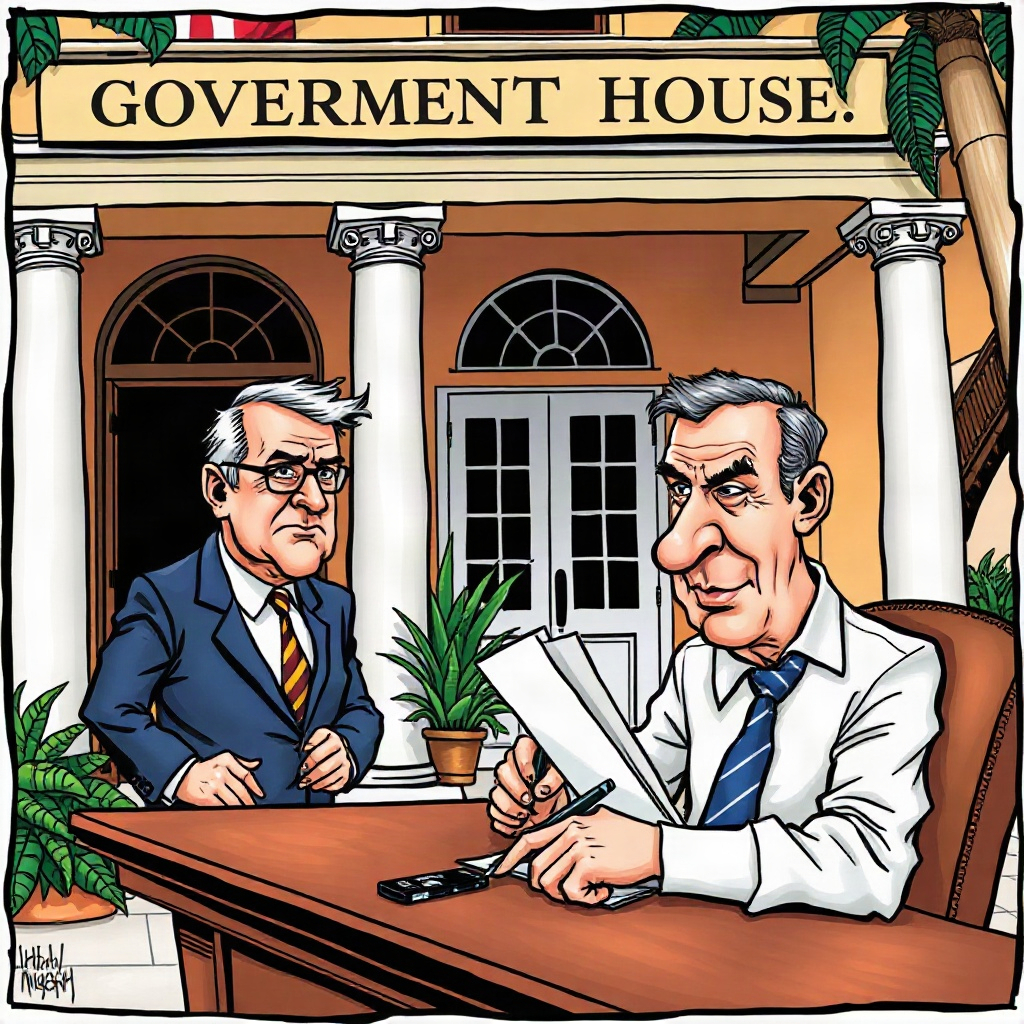
John de Jongh Jr. · Former Governor, U.S. Virgin Islands
For more than a decade, the picturesque expanse of the United States Virgin Islands served as both a private haven and an operational redoubt for Jeffrey Epstein. Central to his ability to operate with impunity across Saint Thomas and his private islands of Little Saint James and Great Saint James was a protective matrix of elite political relationships. Among the most scrutinized chapters in the territory's modern history is the administration of John de Jongh Jr., who served as Governor of the U.S. Virgin Islands from January 2007 through January 2015. While Epstein first established roots in the islands in the late 1990s, public records, unsealed civil litigation, and thousands of internal communications reveal that his influence reached an institutional zenith during De Jongh's two terms in Government House.
The relationship between the Epstein enterprise and the De Jongh administration was defined not merely by informal social proximity, but by direct financial entanglement and extraordinary regulatory generosity. The cornerstone of Epstein's business operation in the territory was the Economic Development Commission, known as the EDC. Designed to attract legitimate capital to the island territory by offering sweeping tax abatements—including up to 90 percent exemptions on individual and corporate income taxes, as well as waivers on gross receipts and excise taxes—the program became Epstein's primary vehicle for shielding hundreds of millions of dollars from federal taxation. Under De Jongh's leadership, Epstein’s entities, including Financial Trust Company and later Southern Trust Company, maintained and expanded these concessions even after Epstein was convicted of procuring a minor for prostitution in Palm Beach County, Florida, in 2008.
The nexus between the disgraced financier and the governor's inner circle was cemented through Epstein’s employment of First Lady Cecile de Jongh. While her husband served as the territory's chief executive, Mrs. de Jongh was maintained on Epstein's direct payroll as an office manager and administrative director for Southern Trust Company. Records produced in subsequent federal court filings revealed that Epstein paid her an annual salary exceeding two hundred thousand dollars, augmented by intermittent discretionary bonuses. From this dual vantage point—as Epstein’s local operative and the territory’s First Lady—Mrs. de Jongh handled matters ranging from local philanthropic donations and residency documentation to direct liaison work regarding government policies that affected Epstein's financial empire.
Related articles
Jeffrey Epstein and Albert Bryan Jr.
Investigative report examining USVI Governor Albert Bryan Jr.'s administrative and political connections to Jeffrey Epstein and the tax incentives inquiry.
Read article →
Jeffrey Epstein and Kenneth Mapp
Investigative report on Jeffrey Epstein's political ties and tax benefits under former U.S. Virgin Islands Governor Kenneth Mapp from 2015 to 2019.
Read article →
Jeffrey Epstein and Stacey Plaskett
Investigative review of public records, FEC filings, and court disclosures detailing the ties between Jeffrey Epstein and USVI Delegate Stacey Plaskett.
Read article →

Jeffrey Epstein and Denise George
Investigative overview of Denise George, the USVI Attorney General who prosecuted Jeffrey Epstein's estate and JPMorgan before her abrupt firing.
Read article →