Jeffrey Epstein &
Albert Bryan Jr.
Governor of the U.S. Virgin Islands
Key Facts
Over $105 million plus half of island sale proceeds
Settlement with Epstein Estate
USVI Dept of Justice (2022)
December 31, 2022 (Denise George ousted)
Removal of Attorney General
Office of the Governor USVI
Up to 90% income tax exemption via EDC program
Tax Incentives Overseen
USVI Economic Development Authority
$75 million settlement with USVI in September 2023
JPMorgan Litigation Resolution
SDNY Court Filings
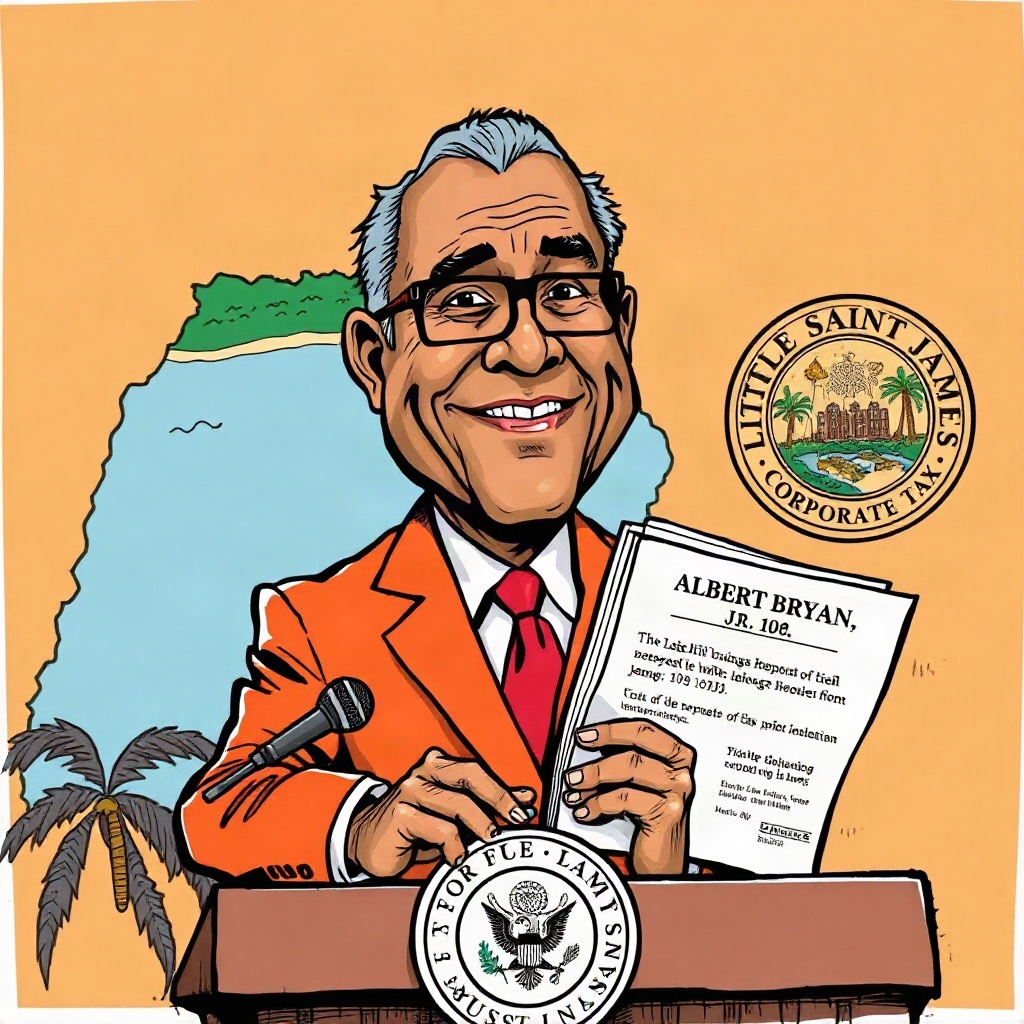
Albert Bryan Jr. · Governor of the U.S. Virgin Islands
For more than two decades, the United States Virgin Islands served as both a private sanctuary and a financial redoubt for Jeffrey Epstein. From his compound on Little Saint James, Epstein operated a global trafficking network while simultaneously securing extraordinary tax abatements through the territory’s Economic Development Authority. As federal investigations, civil litigations, and congressional inquiries gradually unspooled the institutional apparatus that enabled Epstein's operations in the Caribbean, political figures across the territory faced intense scrutiny. Prominent among them is Albert Bryan Jr., who served as Chairman of the Virgin Islands Economic Development Authority board before his election as the territory's ninth elected governor in 2018.
Bryan’s professional trajectory intersected with Epstein’s affairs well before he assumed the territory's highest executive office. In 2007, then-Governor John de Jongh Jr. appointed Bryan as the Commissioner of the Virgin Islands Department of Labor, a cabinet-level post that automatically seated him on the board of the Economic Development Authority. The statutory body administered the territory’s coveted Economic Development Commission program, an initiative designed to spur job growth and capital investment by offering qualifying companies up to a ninety percent exemption on corporate income tax and complete exemptions from local gross receipts, property, and excise taxes. During Bryan's tenure as board chairman, Epstein’s primary Virgin Islands operating vehicle, Southern Trust Company, successfully sought and obtained substantial extensions of its tax-privileged status, saving the financier an estimated several hundred million dollars over the life of the enterprise.
Public records and disclosures made in the Southern District of New York have illuminated the administrative mechanisms through which Epstein cultivated ties with local government leadership during this period. Cecile de Jongh, the wife of the former governor, worked as an office manager and advisor to Epstein’s local operations, actively lobbying officials and coordinating legislative overtures. While Bryan was not accused of personal criminality or illicit conduct on Little Saint James, records emerging from the multi-year legal battles between the Virgin Islands government and financial institutions revealed repeated institutional deference to Epstein. The financier’s companies were granted substantial exemptions despite repeated questions regarding whether they fulfilled standard local employment quotas or provided genuine economic diversification for island residents.
Related articles
Jeffrey Epstein and John de Jongh Jr.
Investigative review of USVI Governor John de Jongh Jr.'s administration, his family's financial ties to Jeffrey Epstein, and state tax exemptions.
Read article →
Jeffrey Epstein and Kenneth Mapp
Investigative report on Jeffrey Epstein's political ties and tax benefits under former U.S. Virgin Islands Governor Kenneth Mapp from 2015 to 2019.
Read article →
Jeffrey Epstein and Stacey Plaskett
Investigative review of public records, FEC filings, and court disclosures detailing the ties between Jeffrey Epstein and USVI Delegate Stacey Plaskett.
Read article →

Jeffrey Epstein and Denise George
Investigative overview of Denise George, the USVI Attorney General who prosecuted Jeffrey Epstein's estate and JPMorgan before her abrupt firing.
Read article →