Key Facts
1,244 acres of New Mexico state trust land
Public Land Leased
New Mexico State Land Office
1993–2003 and 2011–2015
Powell's Terms as Commissioner
State of New Mexico Official Records
Torrance and Santa Fe Counties, surrounding Zorro Ranch
Location of Leased Trust Land
New Mexico Inspection of Public Records Act
September 2019, by Commissioner Stephanie Garcia Richard
Lease Cancellation Date
Santa Fe New Mexican
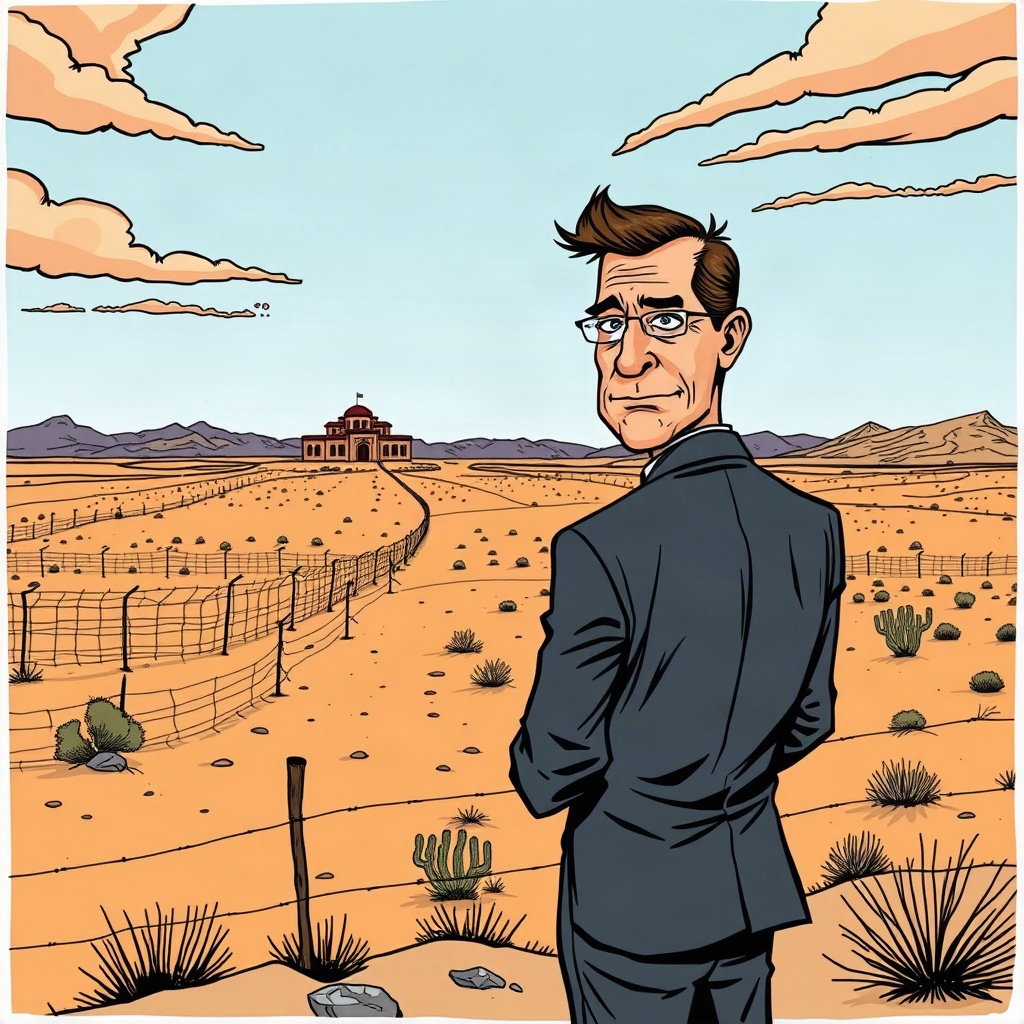
Ray Powell · New Mexico Land Commissioner
In the arid basin of Stanley, New Mexico, approximately thirty miles south of Santa Fe, Jeffrey Epstein assembled one of the most secluded and heavily fortified outposts of his international property empire: the roughly 10,000-acre Zorro Ranch. While the estate’s private mansion, hangar, and private airstrip were held under private deeds, the vast buffer surrounding the compound relied substantially on public land. For decades, the New Mexico State Land Office granted Epstein agricultural and grazing leases that enveloped his private acreage, shielding the property from neighboring scrutiny and expanding his territorial control. Central to the regulatory timeline of these leases was Ray Powell Jr., a veterinarian and public official who served two distinct terms as New Mexico Commissioner of Public Lands, first from 1993 to 2003 and later from 2011 to 2015. Powell’s tenure at the helm of the agency coincided directly with both the initial expansion of Epstein’s footprint in the state and subsequent administrative renewals, placing the agency under intense public focus in the wake of Epstein’s 2019 federal indictment.
Epstein’s arrival in New Mexico commenced in 1993, when he purchased the initial core ranch parcel from the family of former New Mexico Governor Bruce King. Almost immediately, Epstein’s representatives engaged state agencies to consolidate control over the surrounding terrain. In Western states with fragmented property grids, private ranches frequently interlock with state trust lands—sections set aside by the federal government at statehood to generate revenue for public schools and public institutions. To secure uninterrupted perimeters, Epstein, operating through corporate vehicles including Cypress Inc. and later Zorro Ranch LLC, entered into long-term lease agreements with the State Land Office. Under Powell’s first administration, which began in January 1993 and ran through early 2003, the Land Office administered these agreements, which permitted Epstein to utilize approximately 1,244 acres of state-owned trust land for nominal annual fees calculated under statutory agricultural rates.
Administrative records, later scrutinized through Freedom of Information Act and New Mexico Inspection of Public Records Act requests, document that Epstein’s holdings paid modest sums—often less than several thousand dollars annually—to maintain control over public parcels. These leases granted agricultural and grazing access but strictly barred unauthorized commercial development, residential construction, or physical impediments to official state inspections. Throughout Powell’s initial two four-year terms, Epstein steadily erected security infrastructure, perimeter fencing, gated access points, and service outbuildings across the wider ranch area. State Land Office files from the era reflect minimal regulatory friction between Epstein’s corporate managers and state land managers, characterized primarily by routine annual lease renewals, standard surface damage waivers, and regular bureaucratic correspondence handled by civil service staff rather than direct political intervention.
Related articles
Jeffrey Epstein and Albert Bryan Jr.
Investigative report examining USVI Governor Albert Bryan Jr.'s administrative and political connections to Jeffrey Epstein and the tax incentives inquiry.
Read article →
Jeffrey Epstein and John de Jongh Jr.
Investigative review of USVI Governor John de Jongh Jr.'s administration, his family's financial ties to Jeffrey Epstein, and state tax exemptions.
Read article →
Jeffrey Epstein and Kenneth Mapp
Investigative report on Jeffrey Epstein's political ties and tax benefits under former U.S. Virgin Islands Governor Kenneth Mapp from 2015 to 2019.
Read article →
Jeffrey Epstein and Stacey Plaskett
Investigative review of public records, FEC filings, and court disclosures detailing the ties between Jeffrey Epstein and USVI Delegate Stacey Plaskett.
Read article →