Jeffrey Epstein &
Monsignor Jean-Marie Gervais
Former Vatican Official and Catholic Monsignor
Key Facts
Canon of the Chapter of the Papal Basilica of St. Peter in the Vatican
Clerical Role
Annuario Pontificio
Listed in Epstein's personal address book under 'Gervais, Monsignor Jean-Marie' with Vatican phone numbers
Documented Entry
SDNY Unsealed Exhibits
Tota Pulchra Cultural Association (Rome, Italy)
Founded Entity
Italian Corporate and Cultural Registries
No charges or allegations of participation in Epstein's sex-trafficking offenses appear in federal records
Criminal Findings
SDNY Indictment and Case Filings
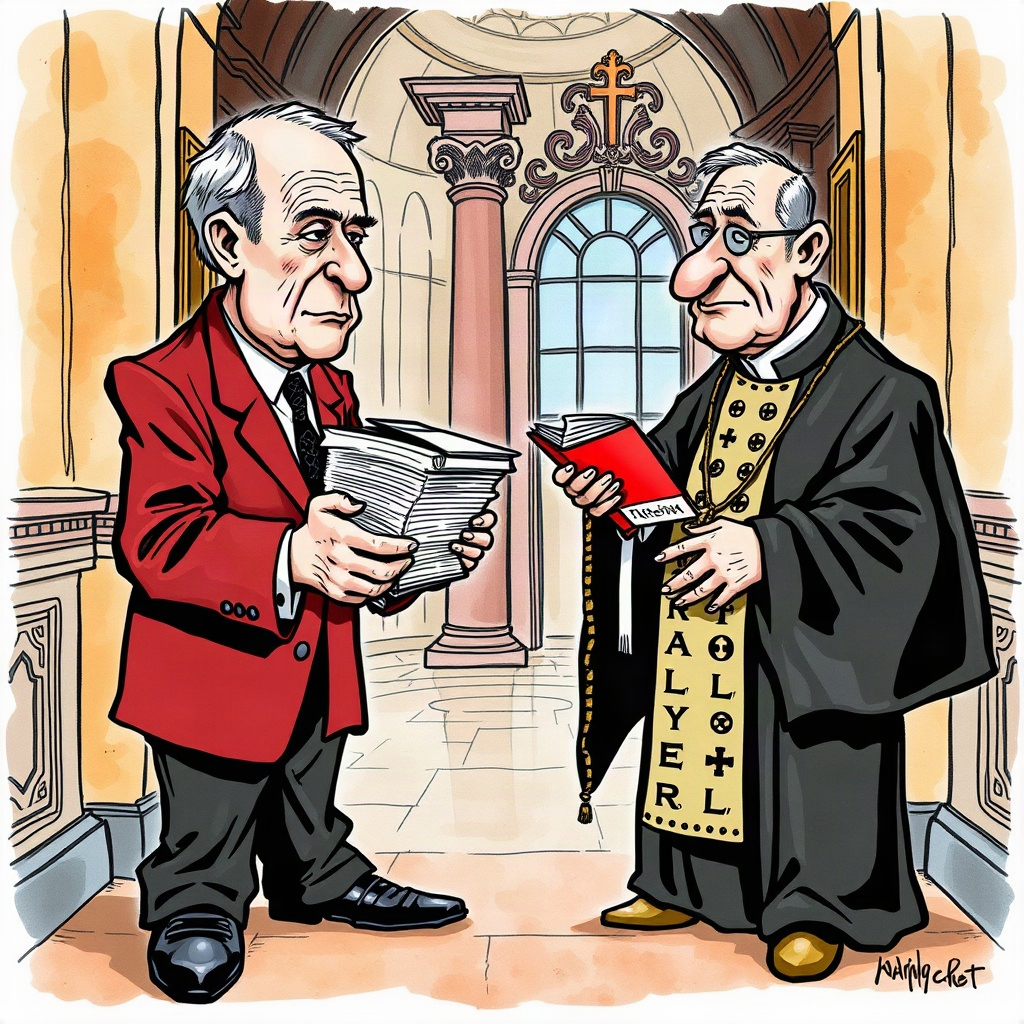
Monsignor Jean-Marie Gervais · Former Vatican Official and Catholic Monsignor
Among the thousands of politicians, academics, royalty, and financiers cataloged in Jeffrey Epstein's private contact books, the presence of senior Roman Catholic clergy stands out as one of the most enigmatic elements of his global Rolodex. Prominently listed under the letter 'G' in Epstein's compiled contact directory—frequently referred to as the 'Little Black Book'—is Monsignor Jean-Marie Gervais, a French-born prelate of the Holy See. Gervais, who served as a canon of the Chapter of the Papal Basilica of St. Peter in the Vatican and worked within high-ranking administrative bodies in Rome, represents an intriguing point of intersection between Epstein's sprawling international rolodex and the inner circles of the Vatican.
Born in France, Monsignor Jean-Marie Gervais built a career within the institutional hierarchy of the Catholic Church that spanned decades. After his ordination, Gervais advanced into administrative and diplomatic functions in Rome, eventually securing an appointment to the Chapter of St. Peter's Basilica, an ancient ecclesiastical body responsible for the liturgical functions and maintenance of the premier shrine of Roman Catholicism. Beyond his formal canonical duties, Gervais was deeply involved in the intersection of religion, diplomacy, and the arts. In 2007, he founded Tota Pulchra, an Italian cultural association ostensibly created to promote young artists, sponsor sacred art exhibitions, and host charitable cultural events. Through Tota Pulchra, Gervais frequently engaged with secular elites, foreign diplomats, socialites, and international patrons, positioning himself as an influential bridge between Rome's clerical establishment and global cultural philanthropists.
Related articles
Jeffrey Epstein and Wexner Heritage Program
Investigative report on Jeffrey Epstein's fiduciary authority, financial control, and institutional ties to the Wexner Heritage Program.
Read article →

Jeffrey Epstein and Bishop Marcelo Sánchez Sorondo
Investigative report examining Jeffrey Epstein's documented meetings and calendar appointments with Vatican Chancellor Bishop Marcelo Sánchez Sorondo.
Read article →
Jeffrey Epstein and Cardinal Angelo Becciu
An investigative review examining alleged links, financial overlaps, and public records connecting Cardinal Angelo Becciu to Jeffrey Epstein.
Read article →
Jeffrey Epstein and Cardinal Theodore McCarrick
Investigative analysis of the alleged ties and documented parallels between Jeffrey Epstein and defrocked Catholic Cardinal Theodore McCarrick.
Read article →