Jeffrey Epstein &
Bishop Marcelo Sánchez Sorondo
Former Chancellor, Pontifical Academy of Sciences
Key Facts
Chancellor of the Pontifical Academy of Sciences and Social Sciences (1998–2022)
Vatican Role Held
Holy See Press Office
Scheduled private meetings and lunches in New York documented in calendar records
Nature of Contact
The Wall Street Journal (2023)
Harvard evolutionary biologist Martin Nowak
Primary Intermediary
Harvard University Investigative Report (2020)
No documented financial donations from Epstein processed by the Vatican academy
Institutional Financial Ties
Pontifical Academy of Sciences Records
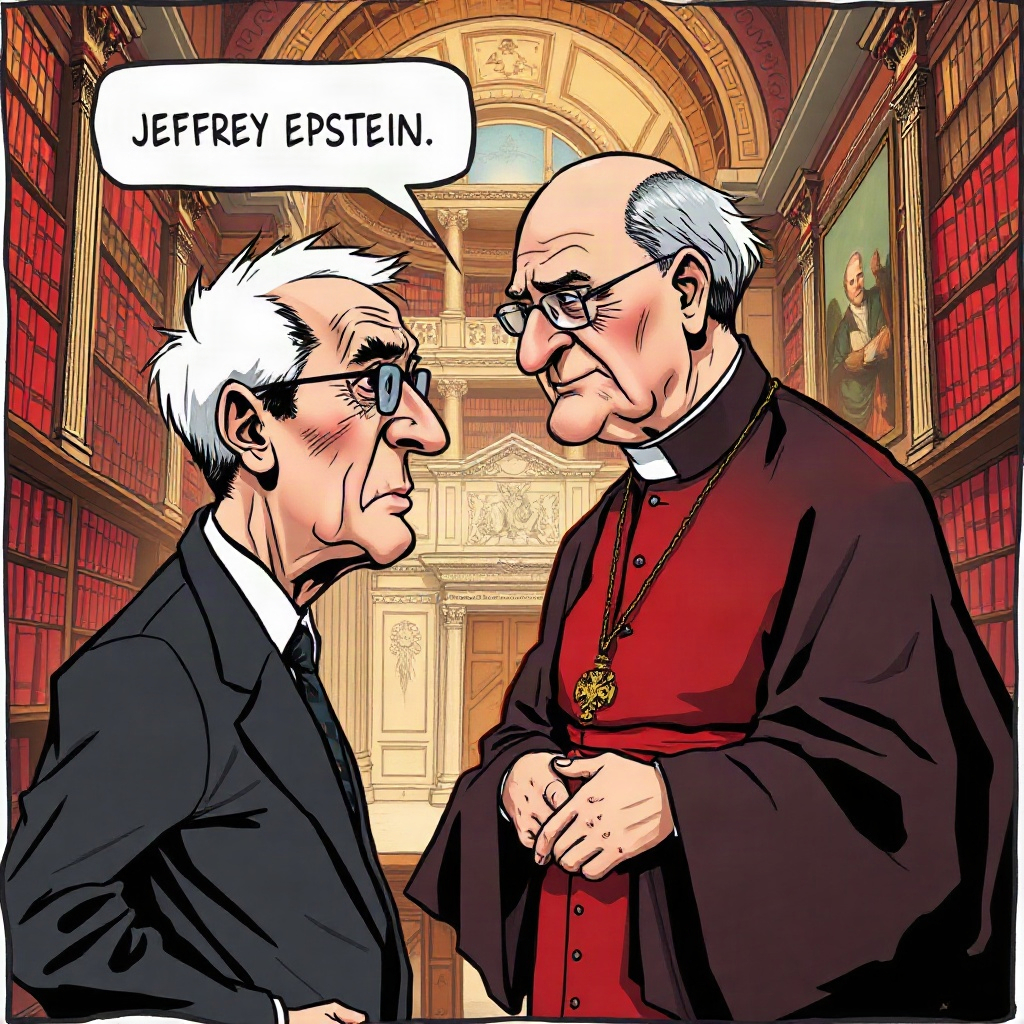
Bishop Marcelo Sánchez Sorondo · Former Chancellor, Pontifical Academy of Sciences
For more than two decades, Bishop Marcelo Sánchez Sorondo occupied a singular intersection of moral authority, global statecraft, and elite academic inquiry. As the Chancellor of the Pontifical Academy of Sciences and the Pontifical Academy of Social Sciences from 1998 until his retirement in 2022, the Argentine prelate was Pope Francis's primary liaison to the international scientific community, organizing high-profile Vatican colloquia on climate change, artificial intelligence, and the elimination of modern human trafficking. However, disclosures of Jeffrey Epstein's private schedules in 2023 exposed a startling and little-examined nexus: the convicted sex offender had successfully penetrated the social and intellectual orbit of one of the Vatican's most influential officials.
The relationship between the disgraced American financier and the Vatican bishop emerged into public view through an extensive investigation by The Wall Street Journal, which reviewed thousands of pages of Epstein’s internal calendars, flight logs, and appointment records dating from 2013 to 2017. These private schedules revealed that Epstein had arranged several meetings with Sánchez Sorondo during the bishop’s visits to New York. Rather than operating entirely on the shadowy periphery of society following his 2008 Florida conviction for soliciting prostitution from a minor, Epstein was actively deploying his financial resources and academic rolodex to gain access to the leadership of the Holy See’s premier intellectual institutions.
The bridge linking the Palm Beach pedophile and the Vatican chancellor was constructed largely through elite academia. Throughout the early 2000s and continuing after his 2008 guilty plea, Epstein directed millions of dollars in philanthropic grants to prestigious academic figures, notably Martin Nowak, a Harvard mathematical biologist whose research on evolutionary dynamics and cooperation had been heavily underwritten by Epstein’s foundations. Nowak, a devout Catholic, was simultaneously a frequent participant and invited speaker at the Pontifical Academy of Sciences in Rome. Through such intermediaries, alongside literary agent John Brockman’s salon-style networks, Epstein cultivated a pipeline to international scholars and prelates who viewed themselves as operating at the cutting edge of science and philosophy.
Related articles
Jeffrey Epstein and Wexner Heritage Program
Investigative report on Jeffrey Epstein's fiduciary authority, financial control, and institutional ties to the Wexner Heritage Program.
Read article →
Jeffrey Epstein and Cardinal Angelo Becciu
An investigative review examining alleged links, financial overlaps, and public records connecting Cardinal Angelo Becciu to Jeffrey Epstein.
Read article →
Jeffrey Epstein and Cardinal Theodore McCarrick
Investigative analysis of the alleged ties and documented parallels between Jeffrey Epstein and defrocked Catholic Cardinal Theodore McCarrick.
Read article →

Jeffrey Epstein and Rabbi Shmuley Boteach
Investigative review of Rabbi Shmuley Boteach's recorded contacts, meetings, and public statements regarding financier Jeffrey Epstein.
Read article →