Jeffrey Epstein &
Mark Middleton
Clinton White House Special Assistant
Key Facts
At least 7 visits signed in directly by Middleton between 1993 and 1995
Documented White House Visits Facilitated
Clinton Presidential Library Visitor Logs
At least 17 recorded visits during the Clinton presidency
Total Epstein White House Visits
White House Security Logs
Suicide via contact gunshot wound to chest and hanging
Official Cause of Middleton's Death
Perry County Sheriff's Office and State Crime Lab
Scene photographs and graphic video depictions barred from public release
Court-Sealed Materials
Perry County Circuit Court Injunction
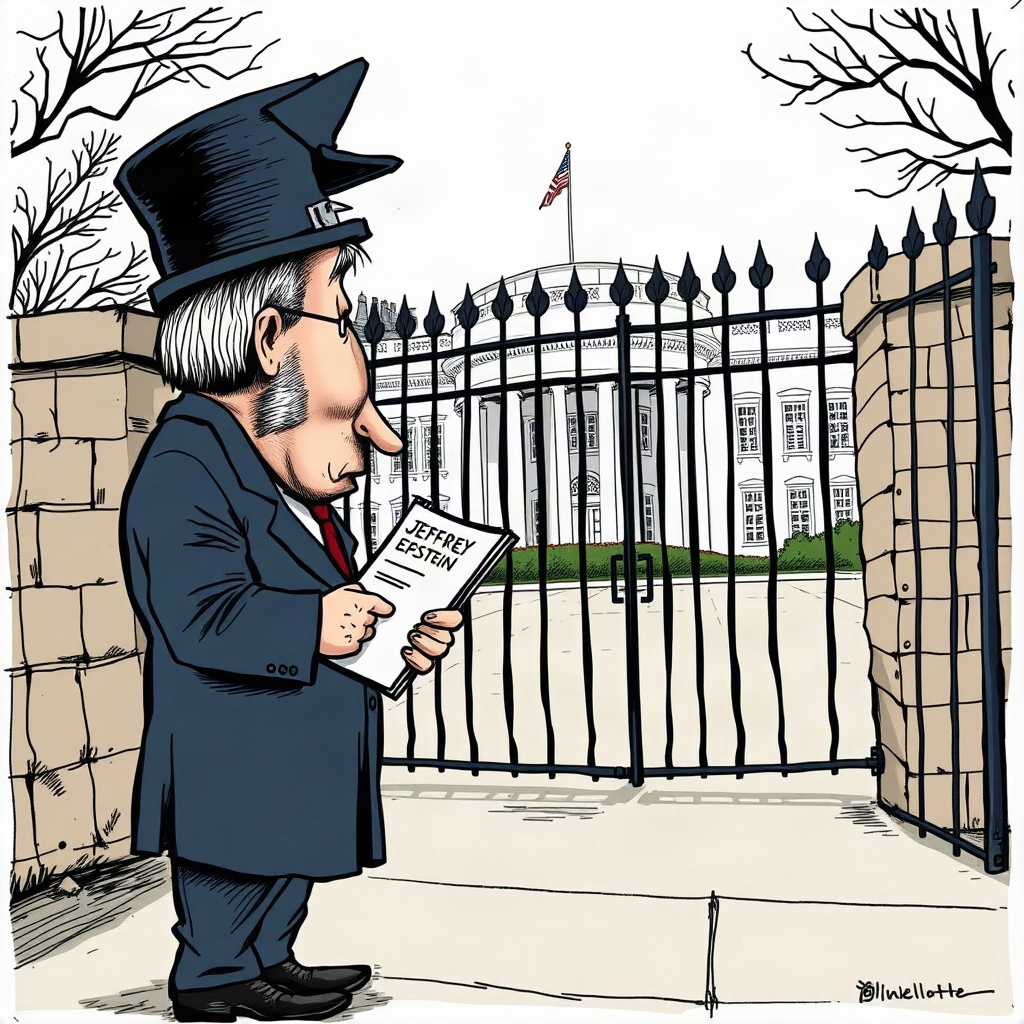
Mark Middleton · Clinton White House Special Assistant
In the ongoing archival reconstruction of Jeffrey Epstein’s influence network, few records provide as clear a window into his early cultivation of federal political access as the White House visitor logs of the mid-1990s. Central to those access records was Mark Middleton, a former special assistant to President Bill Clinton and an aide to Chief of Staff Thomas 'Mack' McLarty. Serving during the formative years of the Clinton administration, Middleton functioned as an influential administrative facilitator whose portfolio included high-level political donors and executive branch liaisons. Archival documentation released decades later demonstrates that Middleton acted as a key facilitator for Epstein’s repeated entries into the White House complex, illuminating the mechanics of how the late financier established proximity to the highest tiers of American executive governance.
A native of Arkansas, Middleton joined the Clinton administration in 1993 following prominent fundraising work for the 1992 presidential campaign. Operating within the Executive Office of the President, his responsibilities included coordinating access for influential political supporters, major donors, and corporate figures seeking engagement with administration officials. In an era before the stringent security and digitised protocols of the post-September 11 period, mid-level executive aides possessed considerable latitude to authorise admissions, host meetings, and escort private individuals through the West Wing and adjacent administrative suites. Documents subsequently obtained through Freedom of Information Act litigation and the records of the William J. Clinton Presidential Library demonstrate that Epstein methodically utilized this institutional discretion.
White House security logs reveal that Epstein visited the presidential complex on at least seventeen separate occasions during the Clinton administration, with a significant concentration of those visits occurring between 1993 and 1995. Official visitor entry records document that Middleton personally signed Epstein into the White House complex on at least seven distinct occasions. These visits included admissions to the West Wing and meetings in the Old Executive Office Building. While Epstein had not yet achieved the widespread public notoriety that accompanied his subsequent criminal proceedings, he was actively marketing himself as an ultra-high-net-worth wealth manager and philanthropic power broker, leveraging connections to institutional figures to build prestige.
Related articles
Jeffrey Epstein and William J. Burns
Investigative report examining the documented 2014 meetings between CIA Director William J. Burns and Jeffrey Epstein, based on public records.
Read article →

Jeffrey Epstein and Peter Thiel
An investigative examination of Peter Thiel's documented meetings with Jeffrey Epstein based on leaked calendars, flight logs, and public reporting.
Read article →

Jeffrey Epstein and General Wesley Clark
Investigative analysis of retired General Wesley Clark's appearances in Jeffrey Epstein's flight logs, address books, and unsealed court records.
Read article →
Jeffrey Epstein and Douglas Leese
Investigative report on British arms broker Douglas Leese and his late-1980s alliance with Jeffrey Epstein and Towers Financial corporate takeover bids.
Read article →