Jeffrey Epstein &
Institute for the Works of Religion (Vatican Bank)
Financial institution of the Holy See
Key Facts
None found in SDNY, USVI court records, or published bank exhibits
Direct Account Evidence
USVI v. JPMorgan Chase (2023)
Over 4,900 accounts closed during external Vatican compliance audits (2013-2015)
IOR Account Review
Promontory Financial Group Review Records
JPMorgan Chase and Deutsche Bank handled the vast majority of Epstein's wealth
Primary Verified Banks
SDNY & USVI Court Records
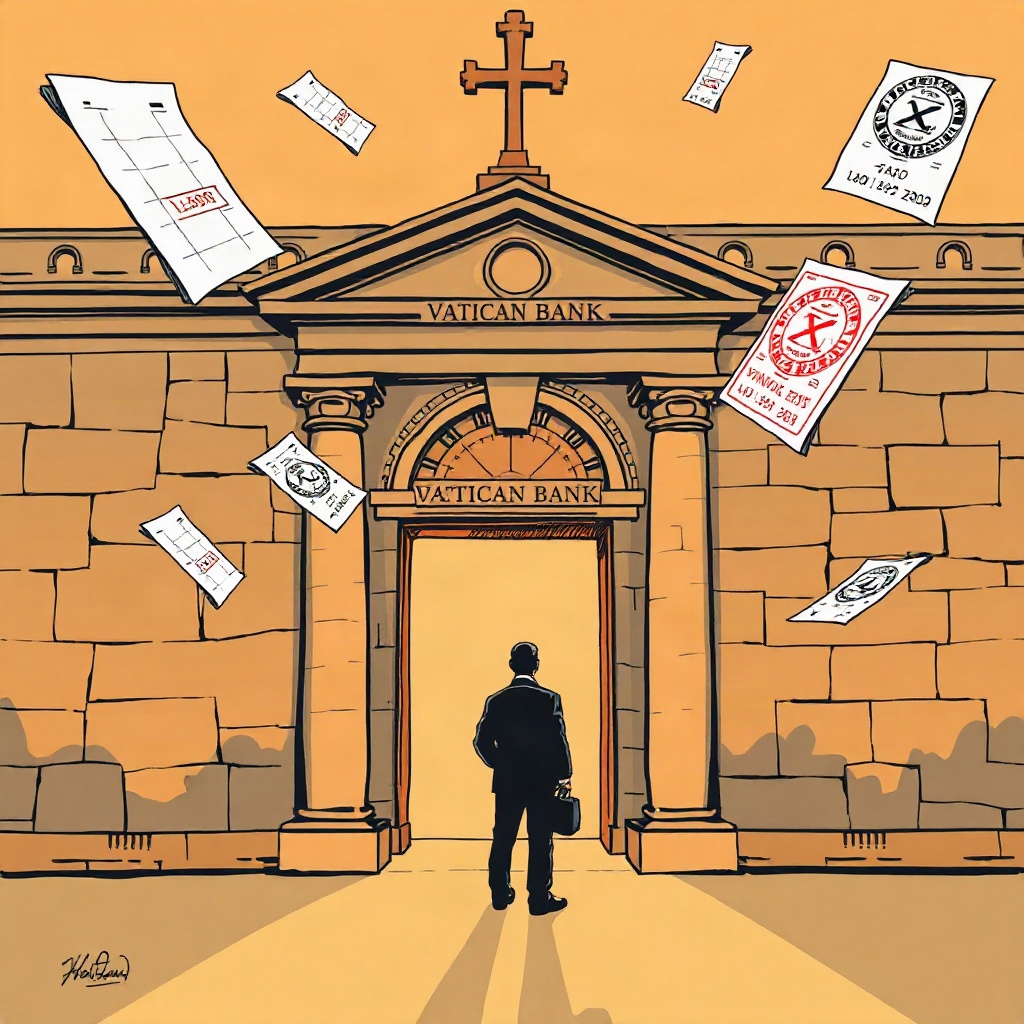
Institute for the Works of Religion (Vatican Bank) · Financial institution of the Holy See
The Institute for the Works of Religion, commonly known as the Istituto per le Opere di Religione or the Vatican Bank, has occupied a singular and often contentious position in modern global finance. Established inside the walls of Vatican City in 1942 under Pope Pius XII, the bank operates outside the direct regulatory oversight of standard central banking regimes, answering instead to a commission of cardinals and the sovereign authority of the Holy See. Over the course of the late twentieth century, particularly during the Roberto Calvi and Banco Ambrosiano scandals of the early 1980s, the institution earned an international reputation for opaque transactions, sovereign immunity, and sheltered private capital. Because of this history, the IOR has frequently surfaced in investigative reporting and global financial inquiries whenever high-profile illicit networks or offshore wealth schemes are scrutinized.
In the wake of Jeffrey Epstein's July 2019 arrest by the Federal Bureau of Investigation and the subsequent unsealing of thousands of court records, persistent questions arose regarding the full scope of his global financial architecture. Epstein, who cultivated an image as an elite financial adviser catering exclusively to billionaires, utilized an intricate labyrinth of shell companies, offshore accounts, and sovereign-adjacent mechanisms to manage assets and facilitate his human trafficking operations. The sheer scale and geographic reach of his network led independent researchers, financial analysts, and media observers to question whether his institutional relationships extended into unique sovereign entities, specifically including the Vatican Bank.
An extensive examination of primary public records, criminal indictments, and civil litigation exhibits reveals a complex reality marked by unverified claims, internet speculation, and an absence of direct documentary proof. During the sweeping litigation pursued by the Government of the United States Virgin Islands against JPMorgan Chase and Deutsche Bank—proceedings that produced hundreds of thousands of internal bank communications, compliance memos, and transaction logs—detailed maps of Epstein's financial empire were made public. These records documented Epstein's primary corporate vehicles, including the Financial Trust Company, the Southern Trust Company, and various iterations of the Butterfly Trust. Across these forensic accountings, Epstein's financial life was overwhelmingly anchored in standard Wall Street institutions, private offshore havens in the Caribbean, and European private wealth divisions, rather than the sovereign vaults of Vatican City.
Related articles
Jeffrey Epstein and Wexner Heritage Program
Investigative report on Jeffrey Epstein's fiduciary authority, financial control, and institutional ties to the Wexner Heritage Program.
Read article →

Jeffrey Epstein and Bishop Marcelo Sánchez Sorondo
Investigative report examining Jeffrey Epstein's documented meetings and calendar appointments with Vatican Chancellor Bishop Marcelo Sánchez Sorondo.
Read article →
Jeffrey Epstein and Cardinal Angelo Becciu
An investigative review examining alleged links, financial overlaps, and public records connecting Cardinal Angelo Becciu to Jeffrey Epstein.
Read article →
Jeffrey Epstein and Cardinal Theodore McCarrick
Investigative analysis of the alleged ties and documented parallels between Jeffrey Epstein and defrocked Catholic Cardinal Theodore McCarrick.
Read article →