Jeffrey Epstein &
Hebrew Congregation of St. Thomas
Historic synagogue, U.S. Virgin Islands
Key Facts
Hebrew Congregation of St. Thomas (Beracha Veshalom Vegmiluth Hasadim)
Recipient Institution
National Register of Historic Places
Gratitude America Ltd. / C.O.U.Q. Foundation
Primary Funding Vehicle
IRS Form 990-PF
USVI Economic Development Commission (EDC) mandatory charitable giving program
Regulatory Framework
USVI Department of Justice Filings
$105 million to the U.S. Virgin Islands government
Estate Settlement Amount
USVI Superior Court Consent Judgment (2022)
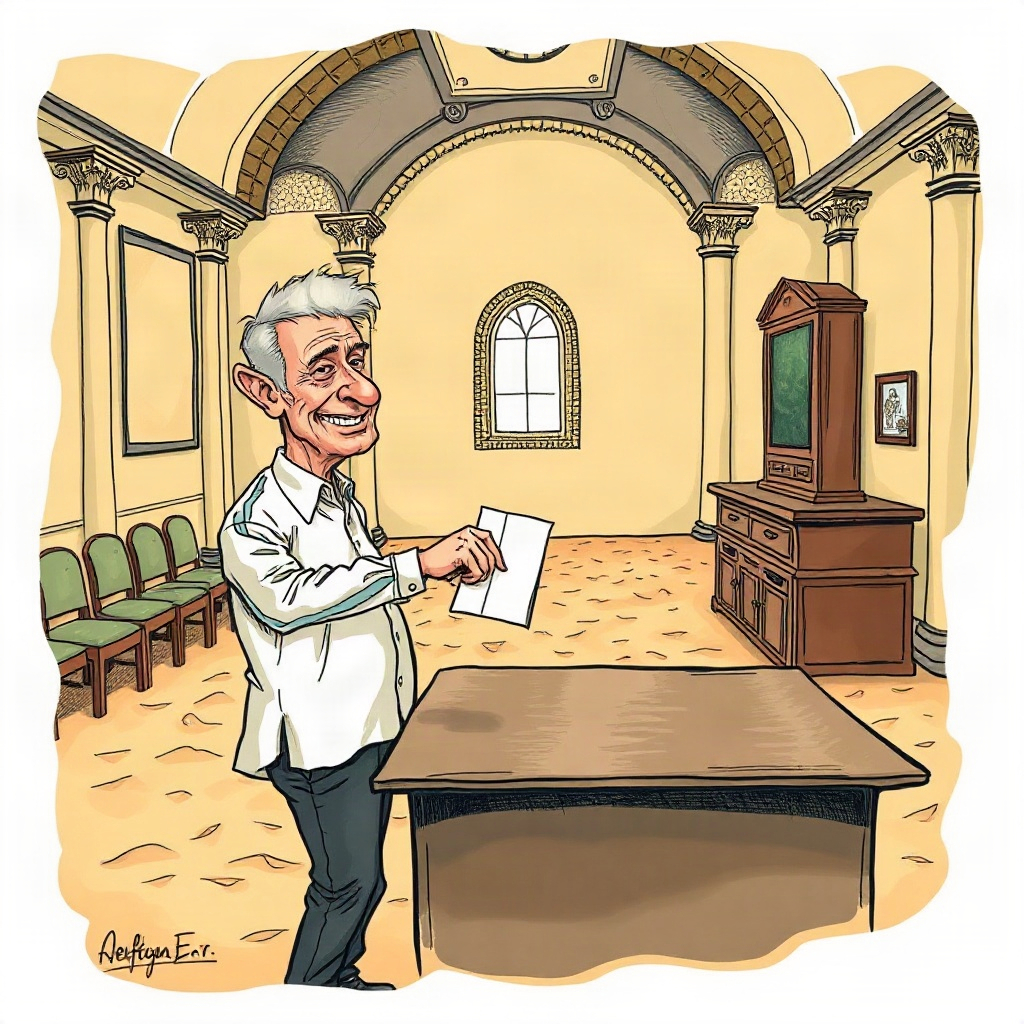
Hebrew Congregation of St. Thomas · Historic synagogue, U.S. Virgin Islands
High above the harbor of Charlotte Amalie on the island of St. Thomas sits one of the oldest active Jewish houses of worship in the Western Hemisphere. The Hebrew Congregation of St. Thomas, formally dedicated in 1833 by a Sephardic community whose local roots trace back to 1796, is widely recognized as a National Historic Landmark. Famous for its mahogany interior, neoclassical architecture, and sand-covered floors—a tradition commemorating the secret prayer spaces of Spanish conversos—the synagogue has long served as both a spiritual home and a civic touchstone for the United States Virgin Islands. Yet in the years following the July 2019 arrest and subsequent death of Jeffrey Epstein, the institution found itself among dozens of Caribbean civic and religious bodies compelled to reexamine their historical associations with the disgraced financier.
Epstein acquired the nearby private island of Little St. James in 1998, establishing an opulent, highly fortified compound that would serve as a principal hub for his sprawling international trafficking operation. To legitimize his presence in the territory and secure massive tax breaks under the U.S. Virgin Islands Economic Development Commission (EDC) program, Epstein launched a sprawling, calculated philanthropic apparatus. Through non-profit vehicles such as the C.O.U.Q. Foundation, Gratitude America Ltd., and later the Enhanced Education and Southern Financial foundations, Epstein systematically distributed millions of dollars across local educational, civic, and religious institutions. This sustained cash flow was not merely an act of beneficence; under the terms of the EDC program, his enterprise was legally required to maintain local charitable donations to qualify for ninety percent exemptions on corporate and personal income taxes.
Related articles

Jeffrey Epstein and Wexner Heritage Program
Investigative report on Jeffrey Epstein's fiduciary authority, financial control, and institutional ties to the Wexner Heritage Program.
Read article →

Jeffrey Epstein and Bishop Marcelo Sánchez Sorondo
Investigative report examining Jeffrey Epstein's documented meetings and calendar appointments with Vatican Chancellor Bishop Marcelo Sánchez Sorondo.
Read article →
Jeffrey Epstein and Cardinal Angelo Becciu
An investigative review examining alleged links, financial overlaps, and public records connecting Cardinal Angelo Becciu to Jeffrey Epstein.
Read article →
Jeffrey Epstein and Cardinal Theodore McCarrick
Investigative analysis of the alleged ties and documented parallels between Jeffrey Epstein and defrocked Catholic Cardinal Theodore McCarrick.
Read article →