Jeffrey Epstein &
Congregation Kehilath Jeshurun
Modern Orthodox synagogue, Manhattan
Key Facts
None; no documented direct affiliation, membership, or institutional ties on public record
Institutional Relationship
SDNY Court Filings
Zero dollars recorded across Epstein's foundation Form 990-PF disclosures to the synagogue
Philanthropic Grants
IRS Form 990-PF Filings (1998–2018)
Located approximately 14 blocks north of Epstein's residence at 9 East 71st Street
Geographic Proximity
Manhattan Land Records
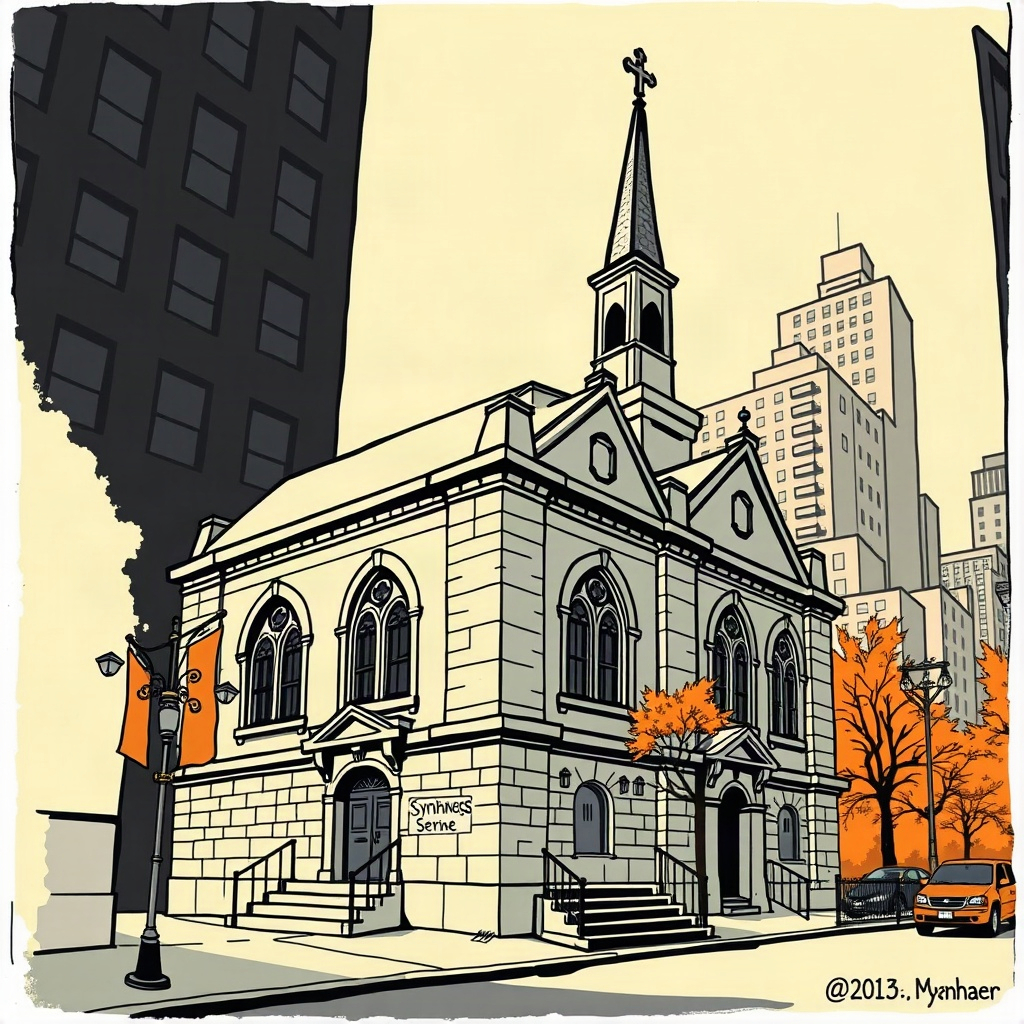
Congregation Kehilath Jeshurun · Modern Orthodox synagogue, Manhattan
Congregation Kehilath Jeshurun, established in 1872 on Manhattan's Upper East Side, stands as one of the most prominent and influential Modern Orthodox Jewish synagogues in the United States. Throughout the twentieth and twenty-first centuries, the synagogue served as a spiritual and social center for prominent figures in New York finance, law, real estate, and civic leadership. Its historic home on East 85th Street, along with its affiliated private academy, the Ramaz School, placed the institution at the intersection of elite Manhattan philanthropy and traditional religious life. Under the multi-generational leadership of the Lookstein rabbinic family, the congregation cultivated a distinguished membership roll that frequently overlapped with the highest echelons of New York's cultural and philanthropic establishments.
Following the July 2019 federal indictment of Jeffrey Epstein by the U.S. Attorney's Office for the Southern District of New York on sex trafficking charges, investigative reporters, legal researchers, and forensic accountants undertook exhaustive reviews of Epstein's social circles, philanthropic footprint, and institutional relationships. Epstein's personal residence, an expansive multi-story townhouse located at 9 East 71st Street, sat merely fourteen blocks south of Kehilath Jeshurun. Because Epstein spent decades utilizing strategic donations to integrate himself into elite Manhattan institutions, researchers scrutinized whether the financier had cultivated ties, directed foundation grants, or established personal relationships within the prominent Upper East Side synagogue.
Investigative reporting into Epstein's charitable entities—primarily the C.O.U.Q. Foundation, Gratitude America Ltd., and the J. Epstein Virgin Islands Foundation—involved examining decades of Internal Revenue Service Form 990-PF filings to trace the destination of millions of dollars in disbursed funds. Epstein regularly deployed these vehicles to gain proximity to academic leaders at Harvard and the Massachusetts Institute of Technology, as well as high-profile cultural and charitable organizations across New York City. News outlets tracking Epstein's philanthropic maneuvers within the broader Jewish philanthropic ecosystem documented significant multi-million-dollar contributions to organizations such as the Wexner Foundation and various academic endowments, prompting reporters to audit whether local Manhattan religious institutions, including Kehilath Jeshurun, had received similar overtures or covert funding.
Related articles
Jeffrey Epstein and Wexner Heritage Program
Investigative report on Jeffrey Epstein's fiduciary authority, financial control, and institutional ties to the Wexner Heritage Program.
Read article →
Jeffrey Epstein and Bishop Marcelo Sánchez Sorondo
Investigative report examining Jeffrey Epstein's documented meetings and calendar appointments with Vatican Chancellor Bishop Marcelo Sánchez Sorondo.
Read article →
Jeffrey Epstein and Cardinal Angelo Becciu
An investigative review examining alleged links, financial overlaps, and public records connecting Cardinal Angelo Becciu to Jeffrey Epstein.
Read article →
Jeffrey Epstein and Cardinal Theodore McCarrick
Investigative analysis of the alleged ties and documented parallels between Jeffrey Epstein and defrocked Catholic Cardinal Theodore McCarrick.
Read article →