Key Facts
$2,000 total from Epstein across the 1992 and 1997 election cycles
Direct Campaign Contributions
Federal Election Commission
Zero recorded appearances on private flight manifests
Flight Log Appearances
Giuffre v. Maxwell Court Exhibits
Safe Horizon, an anti-trafficking and victims' advocacy nonprofit
Disgorgement Charity
Schumer Campaign Statement (July 2019)
Not listed in Epstein's personal telephone directory ('black book')
Contact Book Status
Publicly Released Epstein Phone Records
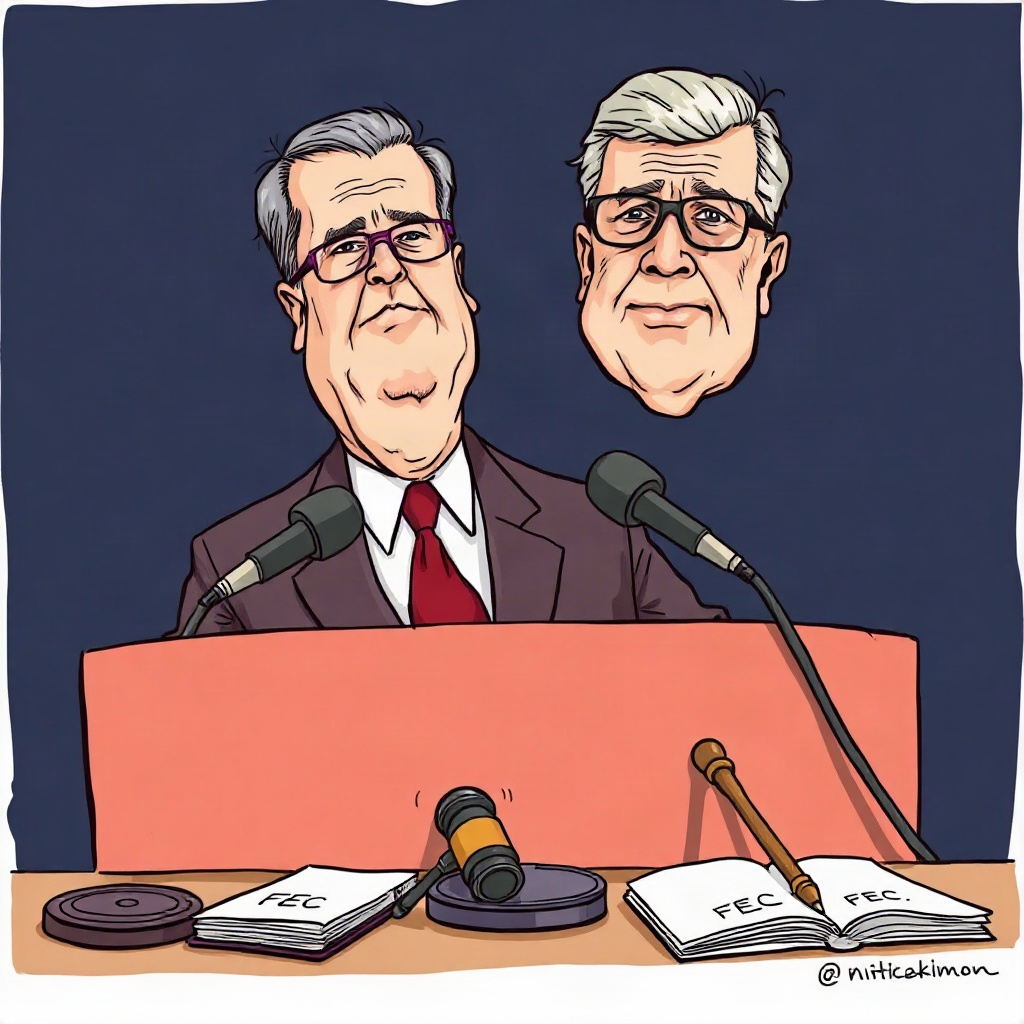
Chuck Schumer · U.S. Senate Majority Leader
In the sprawling landscape of Jeffrey Epstein's financial and social connections, political campaign finance records provide an enduring paper trail of his attempts to cultivate influence among New York's ruling class. Among the prominent elected officials whose names appear in public records alongside the convicted sex offender is Charles E. Schumer, the long-serving United States Senator from New York and current Senate Majority Leader. While Schumer's interactions with Epstein have been scrutinized by journalists, watchdog organizations, and political adversaries, public documents demonstrate that the relationship was largely defined by standard campaign contributions made during the 1990s, followed decades later by public disavowals, charitable donations of the tainted funds, and aggressive congressional calls for executive branch accountability.
Chuck Schumer first entered federal politics as a member of the United States House of Representatives in 1981, representing portions of Brooklyn and Queens. By the 1990s, Schumer was preparing for a high-profile bid to unseat Republican incumbent Alfonse D'Amato in the 1998 New York Senate election. During this period, Jeffrey Epstein was embedding himself within the elite social fabric of Manhattan, presenting himself as an enigmatic billionaire wealth manager operating under the patronage of retail magnate Leslie Wexner. As part of his social maneuvering, Epstein directed political contributions to an array of figures spanning both major American political parties, with a heavy emphasis on New York politicians who held or sought federal office.
Federal Election Commission records reveal that Epstein contributed directly to Schumer's campaign committees on two distinct occasions during the 1990s. The first recorded transaction took place in 1992, when Epstein contributed $1,000 to Schumer's House campaign committee. The second contribution occurred in November 1997, when Epstein gave another $1,000 to Friends of Schumer as the then-congressman mounted his statewide campaign for the Senate. A third, related transaction emerged through Federal Election Commission filings for the Schumer-affiliated Democratic Senatorial Campaign Committee years later, though direct candidate donations remained limited to the initial $2,000 total. At the time these funds were transferred, Epstein had not yet been charged with any crime, and the sexual abuse that would later define his public profile remained hidden from law enforcement records.
Related articles
Jeffrey Epstein and Albert Bryan Jr.
Investigative report examining USVI Governor Albert Bryan Jr.'s administrative and political connections to Jeffrey Epstein and the tax incentives inquiry.
Read article →
Jeffrey Epstein and John de Jongh Jr.
Investigative review of USVI Governor John de Jongh Jr.'s administration, his family's financial ties to Jeffrey Epstein, and state tax exemptions.
Read article →
Jeffrey Epstein and Kenneth Mapp
Investigative report on Jeffrey Epstein's political ties and tax benefits under former U.S. Virgin Islands Governor Kenneth Mapp from 2015 to 2019.
Read article →

Jeffrey Epstein and Stacey Plaskett
Investigative review of public records, FEC filings, and court disclosures detailing the ties between Jeffrey Epstein and USVI Delegate Stacey Plaskett.
Read article →