Jeffrey Epstein &
Carolyn Maloney
Former U.S. Representative from New York
Key Facts
$3,000 across three election cycles (1993, 1998, 2000)
Total Campaign Contributions
Federal Election Commission
Donated $3,000 to anti-human-trafficking and domestic violence charities in July 2019
Charitable Disgorgement
Campaign press statement / The New York Times
Epstein's Manhattan mansion was situated within Maloney's congressional district
Constituency Link
New York Congressional District Maps
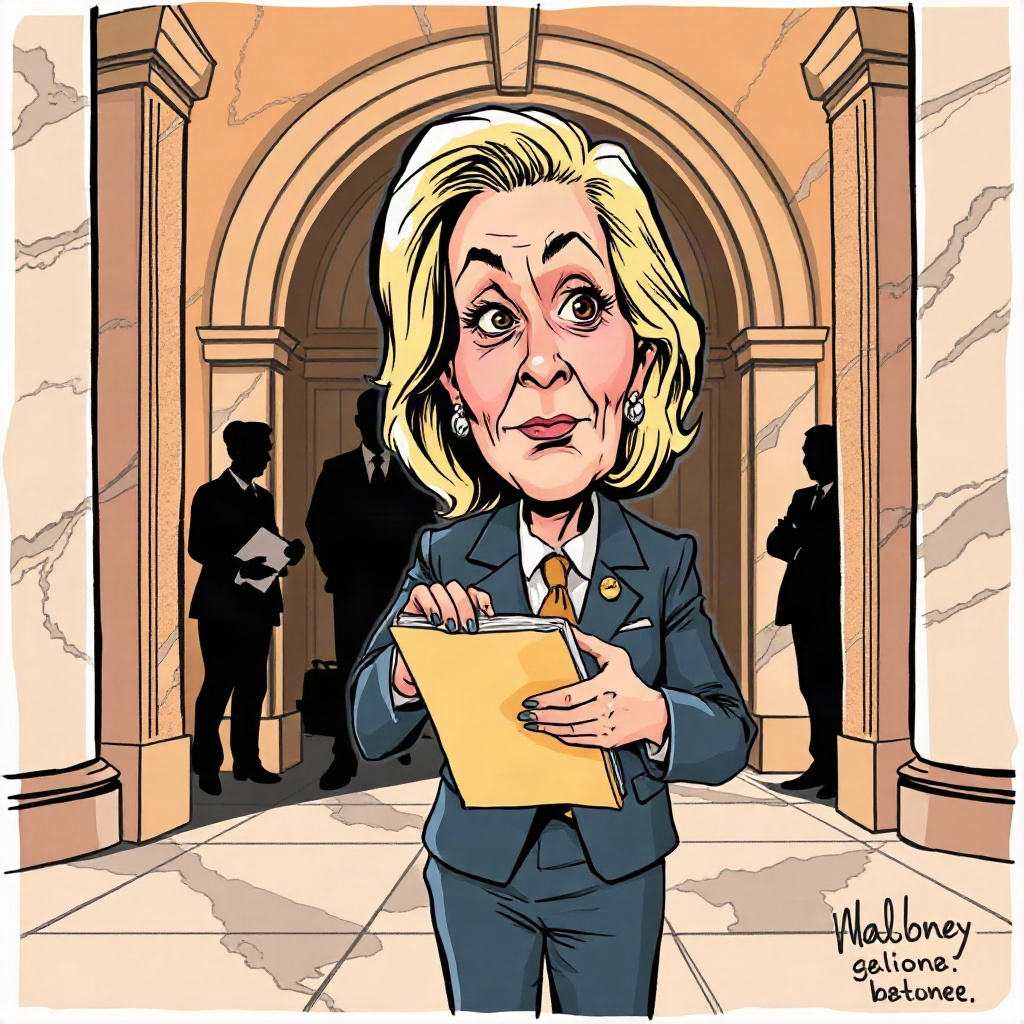
Carolyn Maloney · Former U.S. Representative from New York
For three decades, Carolyn Maloney served as one of the most visible political figures in New York City, representing a congressional district that spanned Manhattan's affluent East Side, parts of Brooklyn, and western Queens. Within the boundaries of her Upper East Side constituency sat the Herbert N. Straus mansion at 9 East 71st Street, the palatial residence of disgraced financier Jeffrey Epstein. In the decades preceding Epstein's July 2019 arrest by federal prosecutors, the financier systematically cultivated access to New York's political, cultural, and academic establishment. Maloney, who entered Congress in 1993, became one of scores of prominent elected officials who intersected with Epstein through political donations and high-society civic circles, prompting retrospective scrutiny once the full scale of Epstein's sex-trafficking operation became public knowledge.
Public records maintained by the Federal Election Commission document a financial link that originated during Maloney's early congressional tenure. Between 1993 and the early 2000s, Epstein contributed funds to Maloney's campaign committees. In May 1993, shortly after Maloney won her seat in the House of Representatives, federal disclosure records indicate an initial individual donation of one thousand dollars from Epstein. Subsequent contributions followed in later election cycles, including identical amounts in 1998 and 2000, bringing his recorded direct contributions to her principal campaign account to three thousand dollars. During this era, Epstein was actively marketing himself as an enigmatic billionaire wealth manager, moving freely among elite political donors across both major political parties.
Epstein's personal contact directory, colloquially dubbed the black book and later entered into the public record through investigative reporting and civil litigation, further illustrated his institutional proximity to Maloney. The directory, compiled by Epstein's household staff in the late 1990s and early 2000s, included contact numbers associated with Maloney's congressional and district offices. Investigative reviews of Epstein's personal logs, however, indicate that the inclusion of local representatives was a standard practice for Epstein, who methodically logged phone numbers for local precincts, city agencies, and district politicians representing the neighborhoods where his properties were located. There is no evidence in court filings or flight records indicating that Maloney ever traveled on Epstein's private aircraft, visited his private residence in the U.S. Virgin Islands, or maintained an intimate personal friendship with the financier.
Related articles
Jeffrey Epstein and Albert Bryan Jr.
Investigative report examining USVI Governor Albert Bryan Jr.'s administrative and political connections to Jeffrey Epstein and the tax incentives inquiry.
Read article →
Jeffrey Epstein and John de Jongh Jr.
Investigative review of USVI Governor John de Jongh Jr.'s administration, his family's financial ties to Jeffrey Epstein, and state tax exemptions.
Read article →
Jeffrey Epstein and Kenneth Mapp
Investigative report on Jeffrey Epstein's political ties and tax benefits under former U.S. Virgin Islands Governor Kenneth Mapp from 2015 to 2019.
Read article →
Jeffrey Epstein and Stacey Plaskett
Investigative review of public records, FEC filings, and court disclosures detailing the ties between Jeffrey Epstein and USVI Delegate Stacey Plaskett.
Read article →