Jeffrey Epstein &
Al-Yamamah Arms Deal
UK-Saudi Defence Procurement Agreement
Key Facts
Over £43 billion throughout its operational lifespan
Estimated Al-Yamamah Value
The Guardian Investigative Reports (2007)
BAE Systems (formerly British Aerospace)
Lead Contractor
UK National Archives
Douglas Leese (UK defense intermediary closely linked to Epstein)
Key Overlapping Associate
Vanity Fair reporting (2003)
Alleged and unverified; no official bank records confirm direct commissions
Documentary Status
SDNY Court Filings
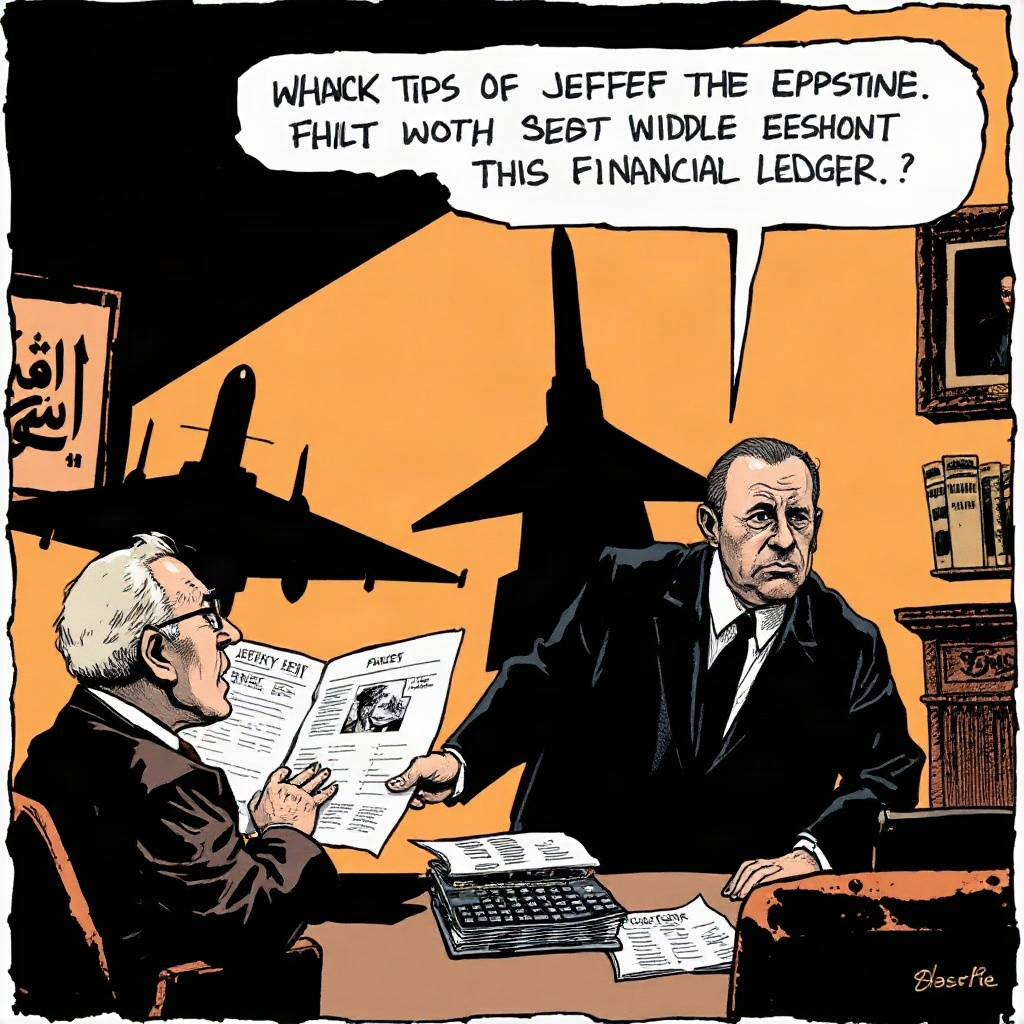
Al-Yamamah Arms Deal · UK-Saudi Defence Procurement Agreement
In September 1985, British Prime Minister Margaret Thatcher and Saudi Defense Minister Prince Sultan bin Abdulaziz finalized the Al-Yamamah arms agreement, inaugurating what would become the largest defense export contract in United Kingdom history. Under the multi-stage deal, British Aerospace, later BAE Systems, supplied dozens of Tornado and Hawk combat aircraft, naval vessels, and extensive support infrastructure to the Royal Saudi Air Force in exchange for crude oil shipments. Beyond its geopolitical scope, Al-Yamamah became internationally notorious for the scale of secret commissions, kickbacks, and offshore slush funds utilized to facilitate and maintain the transactions across decades. Within the ongoing journalistic efforts to decode the elusive origins of Jeffrey Epstein's private fortune during the late 1980s, Al-Yamamah has repeatedly surfaced as a potential locus of financial intermediation and high-level international networking.
The premise connecting Epstein to the Al-Yamamah apparatus rests upon circumstantial financial timelines, shared social registries, and intersecting relationships with primary deal brokers. Following Epstein's departure from Bear Stearns in 1981 and his subsequent involvement with Steven Hoffenberg's fraudulent Towers Financial Corporation, Epstein established J. Epstein and Company in 1987. During this exact window, the secondary expansion of the arms pact, known as Al-Yamamah II, was negotiated. While public records have firmly documented Epstein's subsequent management of retail magnate Leslie Wexner's fortune, investigative journalists and financial biographers have long questioned whether managing Wexner's assets was the sole source of Epstein's capital, or if his initial accumulation derived from high-commission international sovereign brokerage.
A central node in these inquiries is defense consultant Douglas Leese, a British arms broker deeply embedded in UK defense exports who played an acknowledged intermediary role in contracts associated with BAE Systems and Middle Eastern procurement. Independent investigative reporting, including accounts published by journalist Vicky Ward and later biographical retrospectives in Vanity Fair, established that Leese was a personal associate of Epstein during the late 1980s and 1990s. Reporting indicates that Leese introduced Epstein to various high-profile European and Middle Eastern figures, attempting to leverage Epstein's purported acumen for constructing labyrinthine offshore tax shelters and asset-protection trusts. Although no unsealed corporate ledger explicitly credits Epstein with negotiating weapons contracts, contemporaries described Epstein as presenting himself to international clients as a discreet offshore financial architect who could insulate large capital flows from tax authorities and public disclosure.
Related articles
Jeffrey Epstein and William J. Burns
Investigative report examining the documented 2014 meetings between CIA Director William J. Burns and Jeffrey Epstein, based on public records.
Read article →

Jeffrey Epstein and Peter Thiel
An investigative examination of Peter Thiel's documented meetings with Jeffrey Epstein based on leaked calendars, flight logs, and public reporting.
Read article →
Jeffrey Epstein and General Wesley Clark
Investigative analysis of retired General Wesley Clark's appearances in Jeffrey Epstein's flight logs, address books, and unsealed court records.
Read article →
Jeffrey Epstein and Douglas Leese
Investigative report on British arms broker Douglas Leese and his late-1980s alliance with Jeffrey Epstein and Towers Financial corporate takeover bids.
Read article →