Jeffrey Epstein &
United States Department of State
US federal foreign affairs department
Key Facts
Expired Austrian passport bearing Epstein's photo with a fake name and Saudi Arabian address
Foreign Alias Passport
SDNY Bail Hearing Memorandum (July 2019)
Bill Richardson and George Mitchell were named in civil depositions; both strongly denied allegations
Named Diplomatic Figures
Giuffre v. Maxwell Unsealed Depositions (2019/2024)
Epstein provided an estimated $650,000 in funding and a $130,000 loan to think-tank head Terje Rød-Larsen
IPI Financial Ties
International Peace Institute Governance Review (2020)
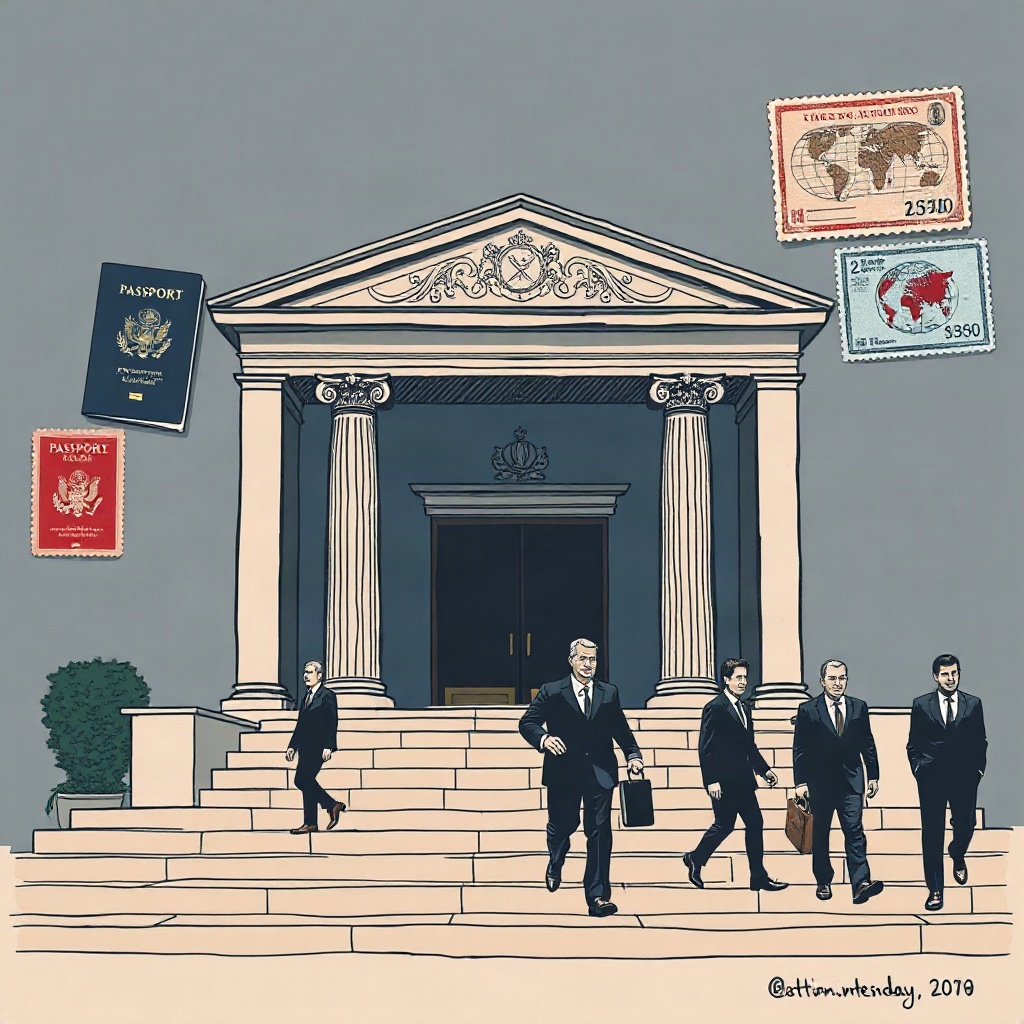
United States Department of State · US federal foreign affairs department
The United States Department of State serves as the executive branch agency responsible for foreign policy, international relations, and diplomatic missions across the globe. Headquartered in Washington, D.C., at the Harry S. Truman Building, the State Department oversees American embassies and consulates, administers the issuance of U.S. passports, and regulates foreign visa processing. In the sprawling investigative record surrounding Jeffrey Epstein, the financier's orbit frequently intersected with the foreign policy establishment and State Department mechanisms. These connections range from the mechanics of international travel and consular visa processing for foreign nationals to Epstein's deliberate cultivation of high-ranking diplomats, former ambassadors, and multilateral emissaries.
Epstein’s operational infrastructure required continuous cross-border movement, relying on international aviation routes that brought him, his staff, and his accusers between the United States, the U.S. Virgin Islands, France, the United Kingdom, and various destinations in North Africa and Latin America. Central to federal investigations into transnational sex trafficking was the question of how Epstein’s network facilitated the arrival of young foreign women into the United States. Federal court filings, civil depositions, and investigative reports indicate that numerous women brought to Epstein’s residences in Palm Beach, Manhattan, and Little Saint James held foreign citizenship, predominantly originating from Eastern Europe, Russia, and South America. State Department consular officers abroad are the primary gatekeepers evaluating nonimmigrant visa applications, such as B-1, B-2 tourist, or J-1 exchange visas. In several civil depositions, former Epstein associates described how foreign women were sponsored, directed, or assisted in navigating visa procedures. While no State Department consular officer has been criminally charged with improper facilitation, civil litigation and subsequent Freedom of Information Act inquiries have scrutinized whether visa vetting standards were bypassed or if consular operations were misled through fraudulent invitations and employment claims arranged by Epstein's staff.
Related articles
Jeffrey Epstein and Central Intelligence Agency (CIA)
An investigative review of alleged ties between Jeffrey Epstein and the CIA, examining FOIA filings, Acosta's remarks, and official calendar records.
Read article →

Jeffrey Epstein and Federal Bureau of Investigation (FBI)
An investigative analysis of Jeffrey Epstein's decades-long history with the FBI, from the 2006 Palm Beach probe to the 2019 Manhattan raid and FOIA files.
Read article →

Jeffrey Epstein and Secret Intelligence Service (MI6)
Investigative analysis of Jeffrey Epstein's alleged links to Britain's Secret Intelligence Service (MI6), Ghislaine Maxwell, and elite UK networks.
Read article →

Jeffrey Epstein and Directorate-General for External Security (DGSE)
Investigating allegations and public records regarding Jeffrey Epstein, his Paris operations, and France's foreign intelligence agency, the DGSE.
Read article →