Jeffrey Epstein &
Directorate-General for External Security (DGSE)
French foreign intelligence agency
Key Facts
800-square-meter luxury apartment on Avenue Foch, Paris
Epstein's Paris Residence
French Land Registry & Judicial Records
August 23, 2019, by the Paris Prosecutor's Office
French Investigation Opened
Paris Prosecutor's Office
Foreign intelligence and counterintelligence outside French borders
DGSE Mandate
French Ministry of the Armed Forces
Unverified; no declassified records confirm operational links
Status of DGSE Ties
Investigative Public Record
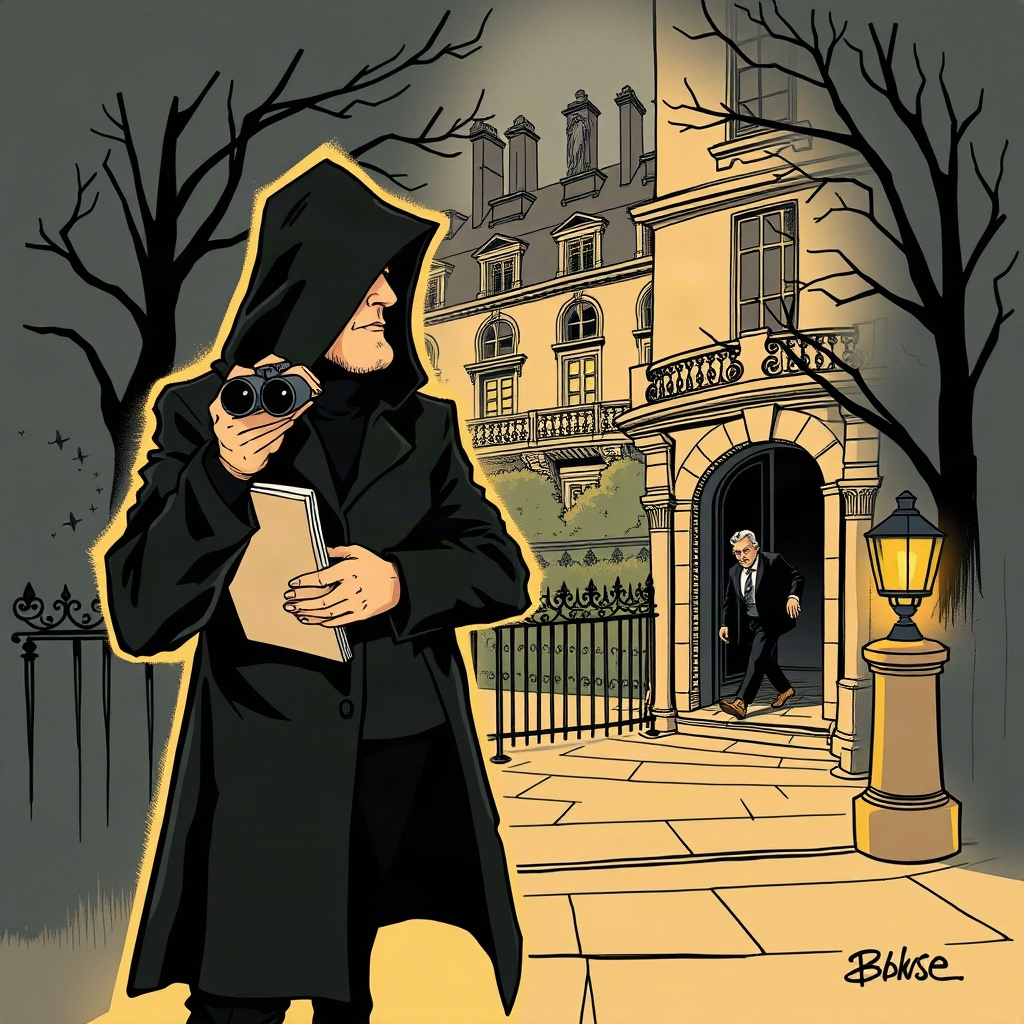
Directorate-General for External Security (DGSE) · French foreign intelligence agency
The Directorate-General for External Security, known widely by its French acronym DGSE, operates as France's equivalent to Britain's MI6 or the United States' Central Intelligence Agency. Tasked with gathering foreign intelligence, safeguarding French national security interests, and conducting covert operations abroad, the agency operates under strict secrecy under the auspices of the French Ministry of the Armed Forces. Following the July 2019 federal arrest and subsequent death of Jeffrey Epstein in New York, international focus shifted rapidly across the Atlantic to France, where the financier had maintained deep social, financial, and residential ties for more than two decades. In the vacuum of unanswered questions surrounding Epstein's true sources of wealth, high-level protection, and geopolitical leverage, investigative reporters, legal observers, and intelligence analysts have persistently probed whether the DGSE, or its domestic counterpart the DGSI, possessed advance intelligence on Epstein or crossed paths with his clandestine network.
Epstein’s operational footprint in France was substantial. His lavish, 800-square-meter apartment on the prestigious Avenue Foch in Paris placed him squarely within the diplomatic and political nerve center of the French capital, mere blocks from foreign embassies and government ministries. For years, Epstein utilized this residence as a primary European staging ground, hosting a revolving cadre of international political elites, scientists, and high-fashion executives. Crucially, Paris served as the hub for Epstein's partnership with Jean-Luc Brunel, the French modeling scout and agency executive accused of procuring young women and minors for Epstein's global circle. Because foreign intelligence agencies systematically monitor transnational figures operating within sovereign diplomatic corridors—particularly those linked to high-profile political figures and potential foreign influence campaigns—Epstein’s presence inevitably raised questions about French state awareness.
Speculation regarding Epstein’s alleged ties to sovereign intelligence apparatuses gained mainstream traction following reporting by investigative journalist Vicky Ward, who recounted that former U.S. Attorney Alexander Acosta was told during Epstein’s 2008 non-prosecution negotiations that the financier 'belonged to intelligence' and was above standard prosecution. While American reporting frequently pointed toward potential connections with the CIA or Israeli military intelligence, French investigative outlets, including Le Monde and Mediapart, began exploring how French security services viewed Epstein’s Avenue Foch operation. The core investigative hypothesis centered on two distinct possibilities: either Epstein operated as an asset or cooperative informant for foreign services on French soil, or the DGSE and French domestic counterintelligence actively monitored him as a suspected foreign intelligence actor or operator of a potential kompromat scheme.
Related articles
Jeffrey Epstein and Central Intelligence Agency (CIA)
An investigative review of alleged ties between Jeffrey Epstein and the CIA, examining FOIA filings, Acosta's remarks, and official calendar records.
Read article →
Jeffrey Epstein and Federal Bureau of Investigation (FBI)
An investigative analysis of Jeffrey Epstein's decades-long history with the FBI, from the 2006 Palm Beach probe to the 2019 Manhattan raid and FOIA files.
Read article →
Jeffrey Epstein and Secret Intelligence Service (MI6)
Investigative analysis of Jeffrey Epstein's alleged links to Britain's Secret Intelligence Service (MI6), Ghislaine Maxwell, and elite UK networks.
Read article →

Jeffrey Epstein and Palm Beach Police Department
An investigative overview of the Palm Beach Police Department's groundbreaking 2005 inquiry into Jeffrey Epstein and their clash with prosecutors.
Read article →