Jeffrey Epstein &
United States Department of Justice
Federal department, US Government
Key Facts
Immunized Epstein and potential unnamed co-conspirators from all federal prosecution in South Florida
2007 Deal Immunity Scope
Southern District of Florida Non-Prosecution Agreement (September 2007)
Federal court found DOJ violated Crime Victims' Rights Act by concealing plea deal from victims
Judicial CVRA Finding
Jane Doe v. United States Ruling (February 2019)
Charged with sex trafficking conspiracy and sex trafficking under Title 18 of the U.S. Code
SDNY Federal Charges
SDNY Indictment (July 2019)
Documented chronic understaffing, falsified prison logs, camera failures, and protocol breaches at MCC New York
DOJ Inspector General Findings
DOJ OIG Report (June 2023)
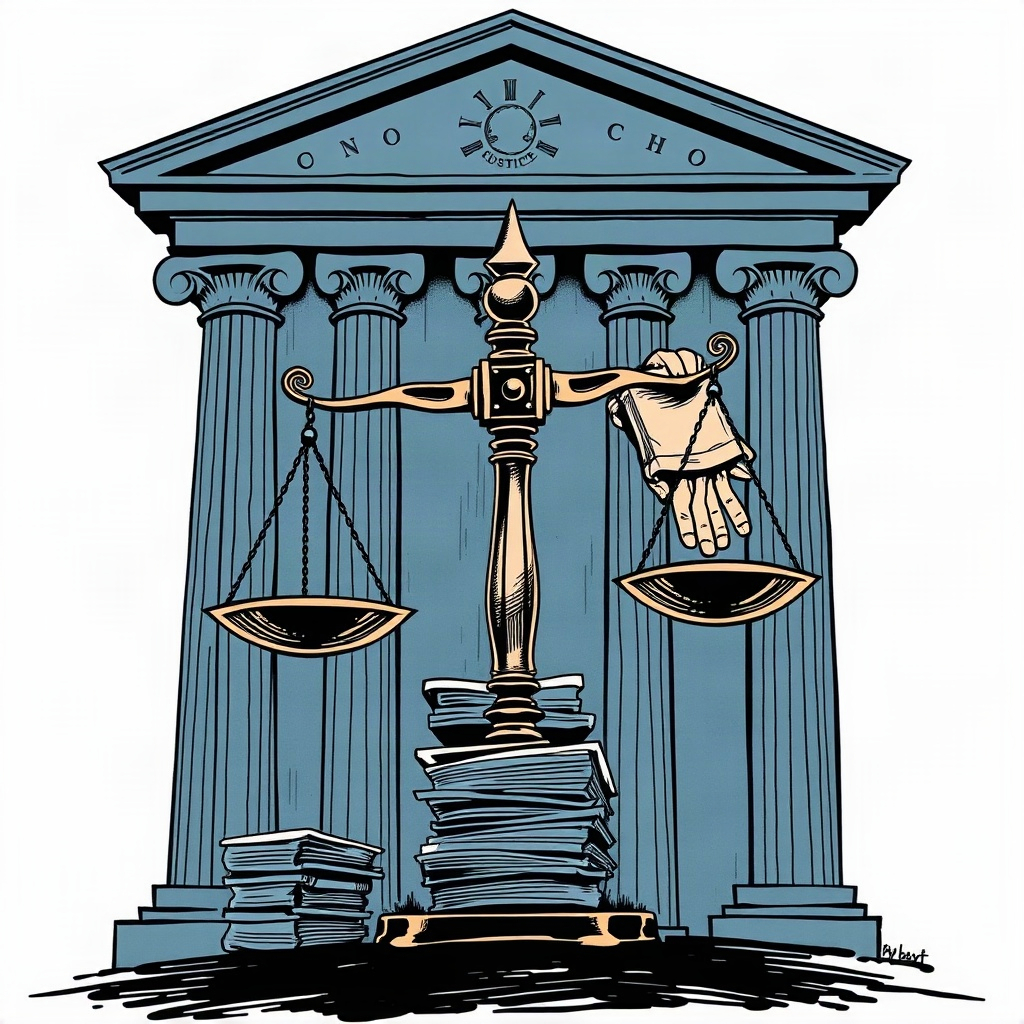
United States Department of Justice · Federal department, US Government
The United States Department of Justice, the executive department responsible for federal law enforcement and the administration of justice, occupies a central and deeply contentious position in the Jeffrey Epstein saga. Through its subordinate entities—including the Federal Bureau of Investigation, various U.S. Attorneys' Offices, the Federal Bureau of Prisons, and independent oversight divisions—the Justice Department interacted with Epstein across two decades. The trajectory of those interactions shifted from what federal courts later characterized as an unlawful shielding of the financier in South Florida to a high-profile prosecution in Manhattan, concluding with catastrophic administrative failure within a federal detention facility. The institutional record illustrates how prosecutorial discretion, bureaucratic inertia, and inter-agency discord defined the federal government's handling of one of the most prolific sex trafficking enterprises in modern American history.
The Department's involvement began in earnest in 2006, when the FBI initiated a federal investigation code-named Operation Leap Year following an inquiry launched by the Palm Beach Police Department. Agents documented credible evidence of dozens of underage victims who had been solicited to Epstein’s Palm Beach mansion. By 2007, federal prosecutors in the U.S. Attorney’s Office for the Southern District of Florida had drafted a comprehensive 53-page indictment charging Epstein with multiple federal crimes, including sex trafficking of minors and child pornography. However, under the direction of then-U.S. Attorney Alexander Acosta, the office entered into prolonged, contentious negotiations with Epstein’s high-powered legal defense team. Rather than proceeding to a federal grand jury with the drafted charges, Acosta approved a secret Non-Prosecution Agreement in September 2007, formalized in 2008.
The resulting agreement is widely regarded in legal scholarship as unprecedented in scope. Under the terms of the Florida agreement, the federal government agreed not to prosecute Epstein for any federal crimes related to the underlying conduct, provided he pleaded guilty to two state-level charges in Florida involving the solicitation of prostitution. Crucially, the Justice Department inserted an extraordinary non-prosecution clause that extended blanket immunity to any potential co-conspirators of Epstein, effectively halting potential federal charges against employees, recruiters, and associates. Federal prosecutors also actively concealed the existence of this arrangement from the victims, explicitly directing that negotiations remain secret to prevent the women and girls from mounting a legal challenge before the deal was signed. Epstein subsequently served thirteen months in a local county jail under extremely liberal work-release conditions that permitted him to spend up to twelve hours a day at his private office.
Related articles
Jeffrey Epstein and Central Intelligence Agency (CIA)
An investigative review of alleged ties between Jeffrey Epstein and the CIA, examining FOIA filings, Acosta's remarks, and official calendar records.
Read article →
Jeffrey Epstein and Federal Bureau of Investigation (FBI)
An investigative analysis of Jeffrey Epstein's decades-long history with the FBI, from the 2006 Palm Beach probe to the 2019 Manhattan raid and FOIA files.
Read article →
Jeffrey Epstein and Secret Intelligence Service (MI6)
Investigative analysis of Jeffrey Epstein's alleged links to Britain's Secret Intelligence Service (MI6), Ghislaine Maxwell, and elite UK networks.
Read article →

Jeffrey Epstein and Directorate-General for External Security (DGSE)
Investigating allegations and public records regarding Jeffrey Epstein, his Paris operations, and France's foreign intelligence agency, the DGSE.
Read article →