Jeffrey Epstein &
Turki bin Faisal Al Saud
Former Saudi Intelligence Chief and Ambassador
Key Facts
Head of Saudi Intelligence (1977–2001); Ambassador to the UK (2003–2005); Ambassador to the US (2005–2007)
Official Titles
Official Diplomatic Records
Direct contact numbers and residences listed in Epstein's private contact directory ('little black book')
Documentary Evidence
Epstein Address Book (2009 exhibit)
Zero recorded flights aboard Epstein's aircraft attributed to Prince Turki
Flight Log Evidence
David Rodgers Flight Manifests
Never named as a defendant, co-conspirator, or perpetrator in any civil or criminal Epstein filing
Legal Status
SDNY Court Filings
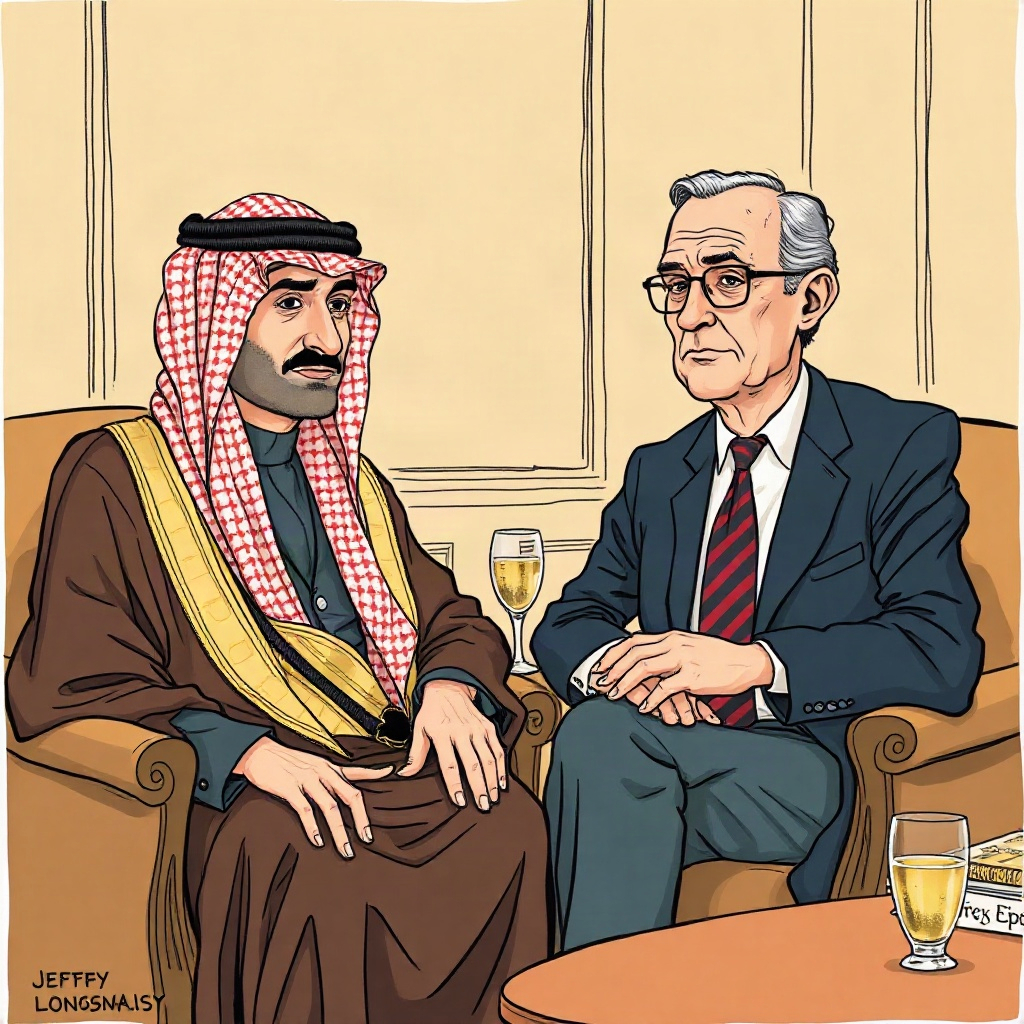
Turki bin Faisal Al Saud · Former Saudi Intelligence Chief and Ambassador
In the decades preceding his 2019 federal indictment for sex trafficking, Jeffrey Epstein assiduously cultivated a global Rolodex designed to project unmatched financial, political, and intelligence influence. Among the foreign dignitaries, royal family members, and intelligence figures documented in Epstein’s personal archives was Prince Turki bin Faisal Al Saud, the long-serving former director general of Saudi Arabia's General Intelligence Directorate and former ambassador to both the United Kingdom and the United States. While the public record does not implicate Prince Turki in Epstein’s sex trafficking operations or criminal enterprises, the presence of his direct contact details within Epstein’s records illustrates how the disgraced financier deliberately positioned himself adjacent to top-tier geopolitical figures.
Prince Turki bin Faisal, a prominent son of the late King Faisal, was one of Saudi Arabia’s most consequential national security figures during the late twentieth and early twenty-first centuries. Between 1977 and August 2001, he led Al Mukhabarat Al A'amah, the Kingdom’s primary foreign intelligence agency, overseeing critical covert operations during the Soviet-Afghan War and navigating delicate diplomatic channels with Western intelligence agencies. After stepping down from his intelligence post mere days before the September 11 attacks, Prince Turki transitioned into high-level diplomatic service, serving as the Saudi ambassador to the Court of St. James's in London from 2003 to 2005, and subsequently as ambassador to the United States from 2005 to 2007. Following his diplomatic retirement, he remained a fixture on the international policy circuit as the chairman of the King Faisal Center for Research and Islamic Studies and a frequent participant at elite global gatherings, including the World Economic Forum in Davos.
The concrete documentation linking Prince Turki to Epstein derives principally from Epstein’s curated contact directories, commonly referred to in investigative reporting as the "little black book." The directory, compiled in the mid-2000s by Epstein’s personal assistants and subsequently entered into public records through legal proceedings and police disclosures, contained direct phone numbers, residence details, and office extensions for Prince Turki across Riyadh and London. In investigative journalism and criminal proceedings, address books do not constitute evidence of criminal complicity; they often represent one-sided compilations of contact data acquired through social introductions, public directories, or administrative staff. However, the specificity of the contact entries for Prince Turki demonstrates that Epstein’s staff maintained direct lines of communication to the prince’s diplomatic and personal offices during his tenure abroad.
Related articles
Jeffrey Epstein and Central Intelligence Agency (CIA)
An investigative review of alleged ties between Jeffrey Epstein and the CIA, examining FOIA filings, Acosta's remarks, and official calendar records.
Read article →
Jeffrey Epstein and Federal Bureau of Investigation (FBI)
An investigative analysis of Jeffrey Epstein's decades-long history with the FBI, from the 2006 Palm Beach probe to the 2019 Manhattan raid and FOIA files.
Read article →
Jeffrey Epstein and Secret Intelligence Service (MI6)
Investigative analysis of Jeffrey Epstein's alleged links to Britain's Secret Intelligence Service (MI6), Ghislaine Maxwell, and elite UK networks.
Read article →
Jeffrey Epstein and Directorate-General for External Security (DGSE)
Investigating allegations and public records regarding Jeffrey Epstein, his Paris operations, and France's foreign intelligence agency, the DGSE.
Read article →