Jeffrey Epstein &
Trilateral Commission
International policy discussion group
Key Facts
Never held official membership on any Trilateral Commission roster
Official Membership Status
Trilateral Commission Annual Directories
Maintained documented contact with prominent members including David Rockefeller, Larry Summers, and George Mitchell
Documented Member Overlaps
SDNY Unsealed Civil Filings
Directed over $9 million in donations to Harvard University during Larry Summers' presidency
Academic Funding Intersect
Harvard University Review (2020)
Zero formal financial transactions found between Epstein foundations and the Trilateral Commission directly
Institutional Affiliation
DOJ Inspector General Report (2023)
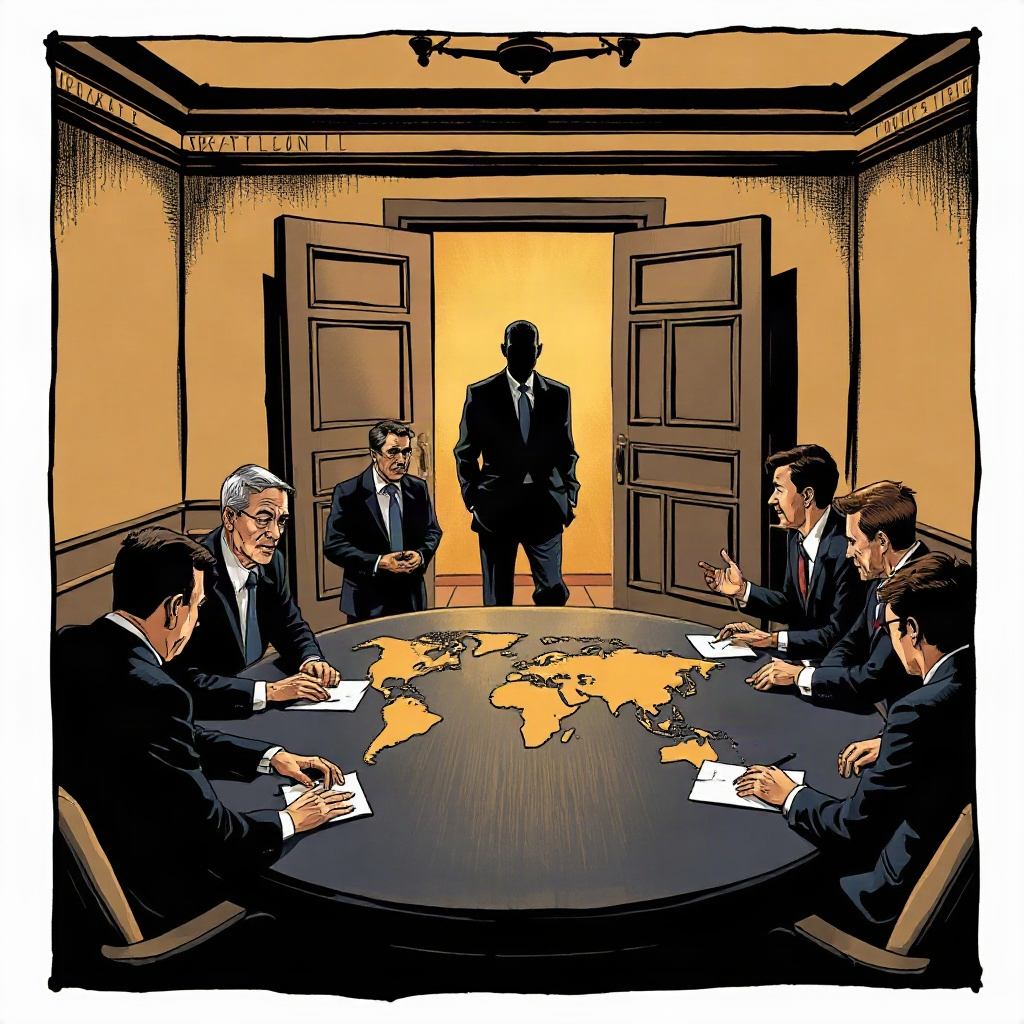
Trilateral Commission · International policy discussion group
Established in 1973 by philanthropist David Rockefeller and geopolitical strategist Zbigniew Brzezinski, the Trilateral Commission was created to foster non-governmental collaboration among political, academic, and business leaders across North America, Western Europe, and Japan. For half a century, the elite private forum has drawn intense scrutiny from foreign policy researchers and conspiracy theorists alike, functioning as a nexus of global influence alongside organizations like the Council on Foreign Relations and the Bilderberg Meeting. When Jeffrey Epstein was arrested in July 2019 on federal sex trafficking charges, public interest quickly gravitated toward the financier's sprawling Rolodex, prompting investigative journalists to examine whether Epstein held formal ties to the Trilateral Commission or merely operated within its orbit.
An exhaustive review of official Trilateral Commission membership rosters from 1973 through the present indicates that Jeffrey Epstein was never listed as an official member. The Commission maintains published annual directories of its participants, which require formal election and sponsorship by regional executive committees. Epstein never appeared on these rosters, nor do institutional archives indicate that he addressed the plenary assemblies held across global financial capitals. However, the absence of a formal credential obscures a more nuanced reality revealed by flight logs, court filings, and Epstein's personal telephone directories: Epstein successfully inserted himself into the immediate social and philanthropic circles of the Commission's most prominent founders, leaders, and longtime participants.
Epstein’s closest structural connection to the Trilateral Commission emerged through his longstanding proximity to its founder, David Rockefeller, and the broader philanthropic infrastructure that sustained the organization. During the late 1990s and early 2000s, Epstein cultivated an identity as a financial whisperer and private wealth manager to billionaires, leveraging that reputation to enter high-level geopolitical discussions. Phone logs entered into evidence during the 2021 federal trial of Ghislaine Maxwell and records obtained through Freedom of Information Act disclosures reveal multiple interactions between Epstein’s staff and Rockefeller’s administrative offices. While no evidence suggests Epstein advised the Rockefeller family on policy, he regularly utilized the veneer of Rockefeller-backed enterprises, including the Council on Foreign Relations and the Trilateral Commission, to establish credibility with foreign dignitaries and American policy elites.
Related articles
Jeffrey Epstein and Central Intelligence Agency (CIA)
An investigative review of alleged ties between Jeffrey Epstein and the CIA, examining FOIA filings, Acosta's remarks, and official calendar records.
Read article →
Jeffrey Epstein and Federal Bureau of Investigation (FBI)
An investigative analysis of Jeffrey Epstein's decades-long history with the FBI, from the 2006 Palm Beach probe to the 2019 Manhattan raid and FOIA files.
Read article →
Jeffrey Epstein and Secret Intelligence Service (MI6)
Investigative analysis of Jeffrey Epstein's alleged links to Britain's Secret Intelligence Service (MI6), Ghislaine Maxwell, and elite UK networks.
Read article →

Jeffrey Epstein and Directorate-General for External Security (DGSE)
Investigating allegations and public records regarding Jeffrey Epstein, his Paris operations, and France's foreign intelligence agency, the DGSE.
Read article →