Jeffrey Epstein &
Swiss Federal Department of Justice and Police
Swiss Federal Government Department
Key Facts
Swiss Federal Office of Justice (FOJ / BJ), a division of the FDJP
Competent Authority
Swiss Federal Office of Justice
Bilateral Treaty on Mutual Legal Assistance in Criminal Matters (MLAT) between the US and Switzerland
Legal Mechanism
FOJ Procedural Rules
Banque Privée Edmond de Rothschild (Geneva), which held Epstein accounts and records
Key Financial Institution
The Wall Street Journal (2023)
No independent domestic criminal charges were initiated against Epstein on Swiss territory prior to his death
Swiss Criminal Proceedings
FDJP Public Record
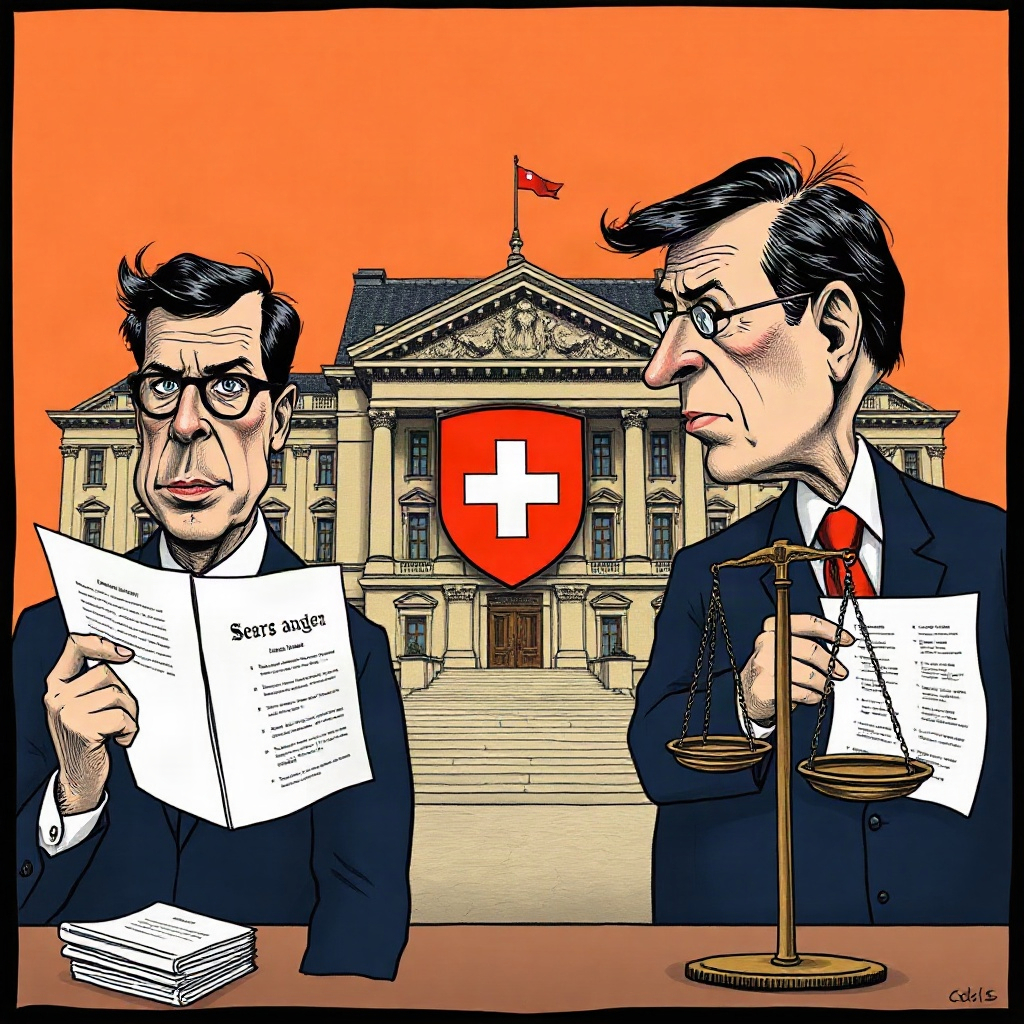
Swiss Federal Department of Justice and Police · Swiss Federal Government Department
The Swiss Federal Department of Justice and Police, known natively as the Eidgenössisches Justiz- und Polizeidepartement or Département fédéral de justice et police, serves as the central executive authority overseeing internal security, federal police services, and cross-border judicial cooperation in Switzerland. Within its administrative apparatus, two specific divisions bear direct relevance to transnational criminal investigations: the Federal Office of Justice, which manages foreign mutual legal assistance treaties and extradition requests, and the Federal Office of Police, colloquially known as Fedpol. In the wake of Jeffrey Epstein's July 2019 arrest and subsequent death, the department found itself positioned at the bureaucratic crossroads of multi-jurisdictional efforts to trace the financier's vast offshore wealth, banking relationships, and potential European logistical footprints.
Switzerland's historic role as a global private wealth hub made it a natural jurisdiction of interest for federal prosecutors from the Southern District of New York and agents from the Federal Bureau of Investigation. For decades, Epstein utilized an opaque architecture of shell companies, trusts, and foreign financial intermediaries to route tens of millions of dollars across international borders. Following his federal indictment on sex trafficking charges, American authorities initiated formal inquiries to identify accounts, liquid assets, and real estate holdings tied to Epstein and his inner circle. Because foreign law enforcement agencies cannot unilaterally seize assets or compel witness testimony on Swiss territory, formal requests for mutual legal assistance had to be routed directly through the Swiss Federal Office of Justice in Bern, which determines whether incoming foreign petitions satisfy domestic legal thresholds.
According to Swiss public records and verified statements from the Federal Office of Justice in late 2019, American authorities filed formal mutual legal assistance requests seeking records from multiple financial institutions operating within the cantons of Geneva and Zurich. Epstein had maintained longstanding relationships with several prominent private banks, most notably Banque Privée Edmond de Rothschild in Geneva. Reporting and subsequent document releases confirmed that Epstein held personal and corporate accounts at the institution and engaged in direct advisory interactions with its senior leadership, including Chairwoman Ariane de Rothschild. The Swiss justice department was tasked with reviewing whether the American subpoenas conformed to the bilateral treaty framework, which mandates that the underlying allegations constitute crimes under Swiss penal law—a requirement readily satisfied by the allegations of human trafficking and financial fraud.
Related articles
Jeffrey Epstein and Central Intelligence Agency (CIA)
An investigative review of alleged ties between Jeffrey Epstein and the CIA, examining FOIA filings, Acosta's remarks, and official calendar records.
Read article →

Jeffrey Epstein and Federal Bureau of Investigation (FBI)
An investigative analysis of Jeffrey Epstein's decades-long history with the FBI, from the 2006 Palm Beach probe to the 2019 Manhattan raid and FOIA files.
Read article →

Jeffrey Epstein and Secret Intelligence Service (MI6)
Investigative analysis of Jeffrey Epstein's alleged links to Britain's Secret Intelligence Service (MI6), Ghislaine Maxwell, and elite UK networks.
Read article →

Jeffrey Epstein and Directorate-General for External Security (DGSE)
Investigating allegations and public records regarding Jeffrey Epstein, his Paris operations, and France's foreign intelligence agency, the DGSE.
Read article →