Key Facts
Former Assistant Attorney General for the Civil Rights Division (1973–1977)
Public Service Role
Department of Justice Historical Records
Subpoenaed witness; never accused of criminal conduct or complicity
Legal Status in Epstein Inquiries
Giuffre v. Maxwell Court Filings
2016 deposition transcript unsealed by SDNY in January 2024
Primary Court Record
Giuffre v. Maxwell, Docket Entry 1320
Listed with multiple phone numbers in Epstein's personal black book
Contact Directory Entry
SDNY Court Exhibit (2015)
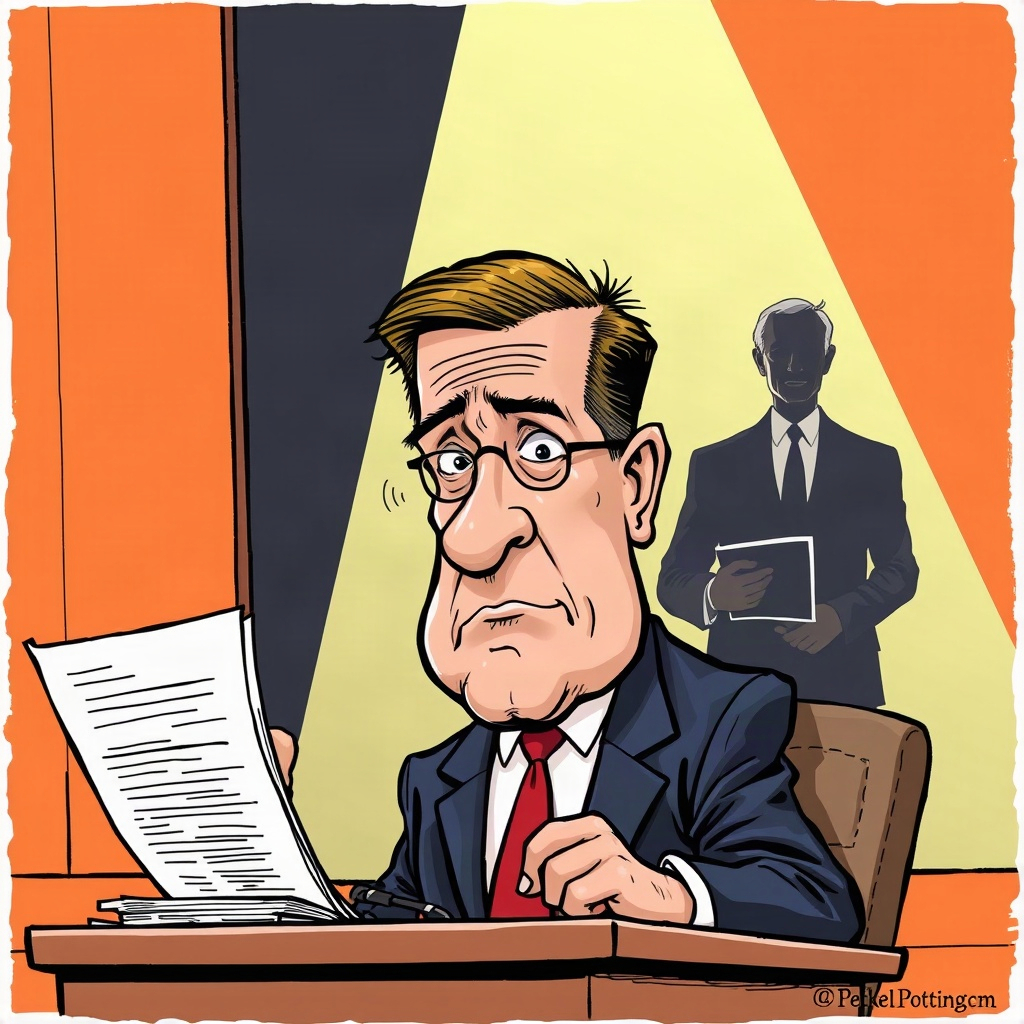
Stanley Pottinger · Former US Assistant Attorney General
In the sprawling catalog of prominent legal figures, financiers, and political operatives who intersected with Jeffrey Epstein, the name J. Stanley Pottinger occupies a distinct and legally significant position. A former high-ranking Department of Justice official who led the Civil Rights Division during the Nixon and Ford administrations, Pottinger built a career defined by establishment pedigree, elite social networks, and high-stakes legal advisory work. Decades after his tenure in Washington, Pottinger found himself drawn into the legal vortex surrounding Epstein, not as an accused perpetrator, but as an acquaintance and witness whose sworn deposition would eventually be scrutinized by federal courts and independent journalists seeking to understand the financier's orbit.
Born in 1940, John Stanley Pottinger rose to national prominence in the early 1970s. Appointed by President Richard Nixon as the director of the Department of Health, Education, and Welfare’s Office for Civil Rights, he was later elevated to Assistant Attorney General for the Civil Rights Division in 1973. In that role, Pottinger oversaw federal civil rights enforcement during a turbulent era, managing desegregation efforts and navigating the fallout of the Watergate scandal. Following his departure from government service in 1977, Pottinger transitioned into private legal practice, investment banking, and commercial writing, establishing residences and professional ties in Manhattan. His entry into New York's cultural and financial elite positioned him within the same affluent circles in which Epstein operated throughout the late 1990s and early 2000s.
The documentary record establishing Pottinger's connection to Epstein first emerged through Epstein’s personal contact directory, colloquially known as the black book, which entered the public domain during early civil proceedings. In these records, Pottinger was listed alongside multiple personal telephone numbers, reflecting direct channels of communication between the former federal prosecutor and the registered sex offender. While the presence of an individual in Epstein’s address book does not inherently prove active collaboration or misconduct, it demonstrated that Pottinger was among the network of influential figures with whom Epstein maintained direct and regular access in Manhattan.
Related articles

Jeffrey Epstein and Darren K. Indyke
Investigative profile of Darren K. Indyke, Jeffrey Epstein's longtime personal attorney, corporate architect, and co-executor of his estate.
Read article →

Jeffrey Epstein and Richard D. Kahn
Investigative profile of Richard D. Kahn, Jeffrey Epstein's long-time accountant and co-executor of his multi-million-dollar estate.
Read article →
Jeffrey Epstein and Michael F. McAuliffe
Investigative review of Michael F. McAuliffe, Palm Beach State Attorney who inherited Jeffrey Epstein's case file and work-release fallout.
Read article →

Jeffrey Epstein and A. Marie Villafaña
Investigative profile of federal prosecutor A. Marie Villafaña, who drafted Jeffrey Epstein's controversial 2007 non-prosecution agreement in Florida.
Read article →