Key Facts
Assistant United States Attorney, Southern District of Florida
Official Title
DOJ OPR Report (2020)
Lead line prosecutor who drafted the 2007 Non-Prosecution Agreement
Primary Role
Jane Doe 1 v. United States Court Filings
Federal court found prosecutors violated the Crime Victims' Rights Act by concealing negotiations
Judicial Finding
U.S. District Court Ruling (2019)
DOJ OPR cleared prosecutors of intentional misconduct while finding severe errors in judgment
Administrative Review Finding
DOJ OPR Report (2020)
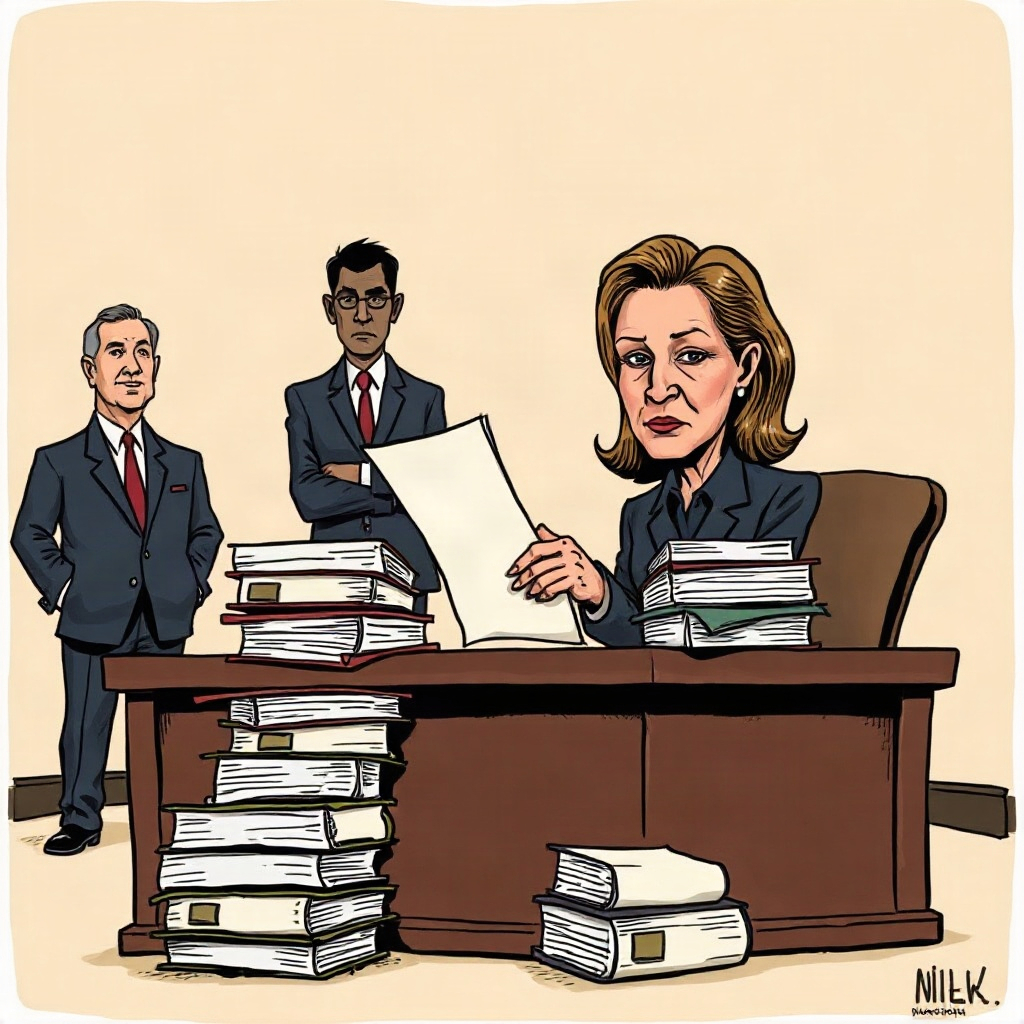
A. Marie Villafaña · Former Assistant U.S. Attorney
In the extensive legal history surrounding Jeffrey Epstein, few federal officials played a more pivotal operational role than A. Marie Villafaña. As an Assistant United States Attorney in the Southern District of Florida during the mid-2000s, Villafaña served as the lead line prosecutor assigned to evaluate and prosecute allegations that the financier was operating an expansive sex trafficking ring involving underage girls at his Palm Beach estate. While her superiors, most notably United States Attorney Alexander Acosta, ultimately shouldered political responsibility for the resolution of the case, it was Villafaña who handled day-to-day interactions with Epstein’s legal team, drafted the operative documents, and managed communications with victims and law enforcement investigators.
The federal investigation into Epstein began in 2006 after Palm Beach Police Chief Michael Reiter and detective Joseph Recarey grew alarmed by the reluctance of local state prosecutors to pursue felony sex offense charges aggressively. When federal authorities intervened, the Federal Bureau of Investigation launched Operation Leap Year, compiling corroborating testimony from dozens of minor victims, household staff, and telephone records. Working alongside FBI agents, Villafaña meticulously assembled evidence and drafted a comprehensive 53-page federal indictment. The draft document outlined severe federal charges, including conspiracy to entice minors to engage in prostitution and sex trafficking, which carried potential prison sentences spanning decades.
Despite the substantial evidence assembled, the trajectory of the prosecution shifted dramatically in 2007. Facing federal exposure, Epstein assembled an elite defense team composed of prominent attorneys, including Roy Black, Gerald Lefcourt, Jay Lefkowitz, Alan Dershowitz, and former federal prosecutor Martin Weinberg. The defense mounted an aggressive campaign directed at the leadership of the Southern District of Florida. Rather than taking the draft indictment before a grand jury, federal prosecutors entered closed-door negotiations to reach an extraordinary resolution that would keep Epstein out of federal prison.
Throughout the summer of 2007, Villafaña found herself at the center of negotiations with Epstein’s counsel. Public records released years later through civil litigation demonstrate that she engaged in frequent, granular correspondence regarding the terms of a proposed non-prosecution agreement. Defense lawyers pushed to ensure that Epstein would not plead guilty to any federal offense, that any jail time would be served locally under generous work-release provisions, and that the agreement would confer unprecedented immunity. The final Non-Prosecution Agreement, executed in September 2007, guaranteed that the federal government would not prosecute Epstein and extended sweeping non-prosecution protections to any potential unnamed co-conspirators. Villafaña was the primary signatory on behalf of the government for several key negotiating drafts and procedural letters that formalized the deal.
Related articles

Jeffrey Epstein and Darren K. Indyke
Investigative profile of Darren K. Indyke, Jeffrey Epstein's longtime personal attorney, corporate architect, and co-executor of his estate.
Read article →

Jeffrey Epstein and Richard D. Kahn
Investigative profile of Richard D. Kahn, Jeffrey Epstein's long-time accountant and co-executor of his multi-million-dollar estate.
Read article →
Jeffrey Epstein and Michael F. McAuliffe
Investigative review of Michael F. McAuliffe, Palm Beach State Attorney who inherited Jeffrey Epstein's case file and work-release fallout.
Read article →
Jeffrey Epstein and Gerald B. Lefcourt
Investigative report examining Gerald B. Lefcourt's role on Jeffrey Epstein's defense team and the controversial 2008 non-prosecution agreement.
Read article →