Jeffrey Epstein &
Spencer Kuvin
Attorney representing Jeffrey Epstein victims
Key Facts
Victims' rights and personal injury litigator representing multiple Epstein survivors.
Professional Role
Court filings, SD Fla.
West Palm Beach, Florida.
Primary Base of Operations
Florida Bar records
Courtney Wild, who initiated major federal legal actions under the Crime Victims' Rights Act.
Key Client
Jane Doe v. United States docket
Judicial finding in February 2019 that federal prosecutors violated federal law by concealing Epstein's 2008 plea agreement.
Key Courtroom Outcome
Order on CVRA, Judge Kenneth Marra (Feb 2019)
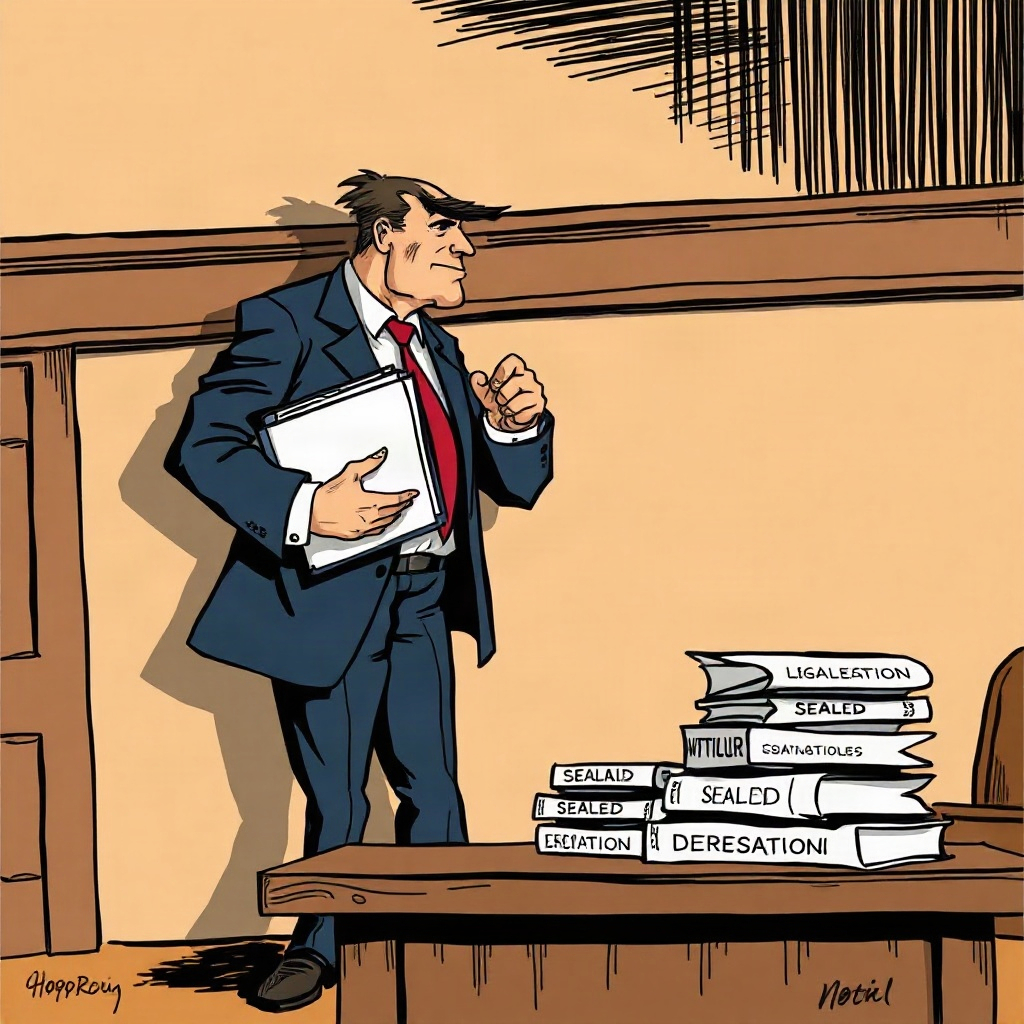
Spencer Kuvin · Attorney representing Jeffrey Epstein victims
In the long, fractured history of the legal proceedings surrounding Jeffrey Epstein, few attorneys sustained pressure against the financier's protective legal shield as early or as tenaciously as Spencer Kuvin. Based in West Palm Beach, Florida, Kuvin entered the Epstein saga in the late 2000s, not as an associate or confidant of the wealthy hedge fund manager, but as one of the primary legal champions for the adolescent girls and young women Epstein abused at his El Brillo Way mansion. Long before federal prosecutors in the Southern District of New York arrested Epstein in July 2019, Kuvin was navigating the labyrinth of Florida civil courts and federal dockets, seeking accountability against a defendant backed by immense wealth, political influence, and elite legal talent.
Kuvin's formal involvement began in the shadow of the controversial 2008 Non-Prosecution Agreement negotiated by then-U.S. Attorney Alexander Acosta and Epstein's defense team. While Palm Beach police detectives had gathered comprehensive evidence suggesting a predatory network that lured dozens of local underage girls into Epstein's residence between 2002 and 2005, the federal intervention truncated the investigation. Epstein was permitted to plead guilty in state court to two minor prostitution charges, securing an eighteen-month county jail sentence with extensive work-release privileges. Kuvin, working alongside co-counsel including civil litigator Bradley Edwards and victims' rights advocate Paul Cassell, took on the representation of several key survivors, most prominently Courtney Wild, who was just fourteen years old when Epstein first abused her.
The core of Kuvin's early work centered on uncovering the procedural anomalies that granted Epstein near-total immunity while leaving his victims completely uninformed. In federal court filings initiated under the Crime Victims' Rights Act, Kuvin and his colleagues argued that federal prosecutors violated federal law by intentionally concealing the non-prosecution agreement from victims while actively negotiating it with Epstein's attorneys. Court transcripts and contemporaneous correspondence revealed that prosecutors repeatedly assured the victims that the federal investigation remained ongoing, even after the clandestine agreement had already shielded Epstein and four named co-conspirators from federal prosecution in the Southern District of Florida.
Related articles
Jeffrey Epstein and Darren K. Indyke
Investigative profile of Darren K. Indyke, Jeffrey Epstein's longtime personal attorney, corporate architect, and co-executor of his estate.
Read article →

Jeffrey Epstein and Richard D. Kahn
Investigative profile of Richard D. Kahn, Jeffrey Epstein's long-time accountant and co-executor of his multi-million-dollar estate.
Read article →
Jeffrey Epstein and Michael F. McAuliffe
Investigative review of Michael F. McAuliffe, Palm Beach State Attorney who inherited Jeffrey Epstein's case file and work-release fallout.
Read article →
Jeffrey Epstein and A. Marie Villafaña
Investigative profile of federal prosecutor A. Marie Villafaña, who drafted Jeffrey Epstein's controversial 2007 non-prosecution agreement in Florida.
Read article →