Jeffrey Epstein &
Sigrid McCawley
Attorney representing Jeffrey Epstein victims
Key Facts
Lead civil litigator for Virginia Giuffre and primary legal adversary to Jeffrey Epstein and Ghislaine Maxwell
Role in Epstein Saga
Giuffre v. Maxwell (S.D.N.Y. 2015)
Managing Partner at Boies Schiller Flexner LLP
Law Firm Affiliation
Boies Schiller Flexner LLP
$290 million civil recovery for survivors of Epstein's trafficking network
JPMorgan Chase Settlement
Jane Doe 1 v. JPMorgan Chase & Co. (S.D.N.Y. 2023)
$75 million civil recovery for facilitating Epstein's financial operations
Deutsche Bank Settlement
Jane Doe 1 v. Deutsche Bank AG (S.D.N.Y. 2023)
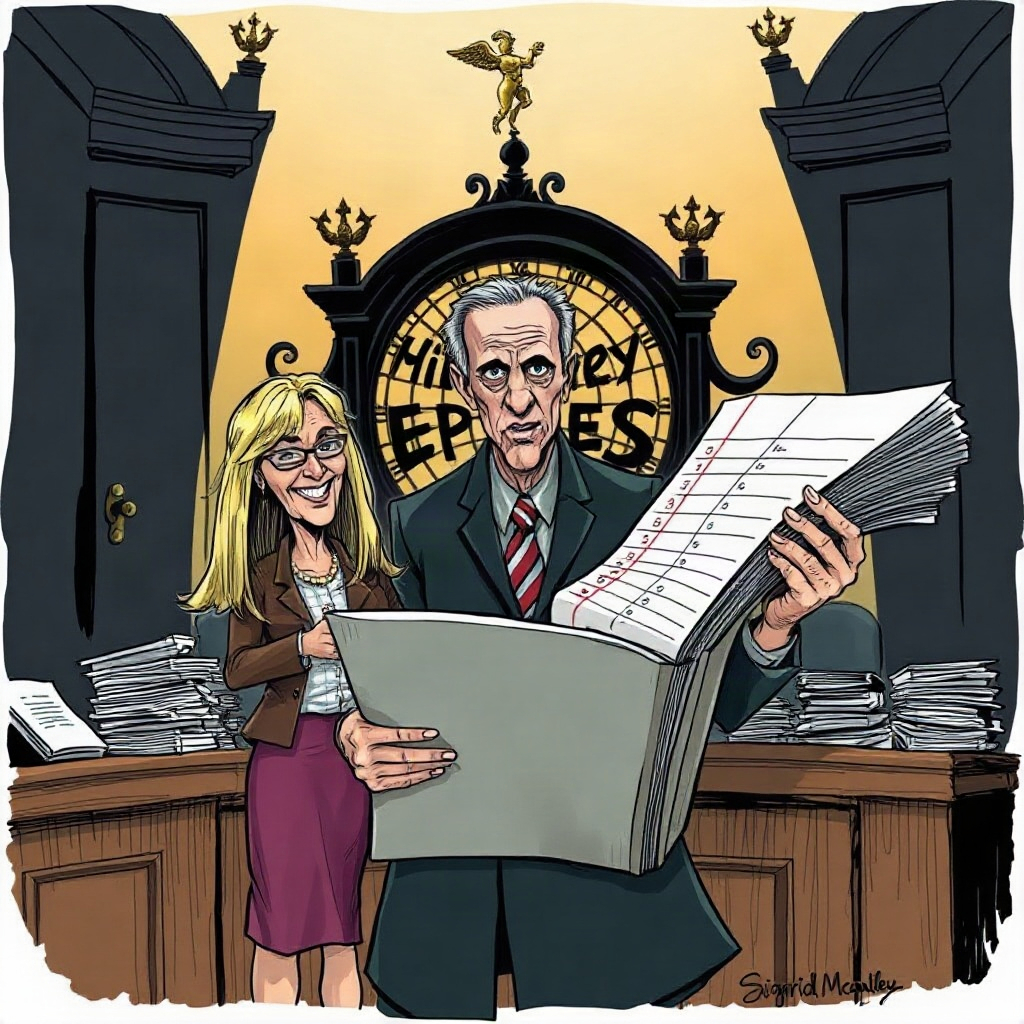
Sigrid McCawley · Attorney representing Jeffrey Epstein victims
In the sprawling, decades-long saga of Jeffrey Epstein, few legal figures have played as central a role in dismantling the financier's protective perimeter of secrecy as attorney Sigrid McCawley. Unlike the myriad associates, financiers, and high-society confidants who formed Epstein’s social network, McCawley’s connection to Epstein exists entirely on the adversarial front lines of the justice system. As a partner and eventual managing partner at the national litigation firm Boies Schiller Flexner LLP, McCawley became the principal legal architect behind the civil actions that exposed Epstein’s sex-trafficking enterprise, compelled the unsealing of thousands of court records, and forced corporate and royal power structures into historic legal accountings.
McCawley first entered the Epstein orbit in late 2014 when she, alongside firm co-founder David Boies, took on the representation of Virginia Roberts Giuffre. At the time, Epstein was operating in the aftermath of his controversial 2008 non-prosecution agreement brokered with the U.S. Attorney’s Office for the Southern District of Florida. The agreement had effectively insulated Epstein and any potential co-conspirators from federal prosecution, leaving the survivors of his abuse with virtually no formal avenue for justice in criminal courts. McCawley identified civil litigation as the sole viable mechanism to bypass the Florida pact and pierce the non-disclosure agreements that kept Epstein's network shielded from public scrutiny.
The breakthrough came in September 2015, when McCawley filed a civil defamation lawsuit on Giuffre’s behalf in the United States District Court for the Southern District of New York against Ghislaine Maxwell. Maxwell had publicly labeled Giuffre a liar after Giuffre accused Maxwell of acting as Epstein’s central recruiter and facilitator. By structuring the action as a defamation claim rather than a time-barred tort, McCawley opened the expansive discovery powers of the federal courts. Over the next eighteen months, McCawley spearheaded a relentless evidentiary offensive, subpoenaing flight logs, telephone message pads, household records, and testimony from across Epstein’s international properties in Palm Beach, Manhattan, New Mexico, and the U.S. Virgin Islands.
Central to McCawley’s evidentiary strategy were her aggressive depositions of Maxwell in April and July of 2016. In contentious questioning sessions that spanned hours, McCawley systematically pinned Maxwell down on the operational details of Epstein’s residences, the identities of visiting guests, and the recruitment of underage girls. Maxwell’s repeated denials under oath—which McCawley proved contradictory to documentary evidence and corroborating witness testimony—ultimately established the evidentiary foundation for the federal criminal perjury charges later brought against Maxwell by the Southern District of New York in 2020.
Related articles

Jeffrey Epstein and Darren K. Indyke
Investigative profile of Darren K. Indyke, Jeffrey Epstein's longtime personal attorney, corporate architect, and co-executor of his estate.
Read article →

Jeffrey Epstein and Richard D. Kahn
Investigative profile of Richard D. Kahn, Jeffrey Epstein's long-time accountant and co-executor of his multi-million-dollar estate.
Read article →
Jeffrey Epstein and Michael F. McAuliffe
Investigative review of Michael F. McAuliffe, Palm Beach State Attorney who inherited Jeffrey Epstein's case file and work-release fallout.
Read article →

Jeffrey Epstein and A. Marie Villafaña
Investigative profile of federal prosecutor A. Marie Villafaña, who drafted Jeffrey Epstein's controversial 2007 non-prosecution agreement in Florida.
Read article →