Jeffrey Epstein &
Sergey Kislyak
Former Russian Ambassador to the US
Key Facts
Russian Ambassador to the United States from 2008 to 2017
Sergey Kislyak's Official Role
Russian Ministry of Foreign Affairs
None publicly verified between Epstein and Kislyak in released flight logs or calendars
Documented Direct Meetings
Public Records and Schedule Disclosures
At least eight scheduled meetings between Epstein and Russian UN Ambassador Vitaly Churkin (2015–2017)
Documented Russian Diplomatic Contact
Wall Street Journal (2023)
International Peace Institute (IPI) and broader New York/Washington foreign policy diplomatic circuits
Shared Institutional Overlap
Independent IPI Review (2020)
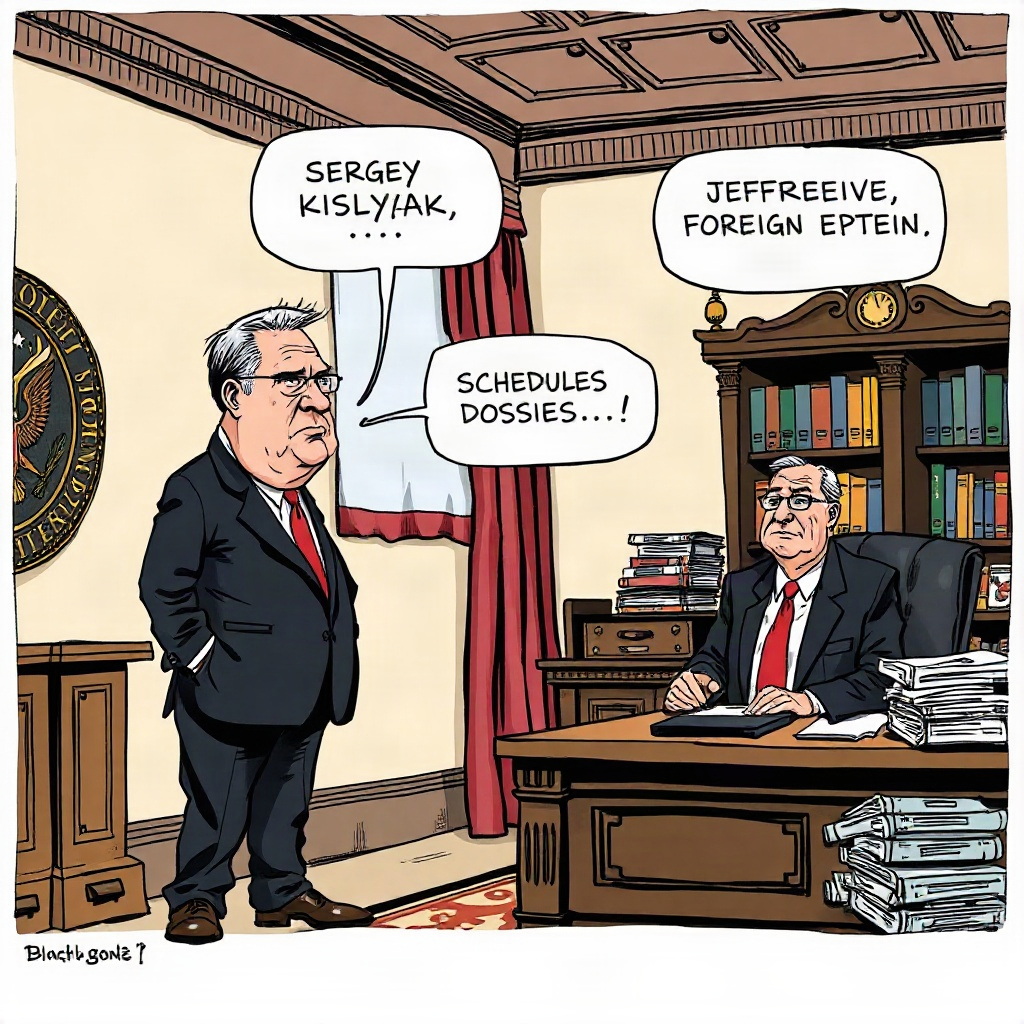
Sergey Kislyak · Former Russian Ambassador to the US
In the ongoing public effort to map Jeffrey Epstein’s vast web of geopolitical influence, researchers and investigative journalists have routinely scrutinized his ties to foreign diplomats and international statecraft. Among the foreign delegations under persistent examination is the Russian diplomatic corps, whose members frequently moved through the elite New York and Washington circles Epstein assiduously cultivated. While Jeffrey Epstein’s documented calendar entries revealed extensive engagements with Russia’s United Nations ambassador, Vitaly Churkin, questions have long lingered regarding whether his network also intersected with Sergey Ivanovich Kislyak, the longtime Russian Ambassador to the United States whose tenure made him one of the most consequential and scrutinized foreign envoys in modern American history.
Sergey Kislyak served as the Russian Federation’s chief diplomat in Washington from 2008 until his departure in August 2017. A career Soviet and Russian foreign service officer trained in engineering and physics, Kislyak previously held high-ranking posts including ambassador to Belgium, representative to NATO, and deputy foreign minister. In Washington, he was known as a relentless networker, hosting lavish dinners at the Russian Embassy on Wisconsin Avenue and maintaining regular access to American lawmakers, corporate executives, and policy experts. Kislyak became a central figure in American political discourse during the 2016–2017 counterintelligence investigations led by the Department of Justice and Special Counsel Robert Mueller, which closely examined his contacts with members of Donald Trump’s transition team, most notably incoming National Security Advisor Michael Flynn.
Epstein’s appetite for cultivating foreign dignitaries was not merely incidental; it was a cornerstone of his post-conviction rehabilitation strategy. Following his lenient 2008 Florida guilty plea for soliciting prostitution from a minor, Epstein leveraged his wealth, philanthropic donations, and real estate to embed himself in global diplomatic networks. A sweeping 2023 review of Epstein’s private schedules and appointment logs by The Wall Street Journal proved that Epstein successfully engineered high-level access to the Russian government. Between 2015 and early 2017, Epstein scheduled at least eight separate private meetings with Russia’s Permanent Representative to the United Nations, Vitaly Churkin, often brokered through figures such as Norwegian diplomat Terje Rød-Larsen, then head of the International Peace Institute. These meetings placed Epstein in direct, recurring dialogue with the highest tier of Russian foreign policy representation on American soil.
Related articles
Jeffrey Epstein and Central Intelligence Agency (CIA)
An investigative review of alleged ties between Jeffrey Epstein and the CIA, examining FOIA filings, Acosta's remarks, and official calendar records.
Read article →
Jeffrey Epstein and Federal Bureau of Investigation (FBI)
An investigative analysis of Jeffrey Epstein's decades-long history with the FBI, from the 2006 Palm Beach probe to the 2019 Manhattan raid and FOIA files.
Read article →
Jeffrey Epstein and Secret Intelligence Service (MI6)
Investigative analysis of Jeffrey Epstein's alleged links to Britain's Secret Intelligence Service (MI6), Ghislaine Maxwell, and elite UK networks.
Read article →

Jeffrey Epstein and Directorate-General for External Security (DGSE)
Investigating allegations and public records regarding Jeffrey Epstein, his Paris operations, and France's foreign intelligence agency, the DGSE.
Read article →