Jeffrey Epstein &
Security Service (MI5)
UK Domestic Counter-Intelligence Agency
Key Facts
MI5 is fully exempt from the UK Freedom of Information Act under Section 23
Statutory FOIA Status
Freedom of Information Act 2000
Met Police Royalty and Specialist Protection coordinates directly with MI5 for threat assessments
Royal Security Liaison
Metropolitan Police Service
MI5 maintained extensive surveillance files on Robert Maxwell, released via The National Archives
Maxwell File Declassification
The National Archives Kew
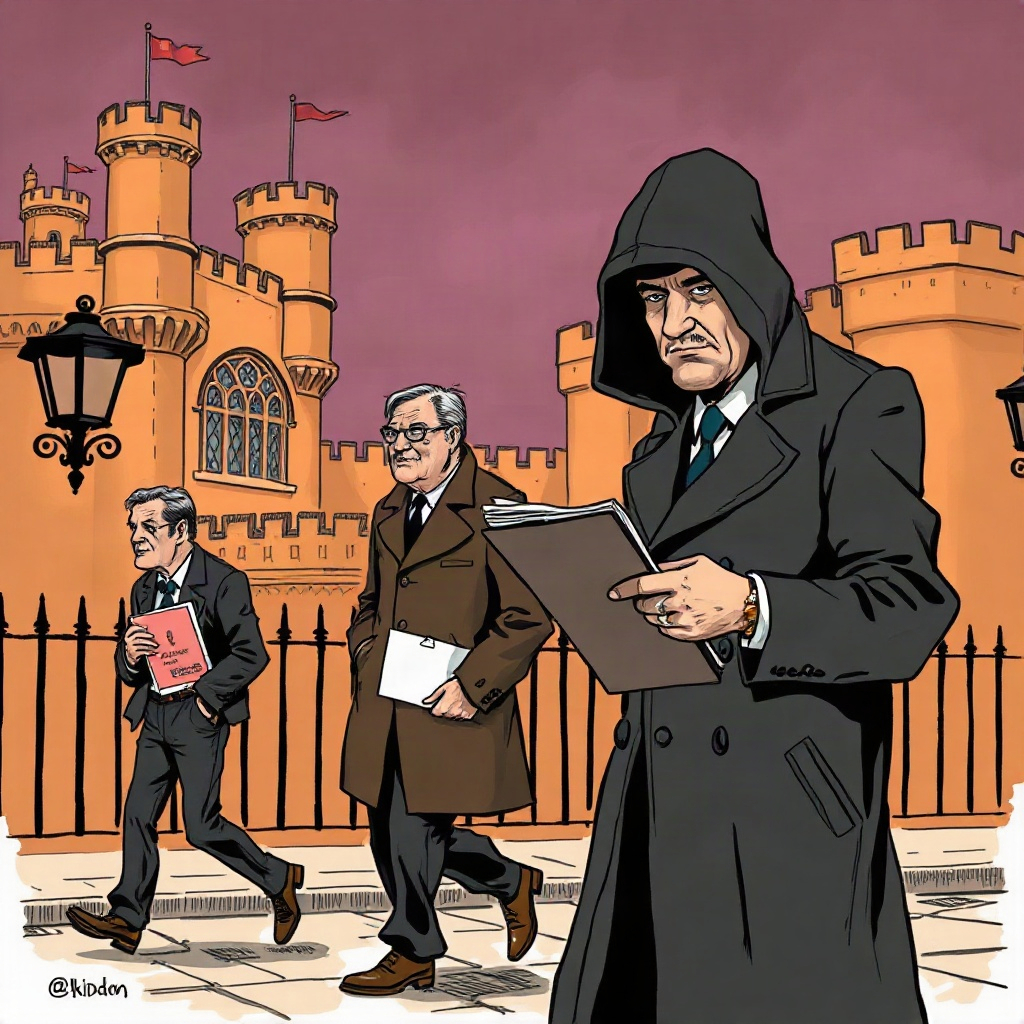
Security Service (MI5) · UK Domestic Counter-Intelligence Agency
The Security Service, commonly designated as MI5, serves as the United Kingdom domestic counter-intelligence and security agency, operating under the authority of the Home Secretary. Its statutory mandate, outlined in the Security Service Act 1989, encompasses the protection of national security against espionage, sabotage, terrorism, and foreign interference, alongside providing protective security advice to state institutions and the British Royal Family. In the years following the federal indictment and subsequent death of convicted sex offender Jeffrey Epstein, researchers, investigative journalists, and parliamentarians have closely examined whether MI5 or affiliated British security bodies held files, issued warnings, or maintained surveillance regarding Epstein and his circle of British associates.
The nexus between Epstein and the British security apparatus primarily intersects through his longstanding relationship with Prince Andrew, Duke of York, as well as his close partnership with Ghislaine Maxwell. As a working member of the Royal Family and, from 2001 to 2011, the United Kingdom Special Representative for International Trade and Investment, Prince Andrew was assigned round-the-clock armed personal protection officers from the Metropolitan Police Royalty and Specialist Protection Command. While the Metropolitan Police provides executive protection, threat assessments and background intelligence vetting concerning foreign figures brought into royal residences are coordinated closely with the Security Service. Unsealed court documents, flight logs, and photographic evidence confirm that Epstein visited royal properties on multiple occasions, including Windsor Castle, Sandringham House, and the royal estate at Balmoral, between the late 1990s and the early 2000s.
The presence of an American financier with an opaque fortune and an entourage of young women inside sovereign royal residences has prompted sustained questions regarding the efficacy of British security vetting. Official records establish that Epstein attended a dance at Windsor Castle in June 2000 to celebrate Prince Andrew's fortieth birthday, an event attended by senior members of the royal family. Under standard security protocols, non-royal attendees of private functions inside royal palaces are subject to background checks that draw upon police databases and security service holdings. Despite these mechanisms, public records show no indication that any security intervention occurred to restrict Epstein's access prior to his initial 2006 indictment in Palm Beach, Florida.
Related articles
Jeffrey Epstein and Central Intelligence Agency (CIA)
An investigative review of alleged ties between Jeffrey Epstein and the CIA, examining FOIA filings, Acosta's remarks, and official calendar records.
Read article →
Jeffrey Epstein and Federal Bureau of Investigation (FBI)
An investigative analysis of Jeffrey Epstein's decades-long history with the FBI, from the 2006 Palm Beach probe to the 2019 Manhattan raid and FOIA files.
Read article →
Jeffrey Epstein and Secret Intelligence Service (MI6)
Investigative analysis of Jeffrey Epstein's alleged links to Britain's Secret Intelligence Service (MI6), Ghislaine Maxwell, and elite UK networks.
Read article →
Jeffrey Epstein and Directorate-General for External Security (DGSE)
Investigating allegations and public records regarding Jeffrey Epstein, his Paris operations, and France's foreign intelligence agency, the DGSE.
Read article →