Key Facts
Criminal defense attorney representing Epstein's MCC cellmate Nicholas Tartaglione
Professional Role
U.S. District Court SDNY Filings (2019)
Maintained Tartaglione did not assault Epstein but summoned guards to save Epstein's life
July 23, 2019 Account
NBC News Interview (July 2019)
Exposed the accidental deletion and mishandling of MCC surveillance camera footage by federal authorities
Evidentiary Impact
SDNY Court Letter (January 2020)
DOJ Inspector General substantiated that no physical assault occurred during the July 23 incident
Official Confirmation
DOJ OIG Report (June 2023)
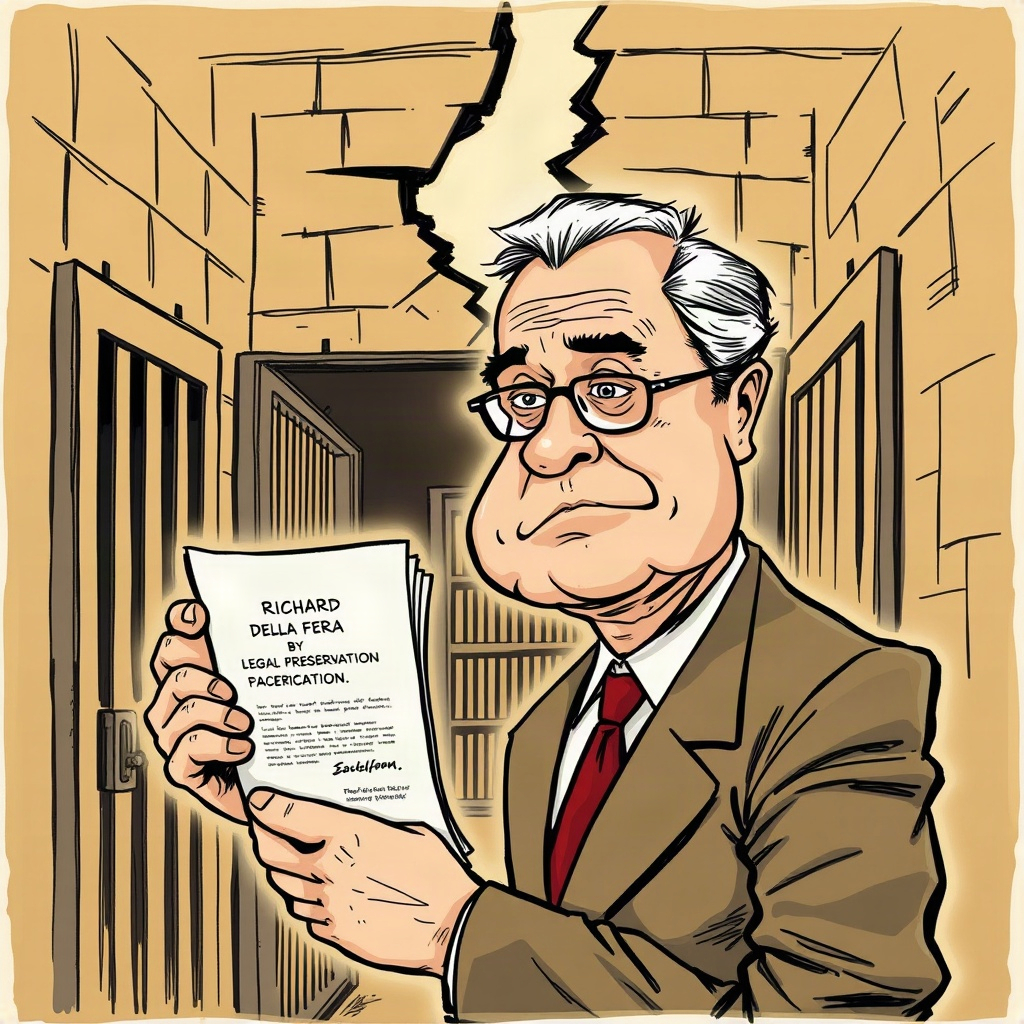
Richard Della Fera · Criminal Defense Attorney
In the volatile weeks preceding Jeffrey Epstein's death in August 2019, the high-security Special Housing Unit of the Metropolitan Correctional Center in Lower Manhattan became the epicenter of an unfolding institutional failure. When federal prosecutors from the Southern District of New York arrested Epstein on sex trafficking charges on July 6, 2019, the financier was assigned to cell eleven on the ninth floor of the federal facility. His assigned cellmate was Nicholas Tartaglione, a former Briarcliff Manor police officer awaiting capital trial on charges involving a four-victim gang-related homicide. Enter Richard Della Fera, a veteran Florida criminal defense attorney retained to represent Tartaglione. While Della Fera never represented Epstein himself, his public statements, formal court motions, and aggressive pushback against initial institutional leaks positioned him as one of the few legal actors with direct visibility into Epstein's turbulent final weeks behind bars.
The relationship between Della Fera and the Epstein saga emerged abruptly in the early morning hours of July 23, 2019. Corrections officers discovered Epstein injured and semi-conscious on the floor of the cell he shared with Tartaglione, bearing visible marks across his neck. Preliminary internal prison reports and immediate media leaks suggested that Epstein had been violently assaulted by his cellmate, raising the specter that the disgraced financier was being targeted for extortion or physical retribution. Della Fera intervened swiftly to counter this narrative. In rapid-fire interviews with national media outlets and formal communications with the Federal Bureau of Prisons, Della Fera maintained that Tartaglione had not assaulted Epstein. Instead, the defense attorney asserted that Tartaglione had actively saved Epstein's life by shouting for guards and attempting to render aid after Epstein attempted to hang himself.
Della Fera's advocacy introduced a crucial counter-narrative into the public record at a time when the Department of Justice remained largely opaque. The attorney emphasized that his client had no motive to attack Epstein, noting that Tartaglione was already facing potential capital punishment and had every incentive to avoid administrative infractions. Della Fera told investigative reporters that Tartaglione and Epstein had coexisted without conflict in the confined space, engaging in routine conversations about legal strategy and prison conditions. According to Della Fera, Tartaglione described Epstein as anxious, despondent, and ill-equipped to survive the squalor, oppressive heat, and rodent infestation of the aging federal facility. By framing the July 23 event as an unambiguous suicide attempt rather than an assault, Della Fera challenged early Bureau of Prisons theories that Epstein's injuries resulted from an altercation, forcing federal investigators to examine the prison's own containment protocols.
Related articles

Jeffrey Epstein and Darren K. Indyke
Investigative profile of Darren K. Indyke, Jeffrey Epstein's longtime personal attorney, corporate architect, and co-executor of his estate.
Read article →

Jeffrey Epstein and Richard D. Kahn
Investigative profile of Richard D. Kahn, Jeffrey Epstein's long-time accountant and co-executor of his multi-million-dollar estate.
Read article →
Jeffrey Epstein and Michael F. McAuliffe
Investigative review of Michael F. McAuliffe, Palm Beach State Attorney who inherited Jeffrey Epstein's case file and work-release fallout.
Read article →
Jeffrey Epstein and A. Marie Villafaña
Investigative profile of federal prosecutor A. Marie Villafaña, who drafted Jeffrey Epstein's controversial 2007 non-prosecution agreement in Florida.
Read article →