Jeffrey Epstein &
Paul Cassell
Law Professor and Victims' Rights Attorney
Key Facts
Lead appellate attorney for Jeffrey Epstein's victims and former federal district judge
Role
S.J. Quinney College of Law faculty biography
Jane Doe 1 and Jane Doe 2 v. United States (08-cv-80736-KAM)
Key Litigation
U.S. District Court, S.D. Fla. Docket
Federal Crime Victims' Rights Act (CVRA), 18 U.S.C. § 3771
Statutory Focus
Eleventh Circuit en banc opinion (2021)
Federal court ruling that DOJ broke the law by concealing Epstein's 2007 plea deal from victims
Major Judicial Finding
Judge Kenneth Marra Memorandum Opinion (2019)
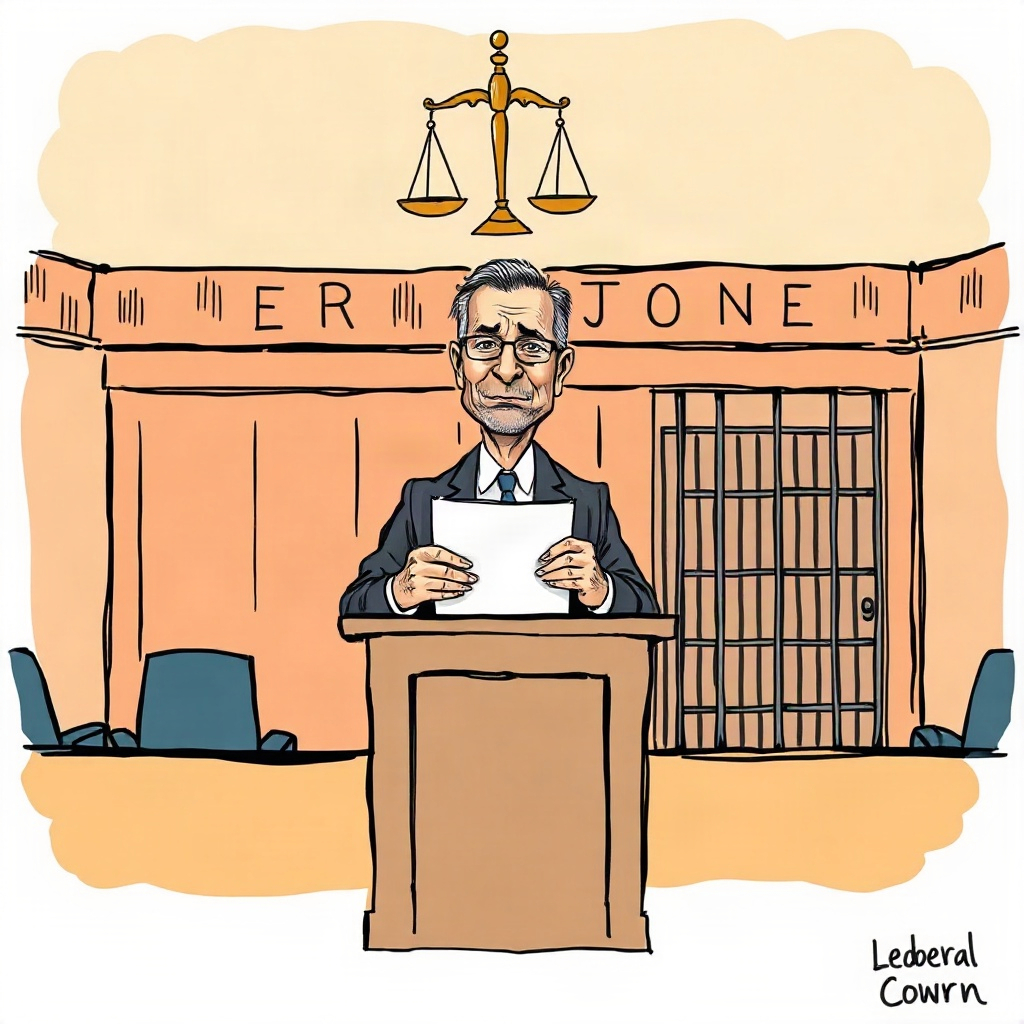
Paul Cassell · Law Professor and Victims' Rights Attorney
In the sprawling web of legal battles surrounding Jeffrey Epstein, few figures have exerted as profound an institutional impact as Paul G. Cassell. Unlike the social elites, financiers, and political operatives who populated Epstein’s private address books, Cassell’s relationship with the late financier was strictly adversarial. A former federal district judge and a preeminent professor of criminal law at the University of Utah’s S.J. Quinney College of Law, Cassell served as the chief appellate strategist and co-counsel alongside Florida attorney Bradley Edwards representing Epstein’s victims. For more than a decade, Cassell used federal courtrooms to expose the extraordinary legal maneuvers that had once shielded Epstein from federal sex-trafficking charges.
Cassell brought unique authority to the litigation. Appointed to the federal bench in 2002 by President George W. Bush, he had resigned in 2007 to return to academia and direct pro bono legal efforts for crime victims. Widely regarded as a principal architect of the federal Crime Victims’ Rights Act of 2004, Cassell recognized early on that the government’s handling of Epstein in the Southern District of Florida represented an unprecedented assault on the protections federal law was designed to guarantee. At the center of the dispute was the controversial 2007 Non-Prosecution Agreement negotiated between Epstein’s defense team and the United States Attorney’s Office for the Southern District of Florida, then led by Alexander Acosta.
Under the terms of that agreement, federal prosecutors agreed to abandon a burgeoning fifty-three-page draft indictment alleging widespread child sex trafficking. In exchange, Epstein pleaded guilty to state-level solicitation charges in Palm Beach County, served a nominal thirteen-month jail sentence with extensive work-release privileges, and secured sweeping immunity from federal prosecution across the district for himself and four named co-conspirators. Most critically, federal prosecutors concealed the existence of the deal from the young women and girls who had been abused. When victims repeatedly contacted the Department of Justice between 2007 and 2008 seeking status updates on the investigation, federal prosecutors actively misled them, giving false assurances that inquiries were ongoing while the secret immunity pact was already executed.
Related articles
Jeffrey Epstein and Marvin Minsky
An investigative look into AI pioneer Marvin Minsky's documented ties to Jeffrey Epstein and the unsealed 2019 defamation court filings.
Read article →
Jeffrey Epstein and Joi Ito
Investigative report on Joi Ito's ties to Jeffrey Epstein, detailing secret MIT Media Lab funding, personal investments, and the 2019 fallout.
Read article →
Jeffrey Epstein and George Church
Investigative review of geneticist George Church's financial and professional interactions with Jeffrey Epstein across nearly two decades.
Read article →
Jeffrey Epstein and Martin Nowak
Investigative report on Harvard biologist Martin Nowak, his ties to Jeffrey Epstein, university funding, and subsequent disciplinary sanctions.
Read article →