Jeffrey Epstein &
George Church
Geneticist, Harvard Medical School
Key Facts
Approximately $650,000 between 2005 and 2007
Funding Received by Church's Lab
Harvard University Report (2020)
Dozens of meetings between 2008 and 2018
Post-Conviction Interactions
Boston Globe (2019)
$9.188 million between 1998 and 2008
Total Harvard Epstein Contributions
Harvard University Report (2020)
Issued in August 2019 citing 'nerd tunnel vision'
Public Apology
New York Times (2019)
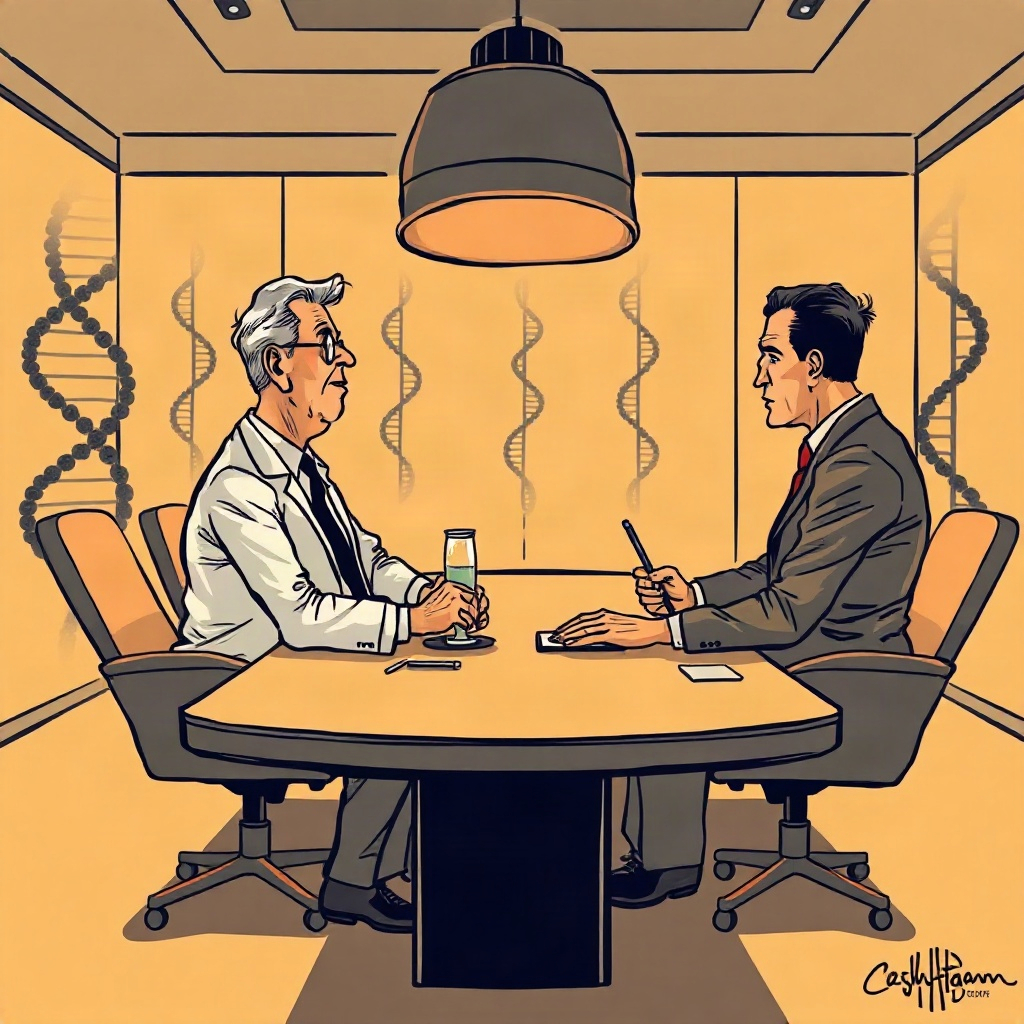
George Church · Geneticist, Harvard Medical School
In the sprawling landscape of Jeffrey Epstein’s philanthropic entanglements with elite academia, few figures commanded as much scientific stature as George Church. A pioneering geneticist holding joint appointments at Harvard Medical School and the Massachusetts Institute of Technology, Church is widely regarded as a founding father of modern synthetic biology, personal genomics, and advanced gene-editing techniques. Yet, following Epstein’s July 2019 federal arrest on sex trafficking charges and subsequent death, Church became one of the most prominent academic researchers forced to confront extensive, documented interactions with the convicted financier, interactions that persisted long after Epstein was formally registered as a sex offender.
Public reporting and institutional audits reveal that Church’s relationship with Epstein began in the mid-2000s, facilitated primarily by elite intellectual salons and scientific intermediaries. During this era, Epstein marketed himself aggressively as an eccentric patron of foundational science, specifically targeting evolutionary biology, theoretical physics, and transhumanism. In interviews with journalists from the Boston Globe and the New York Times, Church acknowledged that he was first introduced to Epstein around 2005, frequently crossing paths with him through dinners and conferences organized by the Edge Foundation, an intellectual networking group curated by literary agent John Brockman. Epstein sought out luminaries at the cutting edge of genomic manipulation, viewing Church’s ambitious lab at Harvard as a premier center of innovative research.
Financial records and institutional disclosures confirm that Epstein’s interest quickly materialized into substantial philanthropic capital. According to an extensive internal review published by Harvard University’s Office of the General Counsel in May 2020, Epstein directed millions of dollars to Harvard researchers between 1998 and 2008. Church’s laboratory received a series of donations originating from Epstein’s affiliated non-profit entities, totaling roughly $650,000 between 2005 and 2007. The capital was allocated toward broad, exploratory projects in genetics and synthetic biology, areas where Church was actively pushing the boundaries of DNA synthesis. While Harvard ceased accepting gifts directly from Epstein following his 2008 conviction in Florida state court for soliciting prostitution from a minor, the institutional report verified that Church’s lab had formally received the designated funding during the pre-conviction period.
Related articles
Jeffrey Epstein and Marvin Minsky
An investigative look into AI pioneer Marvin Minsky's documented ties to Jeffrey Epstein and the unsealed 2019 defamation court filings.
Read article →
Jeffrey Epstein and Joi Ito
Investigative report on Joi Ito's ties to Jeffrey Epstein, detailing secret MIT Media Lab funding, personal investments, and the 2019 fallout.
Read article →
Jeffrey Epstein and Martin Nowak
Investigative report on Harvard biologist Martin Nowak, his ties to Jeffrey Epstein, university funding, and subsequent disciplinary sanctions.
Read article →
Jeffrey Epstein and Lawrence Krauss
An investigative examination of physicist Lawrence Krauss's professional, financial, and personal ties to convicted financier Jeffrey Epstein.
Read article →