Jeffrey Epstein &
New York City Police Department (NYPD)
Municipal law enforcement agency, New York City
Key Facts
NYPD 19th Precinct (Upper East Side, Manhattan)
Townhouse Jurisdiction
NYPD Precinct Boundary Records
1996 report made by Maria Farmer to NYPD and federal authorities
Earliest Known Police Report
Giuffre v. Maxwell Court Filings
July 6, 2019 joint operation with the FBI at 9 East 71st Street
Search Warrant Execution
SDNY Court Filings
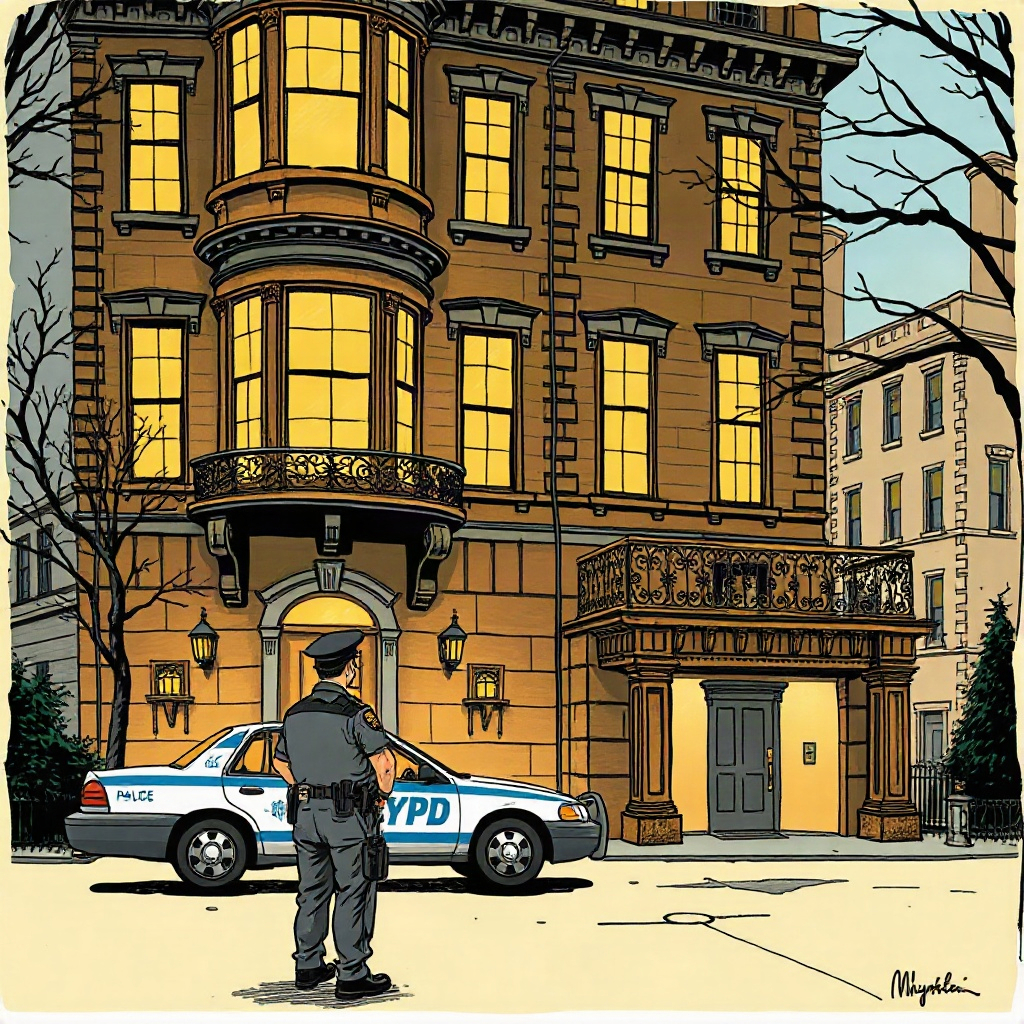
New York City Police Department (NYPD) · Municipal law enforcement agency, New York City
The New York City Police Department represents the largest municipal police force in the United States, commanding tens of thousands of sworn officers and maintaining primary jurisdiction over the five boroughs of New York City. Throughout the late 1990s and 2000s, Jeffrey Epstein operated his primary residence out of a palatial townhouse at 9 East 71st Street in Manhattan. This massive residence sat within the jurisdictional boundaries of the NYPD's 19th Precinct, an affluent district covering the Upper East Side. Despite dozens of young women and underage girls being brought into the residence over multiple decades, the relationship between Epstein's operations and local municipal law enforcement remained defined by apparent institutional blind spots, missed early warnings, and delayed intervention until federal authorities took charge in 2019.
Public interest in the NYPD's historical handling of Epstein intensified following his July 2019 arrest by federal agents. Investigative reporting and subsequently unsealed civil litigation revealed that complaints regarding Epstein's Manhattan residence had surfaced decades earlier. The most prominent early alert occurred in 1996, when artist Maria Farmer attempted to report Jeffrey Epstein and his associate Ghislaine Maxwell to law enforcement. Farmer stated in sworn depositions and subsequent media interviews that after being assaulted at the Ohio compound of Leslie Wexner and subjected to misconduct in New York, she contacted both the Federal Bureau of Investigation and the NYPD. According to Farmer's account, local authorities treated the allegations with skepticism, and no formal criminal prosecution or sustained investigation was initiated by the department at that time.
Throughout the 2000s, while the Palm Beach Police Department in Florida pursued a covert and rigorous investigation into Epstein's activities in South Florida, the New York City Police Department had minimal documented interaction with the financier. Investigative files from the Palm Beach Police Department demonstrate that Florida detectives identified New York as a primary hub where young women were recruited and transported. Palm Beach authorities coordinated substantially with federal prosecutors and the FBI rather than initiating an intensive multi-agency probe with municipal detectives in New York. The absence of an independent, proactive NYPD inquiry during the mid-2000s allowed Epstein to continue using his Manhattan residence without local municipal scrutiny even as his Florida legal troubles mounted.
Related articles
Jeffrey Epstein and Central Intelligence Agency (CIA)
An investigative review of alleged ties between Jeffrey Epstein and the CIA, examining FOIA filings, Acosta's remarks, and official calendar records.
Read article →
Jeffrey Epstein and Federal Bureau of Investigation (FBI)
An investigative analysis of Jeffrey Epstein's decades-long history with the FBI, from the 2006 Palm Beach probe to the 2019 Manhattan raid and FOIA files.
Read article →
Jeffrey Epstein and Secret Intelligence Service (MI6)
Investigative analysis of Jeffrey Epstein's alleged links to Britain's Secret Intelligence Service (MI6), Ghislaine Maxwell, and elite UK networks.
Read article →
Jeffrey Epstein and Directorate-General for External Security (DGSE)
Investigating allegations and public records regarding Jeffrey Epstein, his Paris operations, and France's foreign intelligence agency, the DGSE.
Read article →