Jeffrey Epstein &
National Crime Agency (NCA)
UK National Law Enforcement Agency
Key Facts
National coordination of human trafficking, organized crime, and child exploitation through CEOP Command
Agency Remit
Crime and Courts Act 2013
Ghislaine Maxwell's mews home in Belgravia, London and Tramp nightclub in Mayfair
Key UK Location
Giuffre v. Maxwell Unsealed Depositions
Deference to Metropolitan Police primacy; reliance on Neither Confirm Nor Deny FOIA exemptions
Investigative Stance
National Crime Agency FOIA Responses (2020–2022)
Handled through Home Office UK Central Authority and bilateral MLAT treaties with the US Department of Justice
US Coordination
SDNY Public Disclosures (2020)
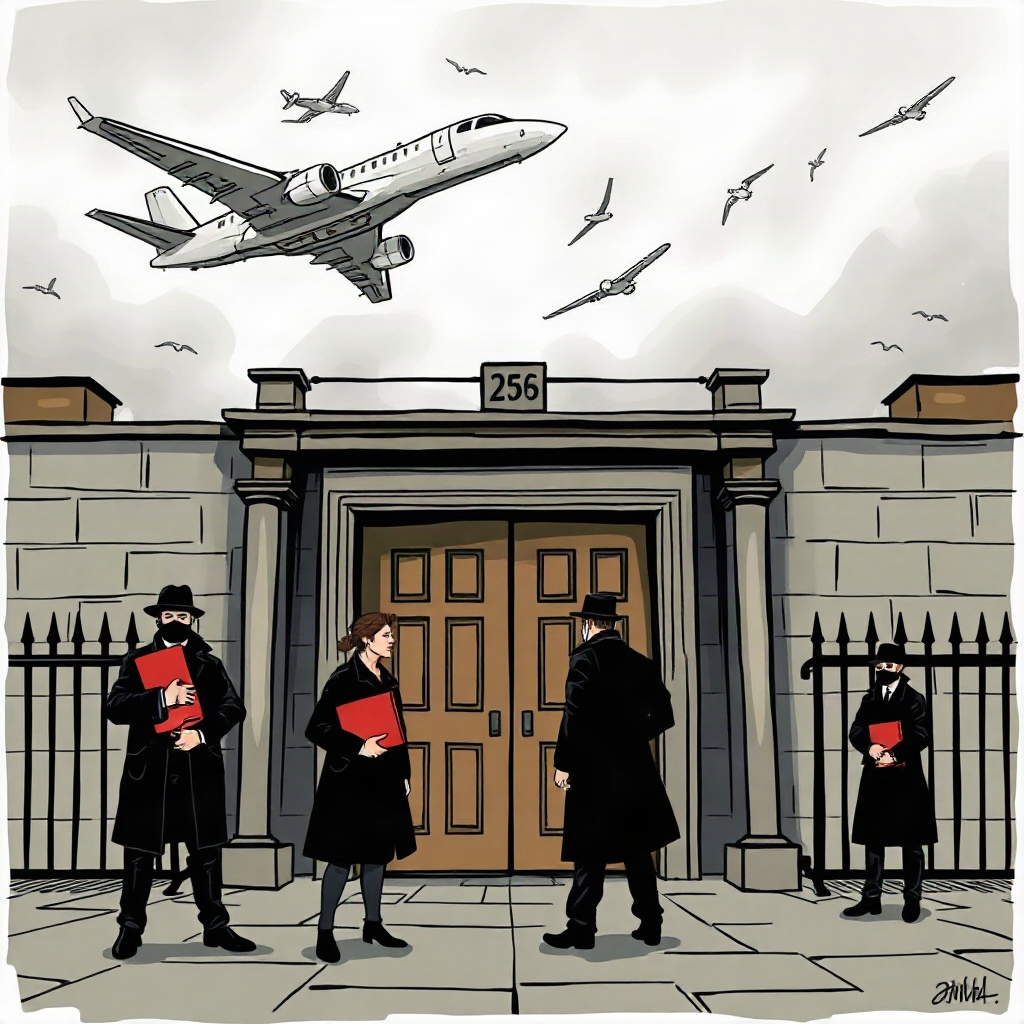
National Crime Agency (NCA) · UK National Law Enforcement Agency
Established under the Crime and Courts Act 2013 and operational since October of that year, the National Crime Agency functions as the United Kingdom premier law enforcement body charged with combating serious and organized crime. Often characterized as the British counterpart to the Federal Bureau of Investigation, the agency commands a wide remit encompassing modern slavery, human trafficking, financial corruption, and international organized crime syndicates. It also houses the Child Exploitation and Online Protection Command, an operational division dedicated specifically to shielding minors from systemic abuse. Despite this sweeping mandate, the agency has found itself at the center of protracted public and legal scrutiny regarding the extent to which it has examined, or declined to examine, the British operations of the late convicted sex offender Jeffrey Epstein and his convicted co-conspirator Ghislaine Maxwell.
The nexus between the Epstein enterprise and the United Kingdom is neither incidental nor speculative; it is deeply rooted in public court filings, travel manifests, and sworn witness depositions. For decades, Epstein maintained strong social, financial, and logistical footprints across London and the British countryside, largely facilitated by Maxwell, a British socialite whose family occupied elite media and political circles. Central to these cross-border ties were allegations leveled by Virginia Giuffre, who stated in sworn federal depositions in the United States that she was trafficked to London in March 2001 at the age of seventeen. According to court records from the Southern District of New York, Giuffre testified that she was transported to the United Kingdom, taken to the private member club Tramp in Mayfair, and compelled to engage in sexual acts with Prince Andrew, the Duke of York, at Maxwell mews house in Belgravia.
While territorial policing in Greater London falls directly under the jurisdiction of the Metropolitan Police Service, commonly known as Scotland Yard, the transnational character of the alleged conduct repeatedly prompted calls for higher-level intervention. The Metropolitan Police examined the allegations on multiple occasions, notably in 2015, 2019, and 2021, consistently concluding that it would take no formal investigative action. Scotland Yard cited jurisdictional constraints, noting that the primary locus of the criminal enterprise lay within the United States, that overseas authorities were leading investigations, and that British police had determined the matters were not suitable for domestic prosecution. This persistent reluctance from London municipal police force fostered growing frustration among legal advocates and anti-corruption watchdogs, who argued that an allegation involving international human trafficking across sovereign borders fell squarely within the statutory remit of the National Crime Agency.
Related articles
Jeffrey Epstein and Central Intelligence Agency (CIA)
An investigative review of alleged ties between Jeffrey Epstein and the CIA, examining FOIA filings, Acosta's remarks, and official calendar records.
Read article →
Jeffrey Epstein and Federal Bureau of Investigation (FBI)
An investigative analysis of Jeffrey Epstein's decades-long history with the FBI, from the 2006 Palm Beach probe to the 2019 Manhattan raid and FOIA files.
Read article →
Jeffrey Epstein and Secret Intelligence Service (MI6)
Investigative analysis of Jeffrey Epstein's alleged links to Britain's Secret Intelligence Service (MI6), Ghislaine Maxwell, and elite UK networks.
Read article →
Jeffrey Epstein and Directorate-General for External Security (DGSE)
Investigating allegations and public records regarding Jeffrey Epstein, his Paris operations, and France's foreign intelligence agency, the DGSE.
Read article →