Jeffrey Epstein &
Metropolitan Correctional Center, New York
Federal detention center, Bureau of Prisons
Key Facts
Permanently closed in late 2021 by the Department of Justice
Facility Status
U.S. Department of Justice Announcement (August 2021)
Cell 5, 9 South Special Housing Unit (SHU)
Housing Unit
DOJ OIG Report (June 2023)
Suicide by hanging
Official Cause of Death
NYC Office of Chief Medical Examiner (August 2019)
Two correctional officers charged with falsifying records; resolved via deferred prosecution
Staff Misconduct Charges
SDNY Court Filings (November 2019, December 2021)
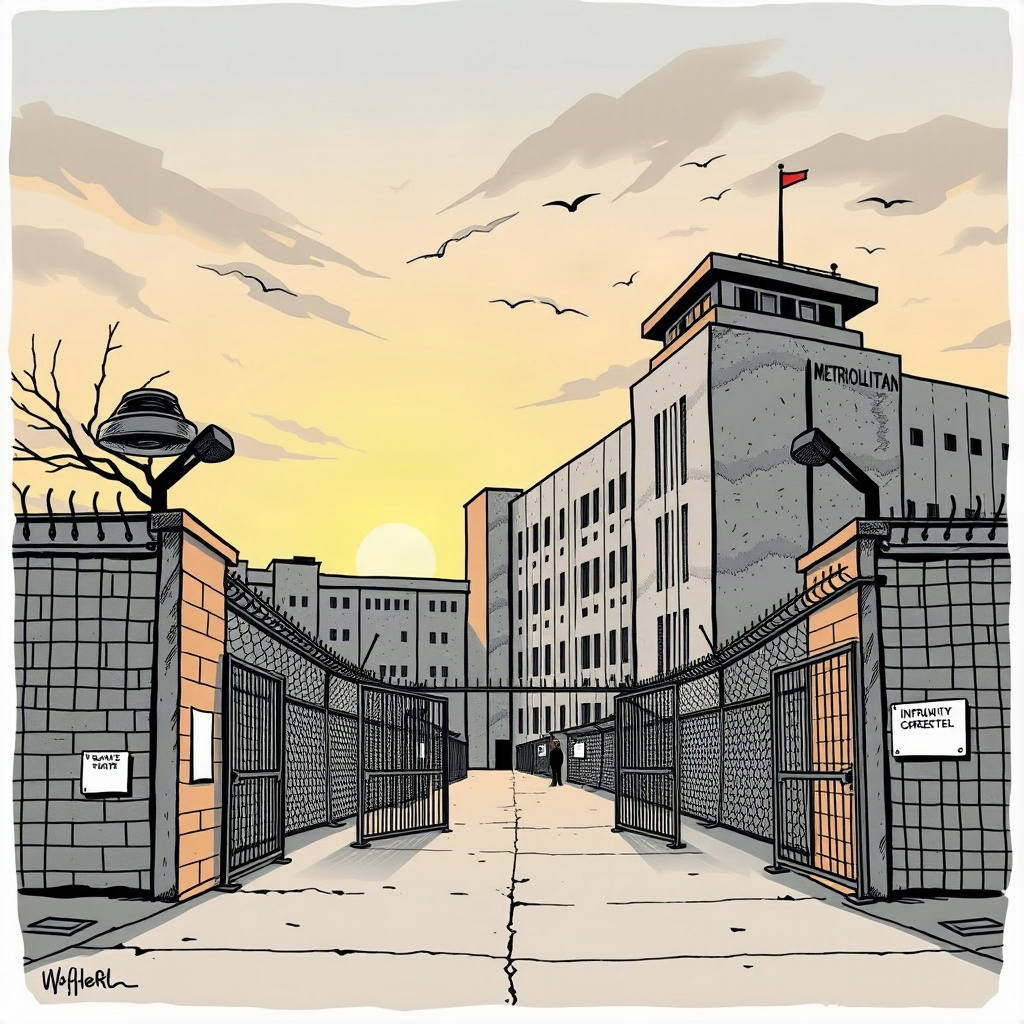
Metropolitan Correctional Center, New York · Federal detention center, Bureau of Prisons
For nearly half a century, the Metropolitan Correctional Center in Lower Manhattan operated as one of the federal government's primary detention bastions. Known colloquially as MCC New York, the twelve-story brutalist structure at 150 Park Row held high-profile mobsters, drug cartel kingpins, and convicted terrorists awaiting trial in the United States District Court for the Southern District of New York. In July 2019, the facility became the focal point of global scrutiny when financier Jeffrey Epstein was remanded into custody following his arrest on federal sex trafficking charges. The subsequent collapse of basic institutional protocols inside the jail, culminating in Epstein's death five weeks later, exposed pervasive dysfunction within the Federal Bureau of Prisons and ultimately contributed to the permanent shuttering of the facility.
Epstein arrived at MCC New York on July 6, 2019, immediately following his apprehension at Teterboro Airport in New Jersey. Prosecutors with the Southern District of New York had secured an indictment accusing him of orchestrating a vast sex trafficking enterprise involving dozens of underage girls between 2002 and 2005. At his bail hearing, federal prosecutors argued that Epstein's immense wealth, private aircraft, and overseas properties presented an unmanageable flight risk. U.S. District Judge Richard Berman concurred, ordering him detained without bail. Epstein was escorted beneath the fortified corridors of Park Row and assigned to the Special Housing Unit, or SHU, located on the ninth floor of the building, designated 9 South. The SHU was designed to isolate inmates who required enhanced administrative separation due to high public profiles, disciplinary infractions, or distinct security risks.
The initial weeks of Epstein's confinement were characterized by escalating volatility. On July 23, 2019, correctional staff discovered Epstein lying semi-conscious on the floor of his cell with neck injuries. His cellmate at the time was Nicholas Tartaglione, an ex-police officer awaiting trial in a quadruple homicide case. Prison officials immediately placed Epstein on suicide watch, transferring him to an observation room where he was stripped of standard clothing and placed under around-the-clock visual monitoring. In interviews with prison psychologists, Epstein claimed he had been assaulted by his cellmate, while Tartaglione maintained that Epstein had attempted suicide and that he had called for guards to assist. Law enforcement investigations failed to conclusively determine the cause of the injuries, though federal records later revealed that Epstein told a psychologist that he had not intended to take his own life.
Related articles
Jeffrey Epstein and Central Intelligence Agency (CIA)
An investigative review of alleged ties between Jeffrey Epstein and the CIA, examining FOIA filings, Acosta's remarks, and official calendar records.
Read article →
Jeffrey Epstein and Federal Bureau of Investigation (FBI)
An investigative analysis of Jeffrey Epstein's decades-long history with the FBI, from the 2006 Palm Beach probe to the 2019 Manhattan raid and FOIA files.
Read article →
Jeffrey Epstein and Secret Intelligence Service (MI6)
Investigative analysis of Jeffrey Epstein's alleged links to Britain's Secret Intelligence Service (MI6), Ghislaine Maxwell, and elite UK networks.
Read article →

Jeffrey Epstein and Directorate-General for External Security (DGSE)
Investigating allegations and public records regarding Jeffrey Epstein, his Paris operations, and France's foreign intelligence agency, the DGSE.
Read article →