Key Facts
Senior appellate and constitutional defense counsel for Jeffrey Epstein in Florida and New York
Role
Argued the 2008 Florida Non-Prosecution Agreement barred the SDNY federal indictment
Key Motion (2019)
SDNY Court Filings (2019)
Proposed private security home confinement and an eight-figure bond package
Bail Strategy
SDNY Bail Hearing Transcript (July 2019)
Defense team access documented in the 342-page Office of Professional Responsibility review
DOJ Scrutiny
DOJ OPR Report (November 2020)
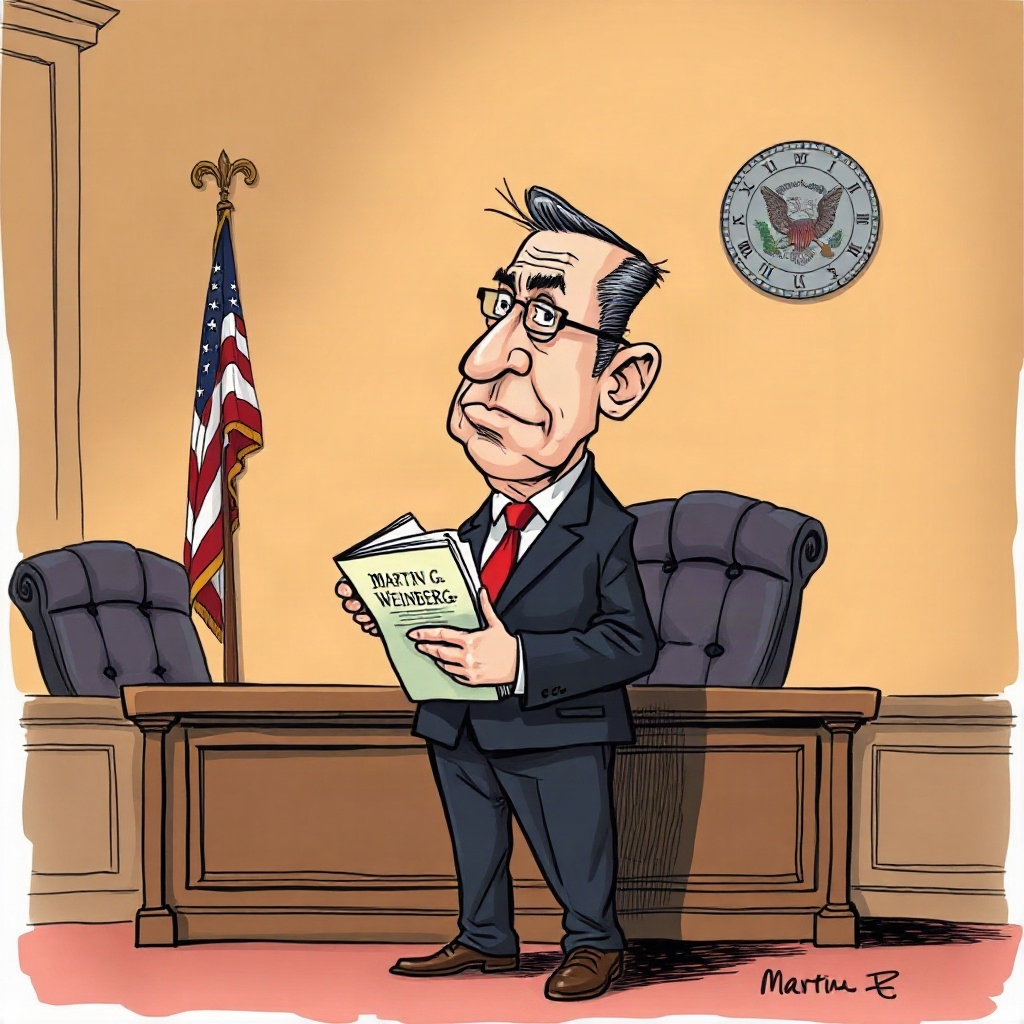
Martin G. Weinberg · Criminal Defense Attorney
In the sprawling legal battles that defined Jeffrey Epstein’s decades-long evasion of severe federal accountability, a cadre of elite defense attorneys served as the architect of his institutional shield. Among the most technically formidable members of that legal apparatus was Martin G. Weinberg, a veteran Boston-based criminal defense lawyer renowned across the United States as an appellate strategist and master of procedural law. While figures such as Alan Dershowitz and Roy Black frequently occupied the public spotlight, Weinberg operated primarily in the mechanics of motions practice, constitutional challenges, and aggressive pre-trial advocacy. His involvement with Epstein spanned both the contentious 2006 to 2008 Florida state and federal negotiations and the dramatic 2019 federal sex-trafficking indictment in the Southern District of New York.
Weinberg entered Epstein’s orbit as federal investigators in the Southern District of Florida began building an indictment regarding the abuse of dozens of underage girls at Epstein's Palm Beach residence. Facing the possibility of a severe federal prosecution under the leadership of then-U.S. Attorney Alexander Acosta, Epstein’s inner circle mobilized an unprecedented defense team. Weinberg brought to the defense table decades of high-stakes federal courtroom experience, particularly regarding Fourth Amendment search-and-seizure jurisprudence and intricate jurisdictional disputes. Working alongside attorneys Kenneth Starr, Roy Black, and Jay Lefkowitz, Weinberg contributed to a multi-front campaign designed to dissuade the Department of Justice from proceeding with a conventional federal indictment.
Public records and subsequent Department of Justice oversight filings reveal that Weinberg’s strategic value lay in neutralizing evidence and exploiting prosecutorial vulnerabilities. During the secret negotiations in late 2007, Epstein’s defense team leveraged aggressive discovery demands, threatening to mount sweeping challenges against the search warrants executed on Epstein's El Brillo Way mansion. Weinberg and his colleagues engaged in direct, private conferences with Acosta and senior federal prosecutors, disputing the application of federal commerce clause statutes to the allegations and asserting that the state of Florida possessed exclusive jurisdiction over the alleged conduct. This pressure campaign culminated in the infamous September 2007 non-prosecution agreement, finalized in 2008, which allowed Epstein to plead guilty to two state prostitution charges while granting blanket federal immunity to him and any potential co-conspirators.
Related articles

Jeffrey Epstein and Darren K. Indyke
Investigative profile of Darren K. Indyke, Jeffrey Epstein's longtime personal attorney, corporate architect, and co-executor of his estate.
Read article →

Jeffrey Epstein and Richard D. Kahn
Investigative profile of Richard D. Kahn, Jeffrey Epstein's long-time accountant and co-executor of his multi-million-dollar estate.
Read article →
Jeffrey Epstein and Michael F. McAuliffe
Investigative review of Michael F. McAuliffe, Palm Beach State Attorney who inherited Jeffrey Epstein's case file and work-release fallout.
Read article →
Jeffrey Epstein and A. Marie Villafaña
Investigative profile of federal prosecutor A. Marie Villafaña, who drafted Jeffrey Epstein's controversial 2007 non-prosecution agreement in Florida.
Read article →