Key Facts
28 years (1991 to 2019)
Tenure with Epstein
Maxwell Trial Testimony (2021)
Approximately $200,000
Annual Pilot Compensation
Maxwell Trial Testimony (2021)
Boeing 727-100 (N908JE) and Gulfstream aircraft
Primary Aircraft Flown
FAA Registry & Trial Exhibits
Never criminally charged; testified as subpoenaed witness
Legal Status
SDNY Court Records
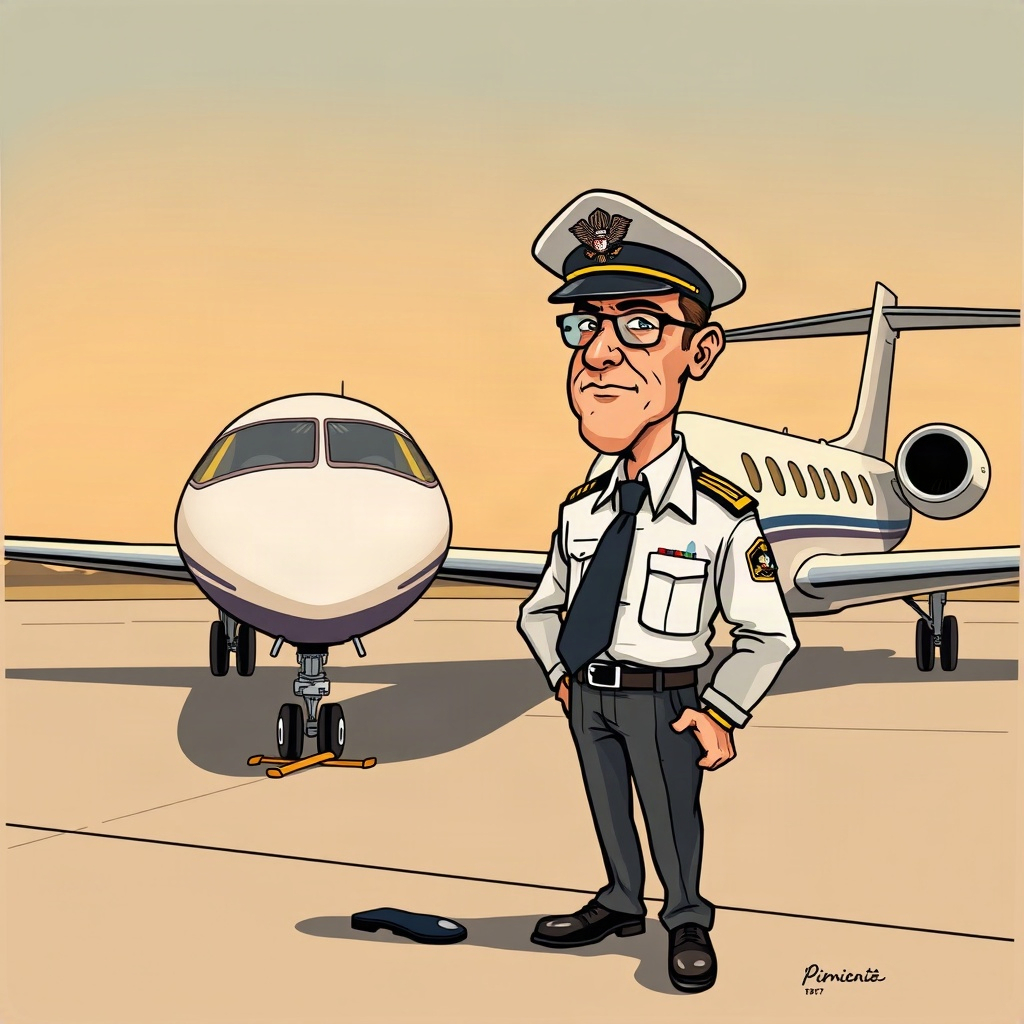
Larry Visoski · Jeffrey Epstein's Chief Pilot
For nearly three decades, Lawrence Visoski Jr. sat in the cockpit of Jeffrey Epstein’s private aircraft, navigating the financial manager, his associates, and hundreds of guests across a global corridor of power, wealth, and abuse. As Epstein’s lead commercial pilot from 1991 until the financier’s arrest in July 2019, Visoski held a singular vantage point on an enterprise that relied heavily on aviation to transport young women and underage girls between Epstein’s residences in New York, Palm Beach, New Mexico, Paris, and the private island of Little St. James in the United States Virgin Islands. When federal prosecutors in the Southern District of New York launched their sex-trafficking trial against Ghislaine Maxwell in November 2021, Visoski was the very first witness called to the stand, underscoring his critical role as the operational chronicler of Epstein’s aerial network.
Visoski’s tenure began in the early 1990s when Epstein recruited him to fly a Gulfstream II. Over the ensuing twenty-eight years, Visoski became the chief pilot overseeing a small fleet that eventually featured a customized Boeing 727-100, tail number N908JE, alongside various long-range corporate jets. Under oath in federal court, Visoski recounted logging thousands of flight hours and receiving an annual salary of approximately two hundred thousand dollars. He described Maxwell as the undisputed second-in-command of Epstein’s operation, testifying that she exercised authority over travel schedules, ground transportation, household staff, and aircraft maintenance, frequently issuing orders and functioning as Epstein’s domestic and operational manager.
The flight logs maintained by Visoski and his fellow pilots, including secondary pilot David Rodgers, evolved into foundational pieces of forensic evidence across multiple legal battles. These handwritten and digital flight manifests were first scrutinized following the 2005 Palm Beach Police Department investigation, later obtained through federal subpoenas, and heavily unsealed during civil litigation, most notably the defamation lawsuit Giuffre v. Maxwell. The logs systematically corroborated victim statements regarding their movements across state and international lines, matching precise calendar dates with testimonies of victims who were flown across the globe at Epstein’s direction.
Related articles
Jeffrey Epstein and Marvin Minsky
An investigative look into AI pioneer Marvin Minsky's documented ties to Jeffrey Epstein and the unsealed 2019 defamation court filings.
Read article →
Jeffrey Epstein and Joi Ito
Investigative report on Joi Ito's ties to Jeffrey Epstein, detailing secret MIT Media Lab funding, personal investments, and the 2019 fallout.
Read article →
Jeffrey Epstein and George Church
Investigative review of geneticist George Church's financial and professional interactions with Jeffrey Epstein across nearly two decades.
Read article →
Jeffrey Epstein and Martin Nowak
Investigative report on Harvard biologist Martin Nowak, his ties to Jeffrey Epstein, university funding, and subsequent disciplinary sanctions.
Read article →