Jeffrey Epstein &
King Mohammed VI of Morocco
King of Morocco
Key Facts
Contains phone listings for the Moroccan Royal Palace Secretariat and royal administration
Contact Book Listing
Epstein Address Book (Black Book)
Documents indicate Epstein's private aircraft landed in Morocco during the early 2000s
Flight Log Records
David Rodgers Flight Logs
No formal civil or criminal claims allege direct sexual abuse by King Mohammed VI
Allegation Status
Giuffre v. Maxwell Unsealed Files (2024)
The Moroccan Royal Palace has never issued a public comment regarding Epstein's documents
Official Response
Investigative Press Reports
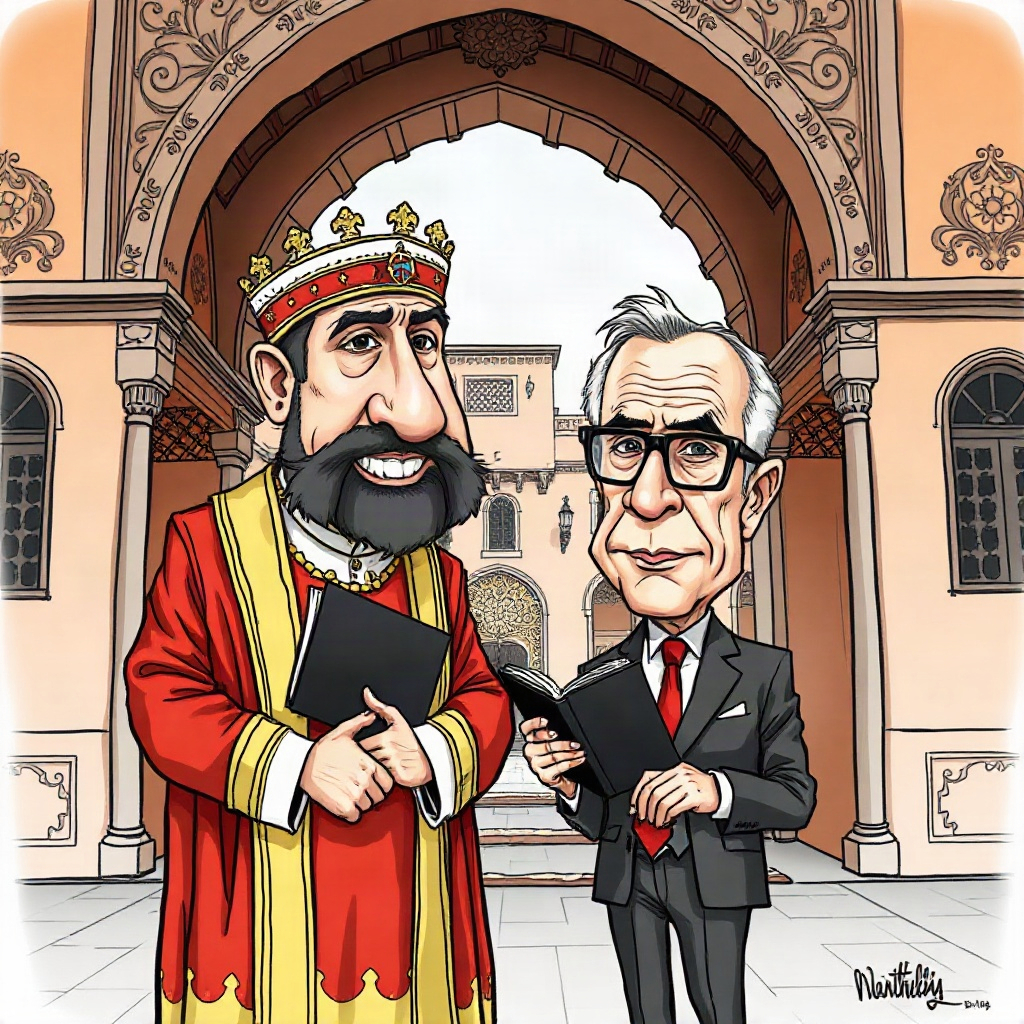
King Mohammed VI of Morocco · King of Morocco
When Jeffrey Epstein methodically assembled his international network of political leaders, royalty, and financiers across the late 1990s and early 2000s, his ambition extended far beyond the corridors of power in Washington, London, and Paris. Among the heads of state whose official offices and personal channels appeared within Epstein’s closely guarded contact directories was King Mohammed VI of Morocco, who ascended the Alaouite throne in July 1999. While the Moroccan monarch has never been formally accused in civil filings or criminal indictments of participating in Epstein’s sex trafficking operation, the presence of Moroccan royal contacts in Epstein’s archives provides a compelling case study in how the disgraced financier systematically sought proximity to sovereign power.
King Mohammed VI succeeded his father, King Hassan II, presenting himself to the international community as a modernizing monarch open to Western commerce, diplomatic modernization, and high-level foreign investment. It was precisely during this transitional period in the early 2000s that Epstein expanded his global footprint. The financier frequently sought introductions to newly crowned sovereigns, utilizing high-profile intermediaries from European aristocratic circles, international diplomacy, and global philanthropy to position himself as a bridge between Western capital and sovereign wealth. Epstein collected the private coordinates of heads of state not merely to solicit business, but to establish an aura of unassailable global influence.
Concrete evidence of Epstein’s focus on the Moroccan court first entered the public record through the seizure and eventual publication of his personal address book, commonly referred to as the black book. Compiled over years by household staff, including former butler Alfredo Rodriguez, the directory featured thousands of names spanning the highest echelons of politics, fashion, and international finance. Within these pages, entries were logged under the heading of Morocco, detailing contact information associated with the Royal Palace in Rabat, the private secretariat of King Mohammed VI, and key officials within the royal apparatus. The presence of direct administrative numbers illustrated that Epstein had established a functional conduit to the palace's outer perimeter.
Related articles
Jeffrey Epstein and Central Intelligence Agency (CIA)
An investigative review of alleged ties between Jeffrey Epstein and the CIA, examining FOIA filings, Acosta's remarks, and official calendar records.
Read article →

Jeffrey Epstein and Federal Bureau of Investigation (FBI)
An investigative analysis of Jeffrey Epstein's decades-long history with the FBI, from the 2006 Palm Beach probe to the 2019 Manhattan raid and FOIA files.
Read article →
Jeffrey Epstein and Secret Intelligence Service (MI6)
Investigative analysis of Jeffrey Epstein's alleged links to Britain's Secret Intelligence Service (MI6), Ghislaine Maxwell, and elite UK networks.
Read article →

Jeffrey Epstein and Directorate-General for External Security (DGSE)
Investigating allegations and public records regarding Jeffrey Epstein, his Paris operations, and France's foreign intelligence agency, the DGSE.
Read article →