Jeffrey Epstein &
Judge William P. Dimitrouleas
Federal Judge, Southern District of Florida
Key Facts
Nominated by President Bill Clinton to the Southern District of Florida bench in May 1998
Judicial Appointment
Federal Judicial Center
United States District Court for the Southern District of Florida, Fort Lauderdale Division
Court Assignment
U.S. District Court SDFL
Institutional judicial oversight only; no personal, commercial, or extralegal relationship documented
Nature of Connection
DOJ OPR Report (2020)
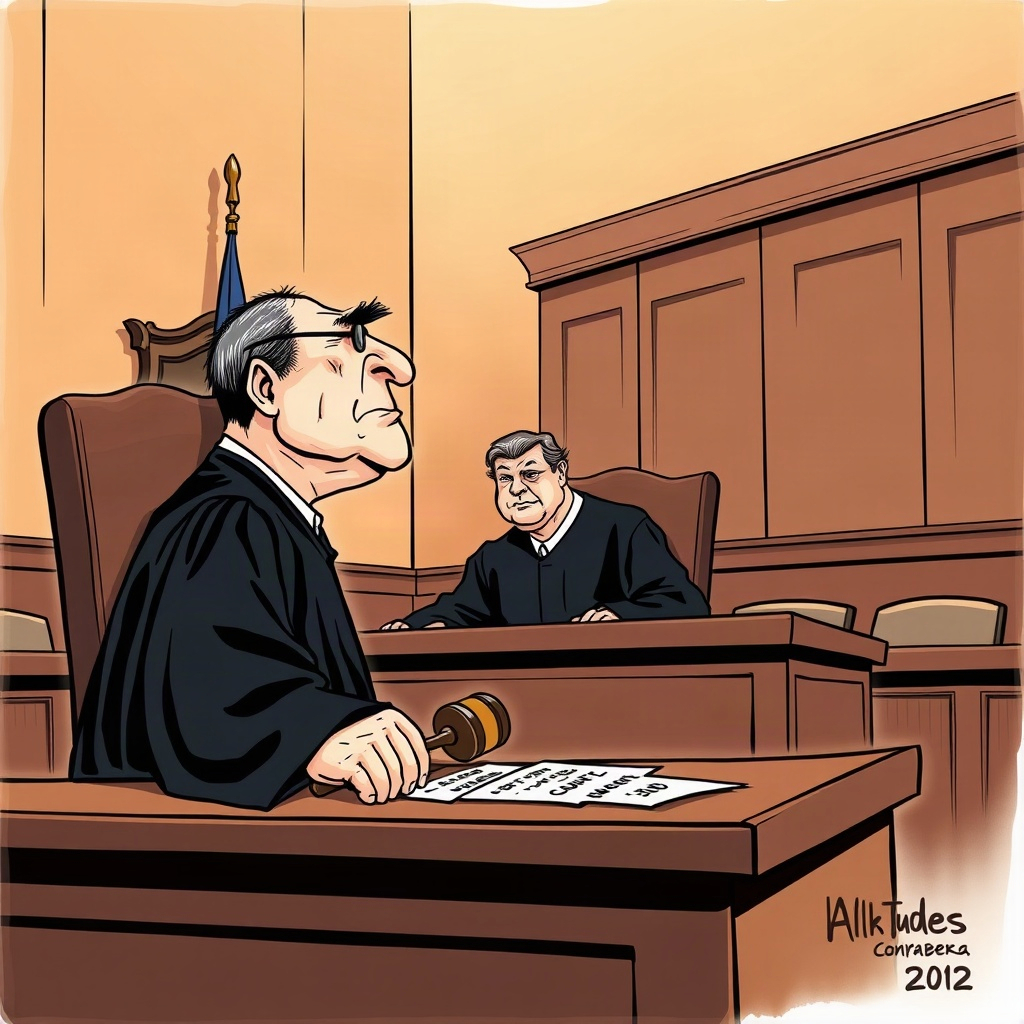
Judge William P. Dimitrouleas · Federal Judge, Southern District of Florida
In the extensive legal history of the late financier Jeffrey Epstein, the federal courts of the Southern District of Florida served as the primary battleground where his controversial treatment by the justice system was scrutinized. Among the federal judges who have served in that district is United States District Judge William P. Dimitrouleas. Unlike figures in Epstein's orbit who maintained personal, social, or commercial relationships with the convicted sex offender, Judge Dimitrouleas's connection to Epstein is strictly institutional and judicial. An examination of public court records, institutional filings, and news reports establishes that his involvement is defined by the routine administration of justice and judicial oversight in South Florida, rather than any personal association.
Born in Pittsfield, Massachusetts, in 1951, William Peter Dimitrouleas built a long career in Florida's legal system before ascending to the federal bench. After earning his law degree from the University of Florida College of Law in 1975, he worked for more than a decade as an assistant state attorney in Broward County, handling major felony prosecutions. In 1989, he was appointed to the Broward County Circuit Court bench. In May 1998, President Bill Clinton nominated Dimitrouleas to a seat on the United States District Court for the Southern District of Florida, and he was confirmed by the United States Senate later that month. Stationed primarily at the federal courthouse in Fort Lauderdale, Dimitrouleas developed a reputation over decades for strict courtroom decorum and meticulous procedural adherence in both criminal and civil matters.
To understand how the Epstein saga intersected with judges like Dimitrouleas, one must examine the legal geography of South Florida between 2006 and 2019. In 2007 and 2008, federal prosecutors in Miami, led by then-United States Attorney Alexander Acosta, secretly negotiated a non-prosecution agreement with Epstein's defense team. That controversial pact effectively insulated Epstein from federal sex-trafficking charges in exchange for a guilty plea to state-level solicitation offenses in Palm Beach County. Because the non-prosecution agreement was negotiated without formal notification to Epstein's underage victims, it prompted unprecedented litigation under the federal Crime Victims' Rights Act, known as the CVRA. In 2008, victims Courtney Wild and an anonymous Jane Doe, represented by attorneys Paul Cassell and Bradley Edwards, filed a federal civil action challenging the legality of the agreement in the Southern District of Florida.
Related articles

Jeffrey Epstein and Darren K. Indyke
Investigative profile of Darren K. Indyke, Jeffrey Epstein's longtime personal attorney, corporate architect, and co-executor of his estate.
Read article →

Jeffrey Epstein and Richard D. Kahn
Investigative profile of Richard D. Kahn, Jeffrey Epstein's long-time accountant and co-executor of his multi-million-dollar estate.
Read article →
Jeffrey Epstein and Michael F. McAuliffe
Investigative review of Michael F. McAuliffe, Palm Beach State Attorney who inherited Jeffrey Epstein's case file and work-release fallout.
Read article →
Jeffrey Epstein and A. Marie Villafaña
Investigative profile of federal prosecutor A. Marie Villafaña, who drafted Jeffrey Epstein's controversial 2007 non-prosecution agreement in Florida.
Read article →