Jeffrey Epstein &
Government of the United States Virgin Islands
Territorial Government, US Virgin Islands
Key Facts
$105 million plus 50% of island sale proceeds
Estate Settlement Amount
USVI v. Estate of Jeffrey E. Epstein Settlement (2022)
Over $300 million in waived corporate and income taxes
Estimated Tax Exemptions
USVI Superior Court Filings (2020)
$75 million
JPMorgan Chase USVI Settlement
SDNY Court Settlement (September 2023)
90% exemption on local income tax, 100% on gross receipts tax
EDC Tax Benefit Rate
Virgin Islands Economic Development Authority Records
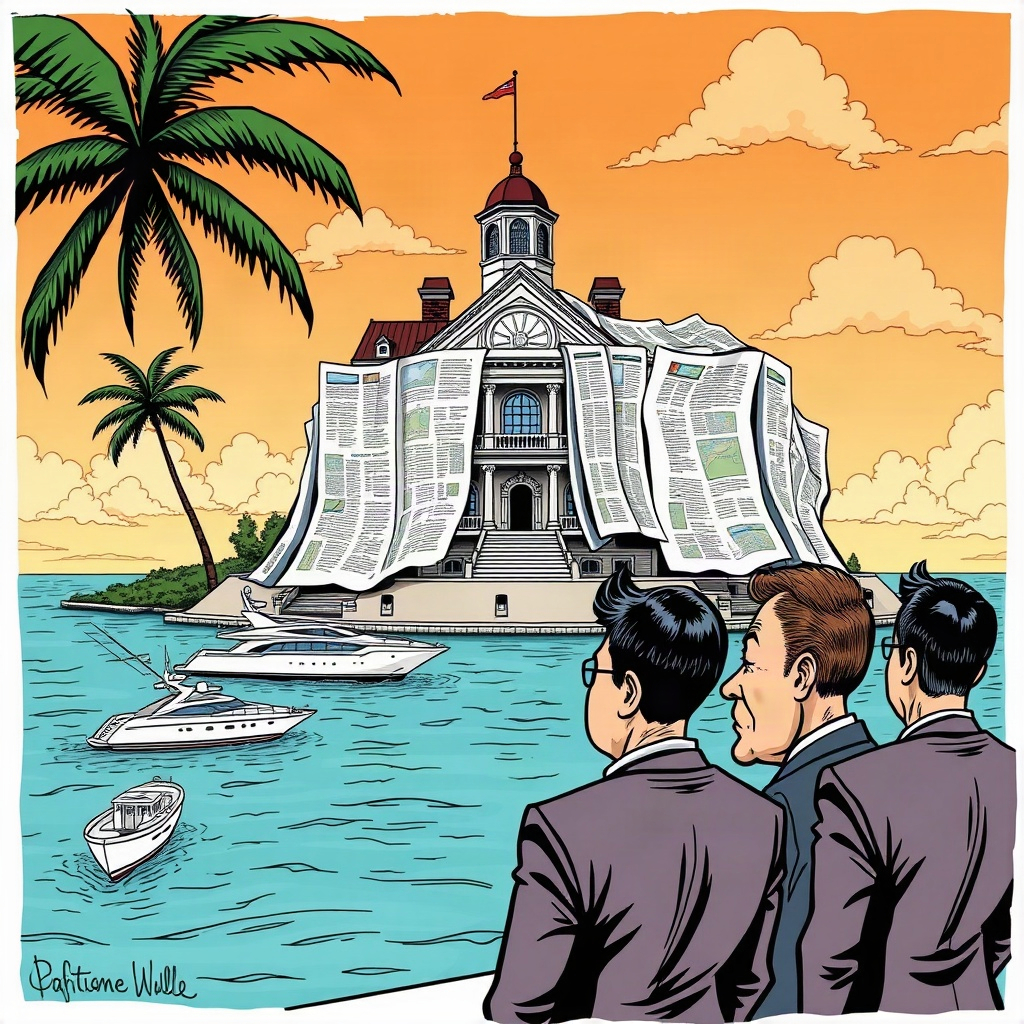
Government of the United States Virgin Islands · Territorial Government, US Virgin Islands
For more than two decades, the United States Virgin Islands served not merely as a tropical retreat for Jeffrey Epstein, but as the central administrative and financial hub for his global enterprise. Operating within an unincorporated United States territory governed by an elected executive and a unicameral legislature, Epstein cultivated institutional access that insulated his operations from regulatory scrutiny. Through lucrative economic development incentives, direct employment of high-ranking political spouses, and significant campaign contributions, Epstein embedded himself into the machinery of territorial governance. Public records, civil discovery, and subsequent enforcement actions reveal a mutually beneficial relationship that endured until his arrest in July 2019, ultimately culminating in historic civil settlements and intense political fallout across the territory.
Epstein’s formal presence in the Virgin Islands began in 1998 with the acquisition of Little Saint James, a seventy-acre private island off the coast of Saint Thomas, followed in 2016 by the purchase of neighboring Great Saint James. While the private islands afforded Epstein physical isolation, his enterprise relied heavily on the territory’s infrastructure. Flight logs and customs documentation show hundreds of arrivals at Cyril E. King Airport on Saint Thomas, where Epstein frequently transported young women and minors into the territory on private jets. Witnesses and court depositions later indicated that local law enforcement and border officials exercised negligible oversight over these flights, even following Epstein’s 2008 conviction in Florida for soliciting a minor for prostitution, which legally required rigorous sex offender registration and monitoring that territorial agencies largely failed to enforce.
The cornerstone of Epstein’s integration into the Virgin Islands was the Economic Development Commission, an agency overseen by the territorial government designed to attract outside capital through generous tax abatements. Through his flagship corporate entities, primarily Southern Trust Company and Financial Trust Company, Epstein qualified for the EDC program. Under contracts approved and renewed by territorial officials spanning multiple administrations, Epstein received up to a ninety percent exemption on personal income taxes and full exemptions on gross receipts and excise taxes. In exchange, Epstein promised nominal local employment and philanthropic contributions, an arrangement that saved his enterprise an estimated three hundred million dollars in federal and local taxes. Investigative reporting and later legal filings showed that Southern Trust performed virtually no legitimate commercial operations within the territory, functioning instead as a private financial vehicle.
Related articles
Jeffrey Epstein and Central Intelligence Agency (CIA)
An investigative review of alleged ties between Jeffrey Epstein and the CIA, examining FOIA filings, Acosta's remarks, and official calendar records.
Read article →

Jeffrey Epstein and Federal Bureau of Investigation (FBI)
An investigative analysis of Jeffrey Epstein's decades-long history with the FBI, from the 2006 Palm Beach probe to the 2019 Manhattan raid and FOIA files.
Read article →
Jeffrey Epstein and Secret Intelligence Service (MI6)
Investigative analysis of Jeffrey Epstein's alleged links to Britain's Secret Intelligence Service (MI6), Ghislaine Maxwell, and elite UK networks.
Read article →

Jeffrey Epstein and Directorate-General for External Security (DGSE)
Investigating allegations and public records regarding Jeffrey Epstein, his Paris operations, and France's foreign intelligence agency, the DGSE.
Read article →