Jeffrey Epstein &
Government of the United States Virgin Islands v. Estate of Jeffrey E. Epstein
USVI civil lawsuit against Epstein estate
Key Facts
$105 million plus 50% of the net sale proceeds of the private islands
Settlement Amount
USVI Settlement Agreement (2022)
Criminally Influenced and Corrupt Organizations Act (CICOA)
Primary Statute Invoked
Superior Court of the Virgin Islands Complaint (2020)
Little Saint James and Great Saint James
Key Island Properties
Property Records and Settlement Agreement (2022)
Southern Trust Company, Inc.
Primary Corporate Entity
USVI Economic Development Authority Filings
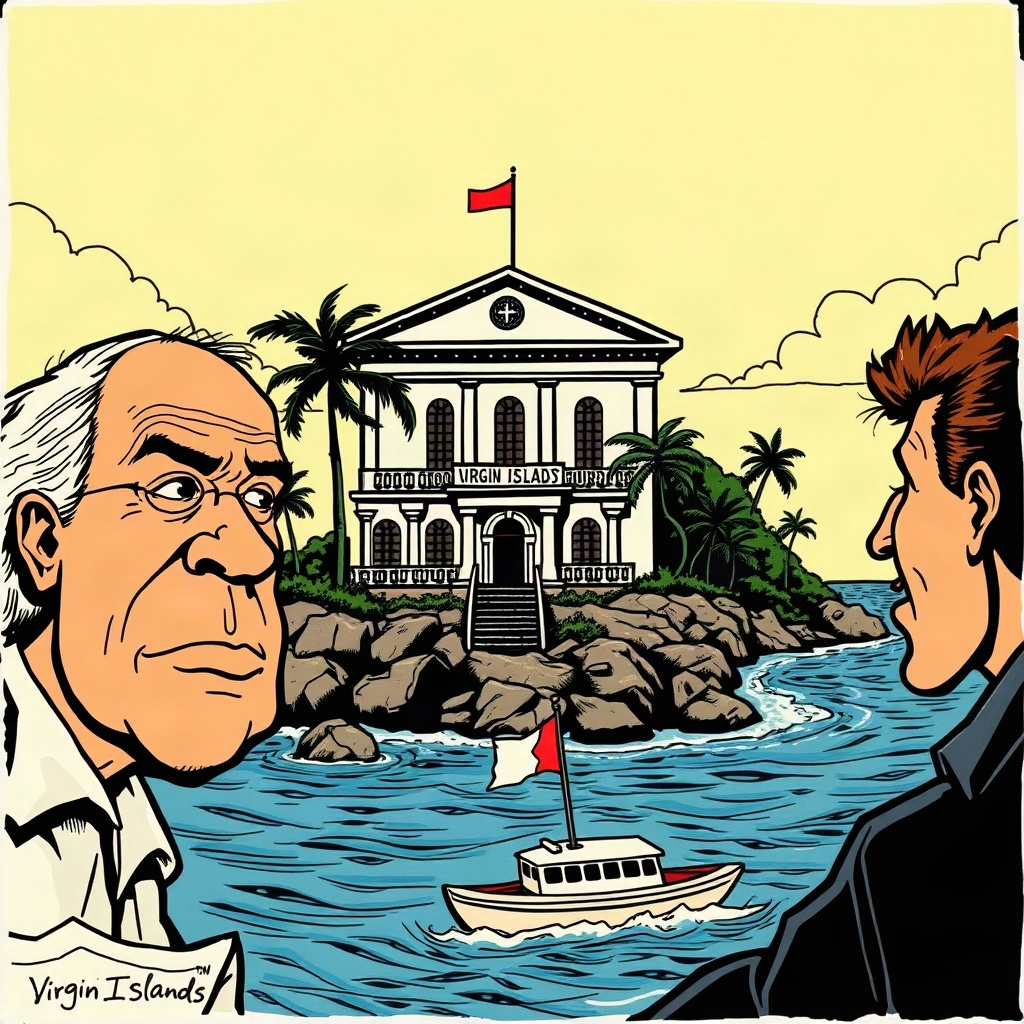
Government of the United States Virgin Islands v. Estate of Jeffrey E. Epstein · USVI civil lawsuit against Epstein estate
In January 2020, five months after Jeffrey Epstein died in a federal detention center in Manhattan, the Government of the United States Virgin Islands initiated a sweeping civil enforcement action against his estate. Filed by Virgin Islands Attorney General Denise George in the Superior Court of the Virgin Islands, the lawsuit formally designated the late financier’s Caribbean retreat as the epicenter of an extensive, decades-long sex trafficking and child exploitation enterprise. Operating under the territory’s Criminally Influenced and Corrupt Organizations Act, known as CICOA, the government sought unprecedented civil forfeiture, substantial financial penalties, and the outright dissolution of the labyrinthine corporate entities that Epstein had established across the archipelago. The legal action marked a critical turning point in post-mortem accountability, compelling the release of sensitive administrative records and pulling back the curtain on how Epstein leveraged island institutions, lucrative government tax incentives, and private isolation to facilitate his illicit operations.
According to the original complaint and subsequent amended filings, Epstein transformed his private properties on Little Saint James and Great Saint James into secure trafficking hubs insulated from standard law enforcement scrutiny. The government alleged that between 2001 and 2019, Epstein and his associates brought scores of young women and underage girls to the islands via private aircraft and personal helicopters. Virgin Islands prosecutors documented how victims were subjected to forced labor, physical confinement, and sexual abuse. Flight logs, marina manifests, and witness depositions cited across public filings detailed an orchestrated operation wherein victims’ travel arrangements, passports, and daily schedules were strictly supervised by island staff. The lawsuit further alleged that Epstein maintained an elaborate surveillance apparatus throughout his compounds, using covert cameras to capture compromising video footage to ensure silence and deter cooperation with law enforcement.
Related articles

Jeffrey Epstein and Darren K. Indyke
Investigative profile of Darren K. Indyke, Jeffrey Epstein's longtime personal attorney, corporate architect, and co-executor of his estate.
Read article →

Jeffrey Epstein and Richard D. Kahn
Investigative profile of Richard D. Kahn, Jeffrey Epstein's long-time accountant and co-executor of his multi-million-dollar estate.
Read article →
Jeffrey Epstein and Michael F. McAuliffe
Investigative review of Michael F. McAuliffe, Palm Beach State Attorney who inherited Jeffrey Epstein's case file and work-release fallout.
Read article →

Jeffrey Epstein and A. Marie Villafaña
Investigative profile of federal prosecutor A. Marie Villafaña, who drafted Jeffrey Epstein's controversial 2007 non-prosecution agreement in Florida.
Read article →