Jeffrey Epstein &
Gordon Brown
Former Prime Minister of the United Kingdom
Key Facts
None documented in public records, flight logs, or address books
Direct Contact
Giuffre v. Maxwell Disclosures
Zero appearances on Epstein aircraft logs
Flight Log Appearances
SDNY Court Exhibits
Lord Peter Mandelson served as First Secretary of State under Brown while maintaining Epstein ties
Key Government Nexus
Cabinet Office Records
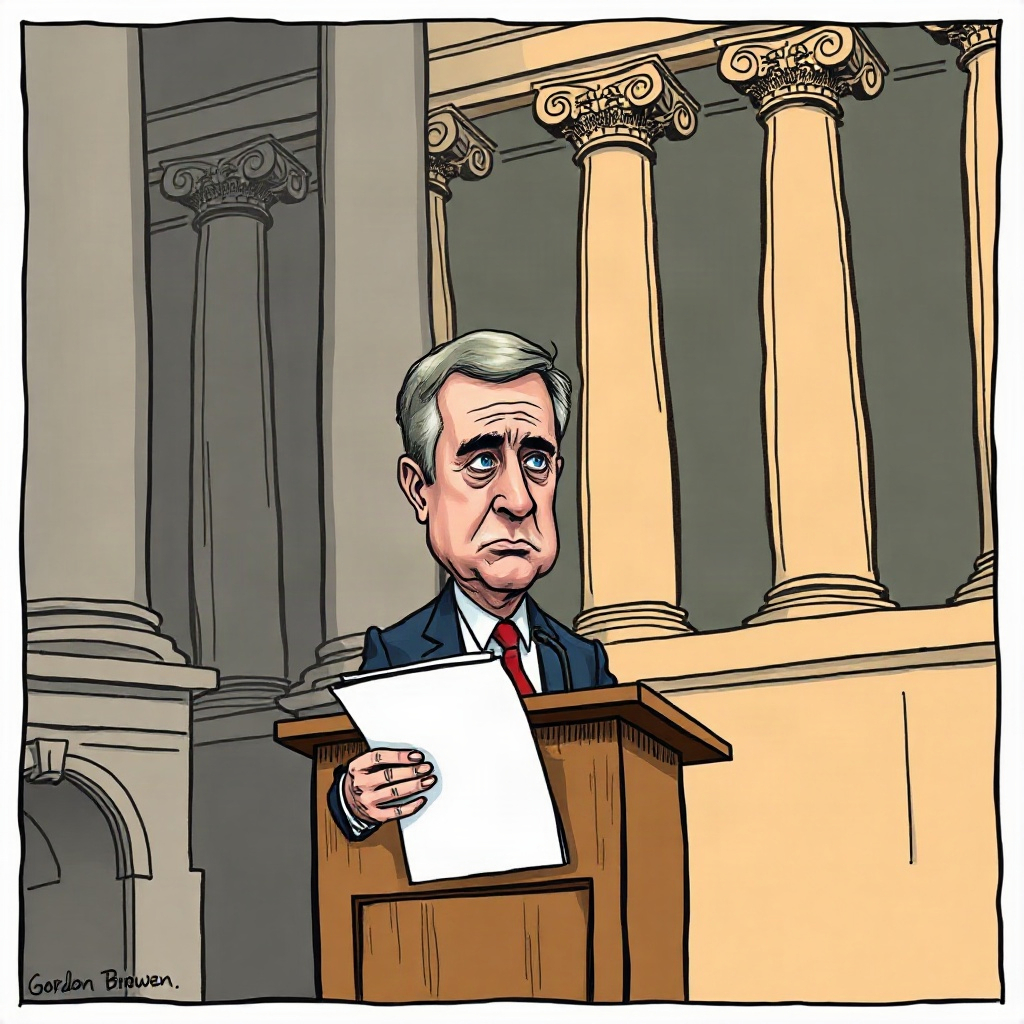
Gordon Brown · Former Prime Minister of the United Kingdom
Gordon Brown served as the United Kingdom's Chancellor of the Exchequer from 1997 to 2007 and subsequently as Prime Minister from 2007 to 2010. Throughout his tenure at the summit of the British government, Brown was defined by an austere public persona and a focus on international economic governance. Following the arrest and subsequent death of convicted sex offender Jeffrey Epstein in 2019, intense public and investigative attention turned toward Epstein's extensive web of political, financial, and aristocratic connections. Within British politics, the primary focus rested on high-profile figures such as Prince Andrew and Lord Peter Mandelson. Inevitably, the sprawling nature of Epstein's social network prompted scrutiny into whether other senior architects of New Labour, including Gordon Brown, had any direct or indirect involvement with the American financier.
A thorough examination of available public records, court filings, and official disclosures reveals no evidence that Gordon Brown ever met Jeffrey Epstein, communicated with him, or maintained any personal or financial relationship with him. Brown's name does not appear in Epstein's widely publicized address book, commonly referred to as the black book, nor is it present on any of the flight manifests from Epstein's private aircraft, which carried numerous global dignitaries over two decades. Furthermore, extensive tranches of court documents unsealed in the Southern District of New York, including depositions and exhibits from civil suits filed by Virginia Giuffre, contain no references to Brown engaging in social visits, financial transactions, or meetings with Epstein.
The intersection between Gordon Brown and the Jeffrey Epstein scandal is instead institutional and political, arising primarily from the actions of Brown's most influential cabinet minister, Peter Mandelson. Mandelson, who served as Brown's Business Secretary and First Secretary of State from 2008 until Labour left office in 2010, maintained a documented personal relationship with Epstein that spanned more than a decade. The overlap between Mandelson's official duties in Brown's government and his continued association with Epstein post-conviction has formed the core of investigative inquiries concerning the Downing Street administration during that era.
Public reporting and archival records document that Mandelson's association with Epstein continued even after Epstein pleaded guilty in Florida in 2008 to state charges of soliciting prostitution from a minor. In June 2009, while Epstein was serving his eighteen-month sentence with work-release privileges in Palm Beach, Mandelson reportedly stayed at Epstein's Manhattan townhouse on East 71st Street. At that time, Mandelson held the title of First Secretary of State and was functionally Brown's deputy prime minister, handling critical government negotiations amid the global financial crisis. Photographic evidence and subsequent investigative reports confirmed Mandelson's presence at the residence, raising questions about whether Number 10 Downing Street was aware of the senior minister's accommodations.
Related articles
Jeffrey Epstein and Central Intelligence Agency (CIA)
An investigative review of alleged ties between Jeffrey Epstein and the CIA, examining FOIA filings, Acosta's remarks, and official calendar records.
Read article →
Jeffrey Epstein and Federal Bureau of Investigation (FBI)
An investigative analysis of Jeffrey Epstein's decades-long history with the FBI, from the 2006 Palm Beach probe to the 2019 Manhattan raid and FOIA files.
Read article →
Jeffrey Epstein and Secret Intelligence Service (MI6)
Investigative analysis of Jeffrey Epstein's alleged links to Britain's Secret Intelligence Service (MI6), Ghislaine Maxwell, and elite UK networks.
Read article →
Jeffrey Epstein and Directorate-General for External Security (DGSE)
Investigating allegations and public records regarding Jeffrey Epstein, his Paris operations, and France's foreign intelligence agency, the DGSE.
Read article →