Jeffrey Epstein &
Does 1-22 v. United States
Federal lawsuit by Epstein victims
Key Facts
Case No. 08-cv-80736-KAM (U.S. District Court for the Southern District of Florida)
Case Citation
Jane Doe 1 and Jane Doe 2 v. United States (2008)
18 U.S.C. § 3771 (Crime Victims' Rights Act)
Governing Statute
U.S. District Court Order (2019)
Prosecutors violated federal statutory duties by concealing immunity negotiations from identified victims
Primary Judicial Finding
Judge Kenneth A. Marra Ruling (2019)
Dismissed 7-4 by en banc 11th Circuit due to statutory limits on pre-charge rights
Final Appellate Outcome
Eleventh Circuit Court of Appeals (2021)
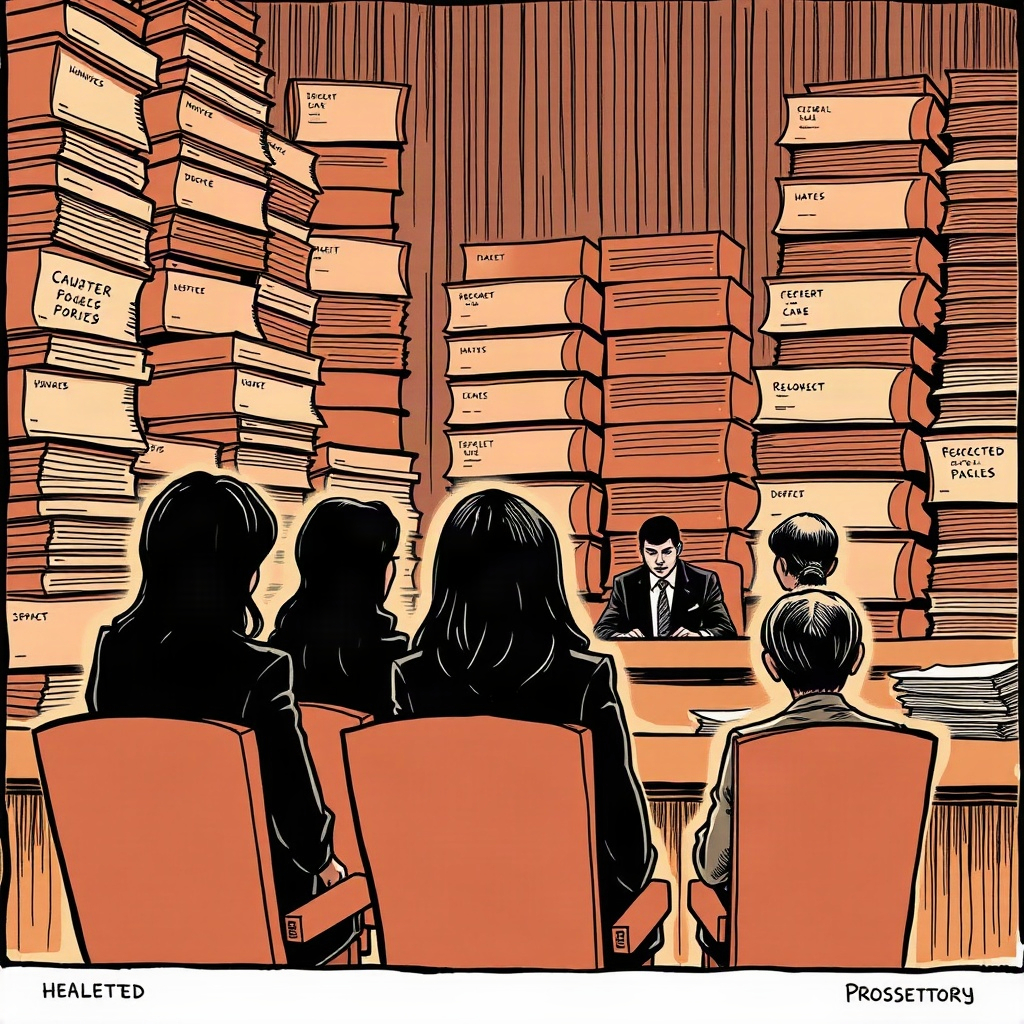
Does 1-22 v. United States · Federal lawsuit by Epstein victims
For more than a decade, the most consequential legal battle surrounding Jeffrey Epstein did not pit the disgraced financier against federal prosecutors, but rather pitted his victims against the federal government itself. Operating under anonymous pseudonyms to protect their privacy, dozens of survivors—identified across successive federal dockets as Jane Does—embarked on a protracted campaign to hold the United States Department of Justice accountable for what federal judges would later characterize as a profound institutional failure. The core of this legal crusade began under the Crime Victims' Rights Act and expanded into subsequent administrative tort claims, exposing the inner workings of the controversial 2007 non-prosecution agreement engineered between federal prosecutors in South Florida and Epstein's elite defense team.
The genesis of this historic litigation dates back to 2008, when Courtney Wild, proceeding initially as Jane Doe 1 alongside Jane Doe 2, filed a federal civil suit in the U.S. District Court for the Southern District of Florida under Case Number 08-cv-80736. The lawsuit alleged that federal prosecutors, led by then-U.S. Attorney Alexander Acosta, violated the 2004 Crime Victims' Rights Act by intentionally concealing negotiations regarding Epstein's clandestine non-prosecution agreement. Under the terms of that 2007 pact, federal prosecutors agreed not to bring federal charges against Epstein and granted sweeping, unprecedented immunity to any potential co-conspirators. Crucially, the government agreed to keep the deal entirely secret from the dozens of young women and underage girls who had provided evidence to the Federal Bureau of Investigation and local Palm Beach detectives.
As the litigation progressed across multiple years, the scope of the challenge widened substantially. What began as a petition by two brave survivors grew into a broader institutional confrontation as additional victims joined the pleadings, intervened, or submitted supporting declarations as numbered Does. Legal filings made clear that the government had systematically misled these victims throughout late 2007 and early 2008. While prosecutors were actively drafting the non-prosecution agreement that effectively shielded Epstein from federal prison, government victim coordinators were assuring the young women that the investigation remained ongoing and that their interests were being actively protected. This deliberate deception deprived the victims of their statutory right to confer with prosecutors, attend proceedings, and challenge the resolution before Epstein entered a tailored state-level guilty plea to minor solicitation offenses.
Related articles
Jeffrey Epstein and Darren K. Indyke
Investigative profile of Darren K. Indyke, Jeffrey Epstein's longtime personal attorney, corporate architect, and co-executor of his estate.
Read article →

Jeffrey Epstein and Richard D. Kahn
Investigative profile of Richard D. Kahn, Jeffrey Epstein's long-time accountant and co-executor of his multi-million-dollar estate.
Read article →
Jeffrey Epstein and Michael F. McAuliffe
Investigative review of Michael F. McAuliffe, Palm Beach State Attorney who inherited Jeffrey Epstein's case file and work-release fallout.
Read article →
Jeffrey Epstein and A. Marie Villafaña
Investigative profile of federal prosecutor A. Marie Villafaña, who drafted Jeffrey Epstein's controversial 2007 non-prosecution agreement in Florida.
Read article →