Key Facts
No public deed records link Epstein or his primary LLCs directly to Tumbledown Estate.
Direct Legal Ownership
Municipal and County Property Registries
No direct flight log entries explicitly corroborate Epstein's presence at the property.
Flight Log Documentation
Subpoenaed Pilot Logs (2019)
Classified as an uncorroborated tip and subject of peripheral media scrutiny.
Evidentiary Status
FBI FOIA Disclosures
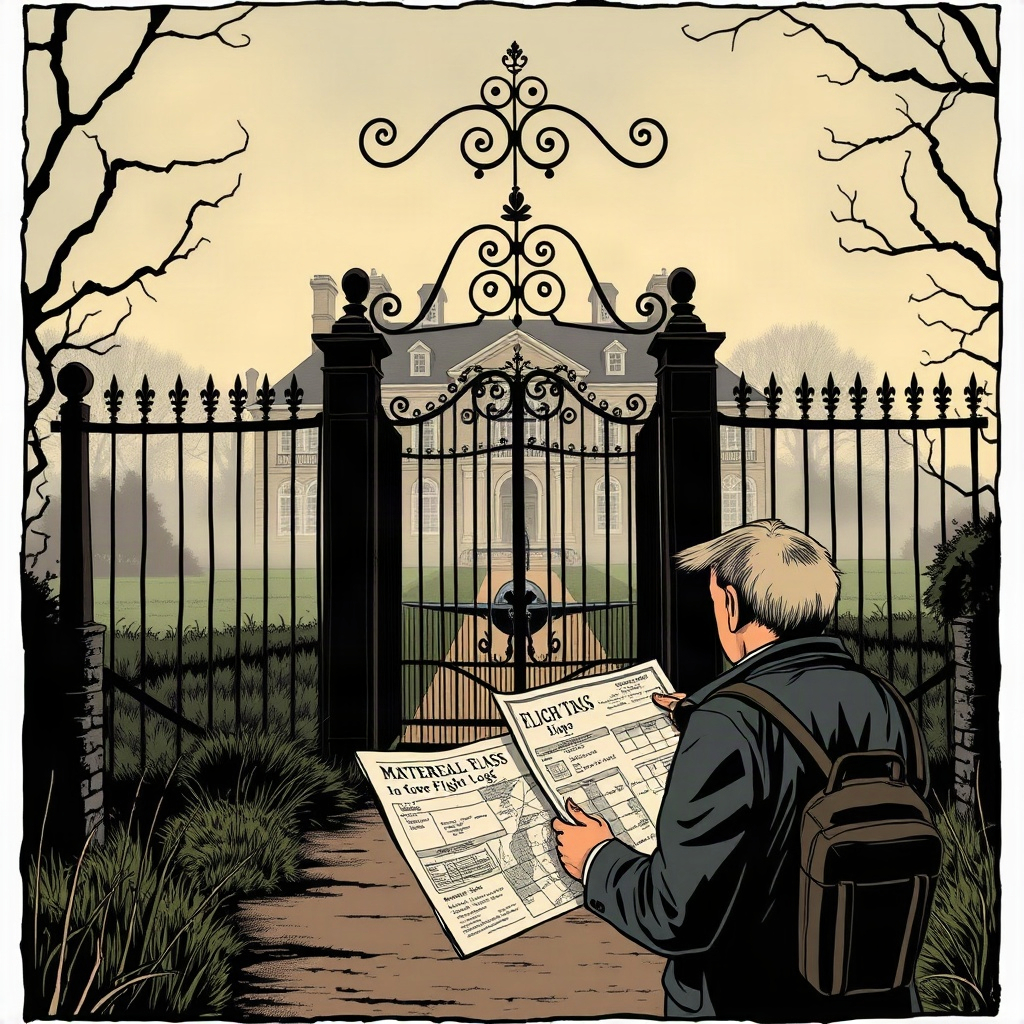
Tumbledown Estate · Private residential estate
In the wake of Jeffrey Epstein’s July 2019 arrest by federal prosecutors in the Southern District of New York, investigative journalists and legal teams launched an exhaustive global inventory of real estate connected to the convicted sex offender. While Epstein’s primary residences—the Herbert N. Straus mansion on Manhattan’s Upper East Side, the El Brillo Way waterfront compound in Palm Beach, the sprawling Zorro Ranch outside Santa Fe, his Avenue Foch apartment in Paris, and his private islands of Little Saint James and Great Saint James in the U.S. Virgin Islands—are comprehensively documented in land deeds and criminal indictments, an array of secondary and peripheral properties also emerged in public reporting. Among these peripheral locations subjected to archival scrutiny is Tumbledown Estate, a secluded property that surfaced in investigative inquiries, public record searches, and witness tip-lines regarding the broader geographical footprint of Epstein and his long-time associate Ghislaine Maxwell.
Investigative interest in Tumbledown Estate arose primarily during the post-2019 efforts by independent researchers, legal investigators, and media outlets to map every location frequented by Epstein, his social network, and his aircraft. In the legal proceedings surrounding Epstein’s criminal enterprise, particularly the civil defamation and battery suit Virginia Giuffre v. Ghislaine Maxwell and the subsequent criminal trial United States v. Maxwell, court dockets frequently revealed the regular use of isolated country estates to evade press attention and law enforcement scrutiny. Maxwell’s own arrest in July 2020 at "Tucked Away," a remote 156-acre estate in Bradford, New Hampshire, demonstrated the network's reliance on obscure, rural redoubts acquired through opaque corporate vehicles. In the months following her capture, researchers scrutinizing real estate transactions, trust documents, and corporate registrations cross-referenced numerous secluded rural tracts, bringing properties like Tumbledown into investigative discussions regarding potential safehouses, social venues, or waypoints for high-profile associates.
Related articles
Jeffrey Epstein and Great St. James
Investigative report on Jeffrey Epstein's 2016 purchase of Great St. James, illicit island development, regulatory battles, and USVI civil litigation.
Read article →
Jeffrey Epstein and 49 East 66th Street
An investigative review of 49 East 66th Street, examining public records, Epstein contact archives, and Upper East Side real estate connections.
Read article →
Jeffrey Epstein and 22 Avenue Foch
Investigative report on Jeffrey Epstein's luxury apartment at 22 Avenue Foch in Paris, detailing police raids, survivor accounts, and legal fallout.
Read article →
Jeffrey Epstein and American Yacht Harbor
Investigative analysis of American Yacht Harbor in St. Thomas, the primary transit hub and staging ground for Jeffrey Epstein's private island.
Read article →