Key Facts
Listed in Jeffrey Epstein's unredacted personal contact directory ('Little Black Book')
Documentary Status
Federal Court Exhibits, Giuffre v. Maxwell
No record on released Epstein flight manifests
Flight Log Status
SDNY Trial Exhibits (2021)
Swiss auctioneer, curator, and former Chairman of Phillips de Pury & Company
Professional Role
Artnet News
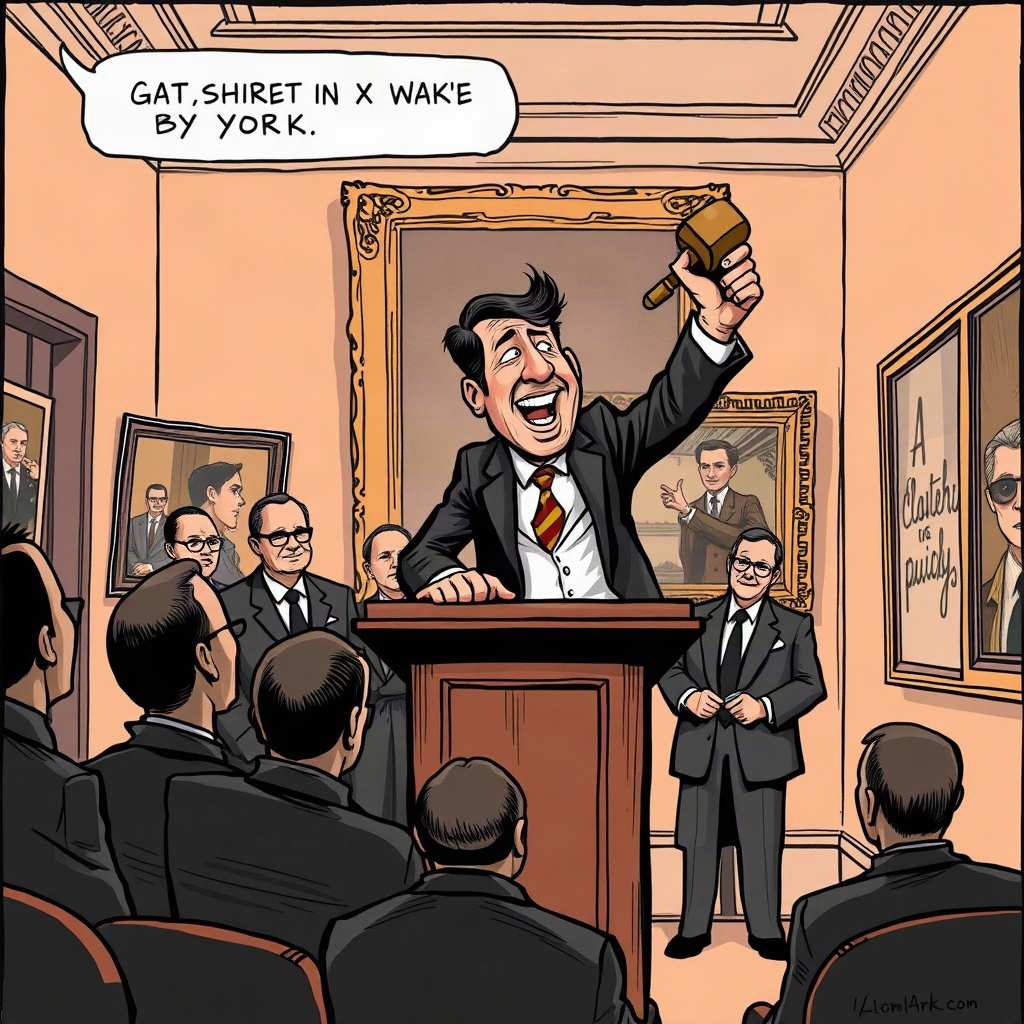
Simon de Pury · Art Auctioneer and Collector
In the high-stakes, international ecosystem of contemporary art and luxury auctions, few personalities have commanded the rostrum with the flamboyant energy of Simon de Pury. The Swiss-born auctioneer, curator, and former chairman of Phillips de Pury & Company cultivated a reputation as the consummate art-market insider, navigating exclusive European estates, private collections, and the ultra-wealthy patronage networks of New York, London, and Geneva. When federal law enforcement scrutiny tore open the private archives and contact directories of Jeffrey Epstein following the financier's 2019 indictment by the U.S. Attorney's Office for the Southern District of New York, de Pury emerged as one of hundreds of prominent cultural figures whose names and coordinates populated Epstein's private personal directories.
Epstein’s sprawling personal contact registry, often dubbed the little black book, served as an operational index of the financier’s social, commercial, and philanthropic access points. Within these unredacted files, originally compiled in the mid-2000s by Epstein’s household staff and later filed as public exhibits in federal civil proceedings, de Pury is recorded alongside telephone numbers and institutional contact coordinates reflecting his professional prominence. In investigative records that trace the social topography of Epstein’s post-conviction and pre-conviction life, the presence of an elite auctioneer underscores how deeply Epstein entrenched himself in the high-end secondary art market, an arena historically characterized by financial opacity and client confidentiality.
To understand the context of de Pury's appearance in these records, investigative reporting has closely examined Epstein’s aggressive cultivation of the contemporary art world. Epstein's residences, most notably the Herbert N. Straus mansion at 9 East 71st Street in Manhattan and his compound in Palm Beach, featured extensive collections of art, eccentric decorative commissions, and blue-chip works. The acquisition and liquidation of such assets invariably brought Epstein into contact with the leadership of major auction houses and boutique advisory firms. During the 2000s, when de Pury was actively reshaping Phillips de Pury & Company into a leading clearinghouse for contemporary art, design, and photography, the auction house aggressively pursued relationships with wealthy private collectors in Manhattan, establishing a high-profile clientele that mirrored the broader billionaire demographic in Epstein’s Rolodex.
Related articles
Jeffrey Epstein and Great St. James
Investigative report on Jeffrey Epstein's 2016 purchase of Great St. James, illicit island development, regulatory battles, and USVI civil litigation.
Read article →
Jeffrey Epstein and 49 East 66th Street
An investigative review of 49 East 66th Street, examining public records, Epstein contact archives, and Upper East Side real estate connections.
Read article →
Jeffrey Epstein and 22 Avenue Foch
Investigative report on Jeffrey Epstein's luxury apartment at 22 Avenue Foch in Paris, detailing police raids, survivor accounts, and legal fallout.
Read article →

Jeffrey Epstein and American Yacht Harbor
Investigative analysis of American Yacht Harbor in St. Thomas, the primary transit hub and staging ground for Jeffrey Epstein's private island.
Read article →