Jeffrey Epstein &
Sheikh Mohammed bin Zayed Al Nahyan
President of the United Arab Emirates
Key Facts
Ambassador Yousef Al Otaiba
Key UAE Diplomatic Contact
The Intercept (2017)
International Peace Institute (IPI), supported by UAE funding
Institutional Nexus
Dagens Næringsliv (2020)
Unverified; documented contact occurred primarily via intermediaries and calendars
Direct Evidence of Bilateral Meeting
SDNY Court Disclosures (2023)
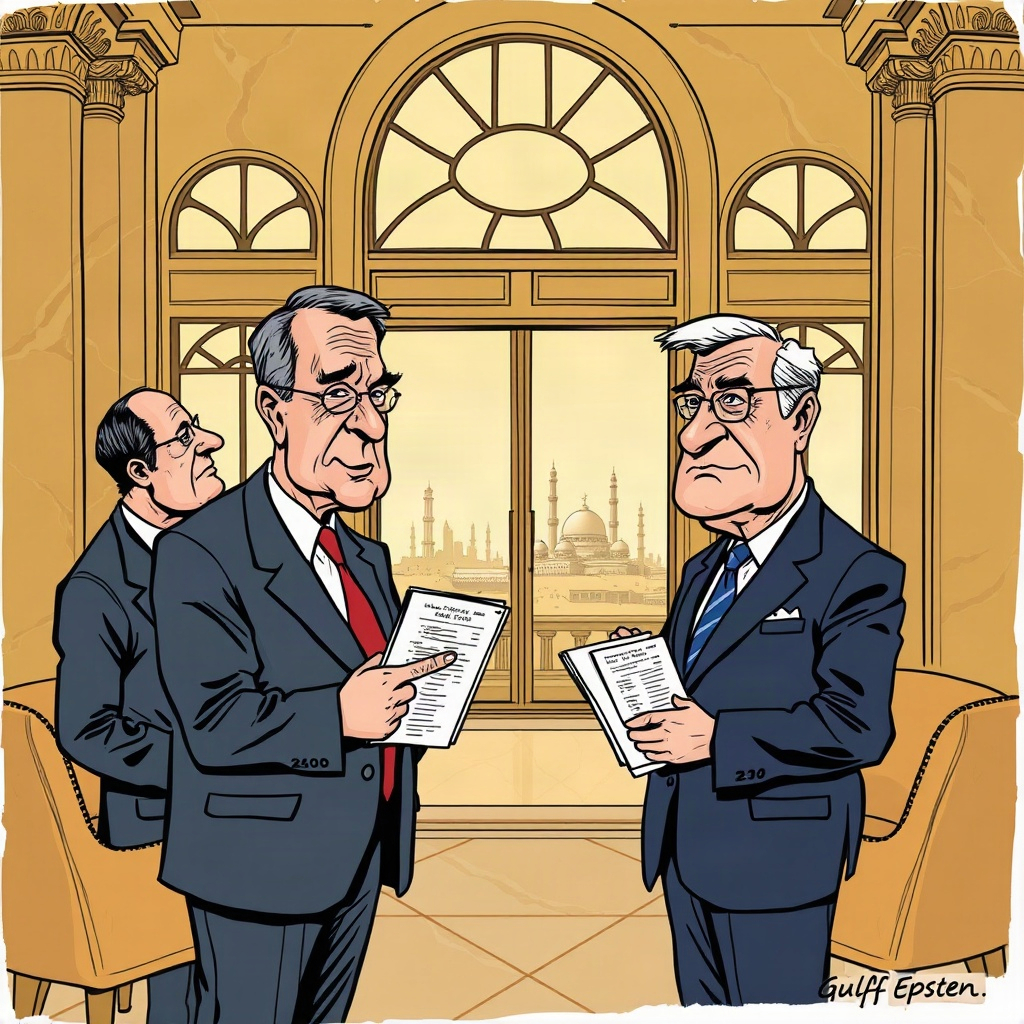
Sheikh Mohammed bin Zayed Al Nahyan · President of the United Arab Emirates
Sheikh Mohammed bin Zayed Al Nahyan, widely known by the acronym MBZ, serves as the President of the United Arab Emirates and the ruler of Abu Dhabi. Long regarded as the de facto architect of the Emirates' modernization and aggressive foreign policy, MBZ spent decades expanding the nation's geopolitical influence, overseeing immense sovereign wealth funds, and cultivating dense relationships with Western political and financial elites. Following Jeffrey Epstein's 2008 conviction in Florida for soliciting prostitution from a minor, the disgraced financier undertook a persistent, calculated effort to reassert himself on the global stage. A significant component of this post-conviction campaign centered on the Persian Gulf, where sovereign capital, defense procurement, and private diplomacy converged. Investigative disclosures, congressional inquiries, and leaked communications have revealed how Epstein systematically sought access to the highest echelons of power in Abu Dhabi, repeatedly referencing Sheikh Mohammed bin Zayed and his inner circle.
The documentary record detailing Epstein's connections to Gulf leadership expanded substantially between 2021 and 2023, following civil litigation brought by the U.S. Virgin Islands against JPMorgan Chase and subsequent releases of internal schedules obtained by major news organizations. Calendar entries and correspondence demonstrated that Epstein sought to position himself as an informal financial conduit and geopolitical advisor capable of bridging Wall Street institutions and Gulf sovereign investors. In these records, Epstein frequently referenced Abu Dhabi's ruling family and its primary investment vehicles, including Mubadala Investment Company, attempting to orchestrate meetings involving Western business executives and senior Emirati officials. While Epstein's private schedules frequently noted planned interactions and discussions regarding the Abu Dhabi royal court, the documentation illustrates a complex web of intermediaries rather than an unambiguous trail of personal, closed-door partnerships with MBZ himself.
Central to Epstein's connection to the Emirati leadership was his established access to diplomatic emissaries operating in Washington and New York. Among the most prominent figures in this network was Yousef Al Otaiba, the long-serving UAE Ambassador to the United States and a trusted confidant of Sheikh Mohammed bin Zayed. Leaked emails from Otaiba's diplomatic office, published by media outlets in 2017, revealed that Epstein communicated directly with the ambassador, proposing meetings and discussing financial structures. In one exchange, Epstein offered to introduce high-profile financiers to Emirati officials and coordinated logistical details for potential discussions. Ambassador Otaiba's office later acknowledged the correspondence, framing the communications as routine diplomatic interactions initiated by Epstein, who was widely known across Washington social circles prior to his broader public exposure.
Related articles

Jeffrey Epstein and Prince Andrew, Duke of York
An investigative record of Prince Andrew's ties to Jeffrey Epstein, examining flight logs, Virginia Giuffre's allegations, and the royal fallout.
Read article →

Jeffrey Epstein and Sarah Ferguson, Duchess of York
Investigative overview of Sarah Ferguson's ties to Jeffrey Epstein, detailing financial transactions, public admissions, and unsealed records.
Read article →
Jeffrey Epstein and Princess Beatrice of York
Investigative report examining Princess Beatrice of York's documented connections to Jeffrey Epstein through Prince Andrew's social and royal circle.
Read article →
Jeffrey Epstein and Princess Eugenie of York
An investigative review of public records, court filings, and royal finances detailing Princess Eugenie's proximity to Jeffrey Epstein's network.
Read article →