Jeffrey Epstein &
Richard Axel
Nobel Laureate Neuroscientist, Columbia University
Key Facts
2004 Nobel Prize in Physiology or Medicine
Nobel Recognition
Nobel Prize Foundation (2004)
University Professor and HHMI Investigator, Columbia University
Academic Affiliation
Columbia University Faculty Directory
Listed in Epstein's verified contact directory ('black book')
Record Occurrence
Court Exhibits, Giuffre v. Maxwell (2015)
None identified in criminal indictments, civil litigation, or university reviews
Documented Misconduct
SDNY Court Records (2019)
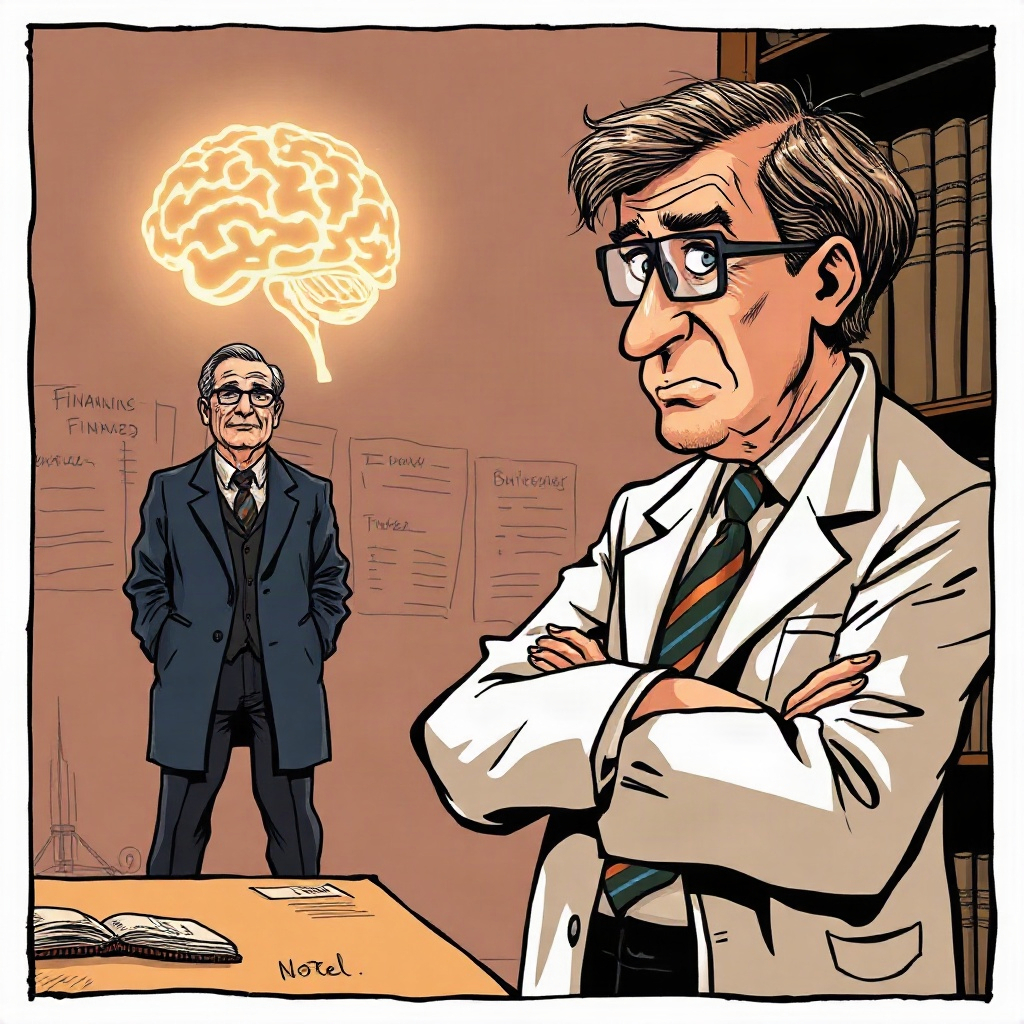
Richard Axel · Nobel Laureate Neuroscientist, Columbia University
For decades leading up to his final arrest in July 2019, Jeffrey Epstein methodically engineered an expansive personal network spanning international politics, high finance, and the upper echelons of academic science. Epstein viewed scientific patronage not merely as an eccentric hobby, but as a core vehicle for social rehabilitation and intellectual validation, particularly after his 2008 Florida conviction for soliciting prostitution from a minor. Among the hundreds of researchers, geneticists, and neuroscientists whose names entered Epstein's sphere of interest was Dr. Richard Axel, a preeminent molecular biologist and University Professor at Columbia University. Axel's presence in records associated with the financier illustrates the pervasive reach of Epstein's outreach into the world of elite biomedical research, while underscoring the critical journalistic distinction between documented criminal complicity and passive inclusion within a billionaire's Rolodex.
Dr. Richard Axel is widely regarded as one of the most consequential neuroscientists of his generation. An investigator at the Howard Hughes Medical Institute and co-director of Columbia University's Mortimer B. Zuckerman Mind Brain Behavior Institute, Axel spent decades deciphering how the brain translates chemical sensory signals into complex cognitive perceptions. His foundational work alongside Dr. Linda Buck mapped the gene family responsible for olfactory receptors, demonstrating how mammalian olfactory systems identify thousands of individual odors. This pioneering research earned Axel and Buck the 2004 Nobel Prize in Physiology or Medicine. In academic circles, Axel achieved rare status as both a scientific luminary and a central figure in New York City's intellectual establishment, precisely the profile Epstein sought to co-opt as he cultivated an image of a visionary scientific philanthropist.
Related articles
Jeffrey Epstein and Ethan Zuckerman
Investigative report on Ethan Zuckerman's principled resignation from the MIT Media Lab following revelations of Jeffrey Epstein's covert funding.
Read article →

Jeffrey Epstein and Signe Swenson
Investigative profile of Signe Swenson, her documented interactions with Jeffrey Epstein in Palm Beach, and her role in public records and exposés.
Read article →
Jeffrey Epstein and Peter Cohen
Investigative report examining the documented links and address book ties between Jeffrey Epstein and former Shearson Lehman CEO Peter Cohen.
Read article →
Jeffrey Epstein and Nicholas Negroponte
Investigative review of MIT Media Lab co-founder Nicholas Negroponte's ties to Jeffrey Epstein and his defense of donations from the financier.
Read article →