Jeffrey Epstein &
Princess Ira von Fürstenberg
Italian actress, socialite, jewelry designer
Key Facts
Listed in Epstein's address book with European phone numbers in Paris and Rome
Documented Contact Record
Epstein Address Book (SDNY Exhibit)
No documented passenger entries on Epstein's aircraft manifests
Flight Log Presence
FAA Pilot Flight Logs
Never accused, named, or implicated in any criminal conduct or civil claims
Legal Status
SDNY Court Dockets
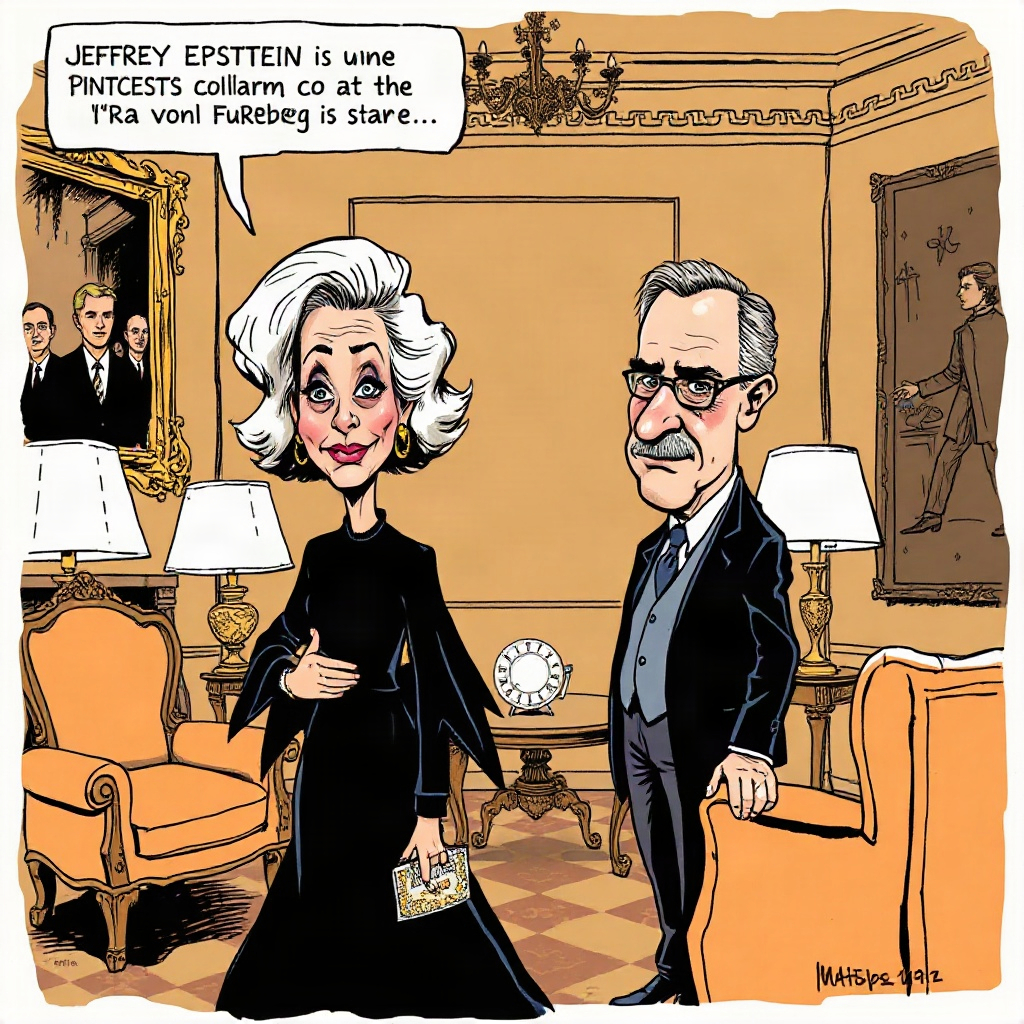
Princess Ira von Fürstenberg · Italian actress, socialite, jewelry designer
The investigative fallout surrounding the global network of Jeffrey Epstein has frequently focused on the mechanisms by which an uncredentialed financier from Brooklyn systematically ingratiated himself into the uppermost echelons of international high society. Among the European aristocrats, dynastic heirs, and jet-set personalities whose contact details appeared within Epstein’s personal archives was Princess Ira von Fürstenberg, a prominent European socialite, actress, and jewelry designer who died in Rome in February 2024 at the age of 83. Examining her presence within Epstein’s records provides a window into the transatlantic social architecture cultivated by Epstein and his longtime associate Ghislaine Maxwell during the 1990s and early 2000s, while underscoring the critical journalistic distinction between social proximity and criminal involvement.
Born Virginia Carolina Theresa Pancrazia Galdina zu Fürstenberg in Rome in 1940, Princess Ira was the daughter of Prince Tassilo zu Fürstenberg and Clara Agnelli, a prominent heiress to the Fiat automotive empire. Her life was characterized by intense public fascination from an early age. In 1955, at just fifteen years old, she entered into a widely publicized marriage with Prince Alfonso of Hohenlohe-Langenburg, which brought international press attention to their lavish Mediterranean circles. Following the dissolution of that marriage and a subsequent high-profile union with the Italian-Brazilian industrialist Francisco Matarazzo Pignatari, she reinvented herself as an actress in European cinema during the 1960s and 1970s, later becoming a luxury jewelry designer, philanthropist, and ubiquitous fixture in aristocratic enclaves spanning Rome, Paris, Madrid, and Marbella. For decades, her pedigree, familial wealth, and extensive personal network positioned her as a central figure in European café society.
Epstein’s operational strategy relied heavily on collecting individuals possessing genuine pedigree. Investigative reporting and legal records demonstrate that Epstein deliberately surrounded himself with figures of unquestioned aristocratic and financial legitimacy to project an aura of unassailable prestige. Ghislaine Maxwell, the daughter of the late British media tycoon Robert Maxwell, served as the primary bridge facilitating access to these hereditary elites. Maxwell possessed preexisting connections to European royal families and continental nobility, allowing the pair to circulate in elite gatherings where Epstein’s actual commercial activities were seldom subjected to rigorous scrutiny. Princess Ira was an influential participant in precisely those cosmopolitan circles, where the Agnelli lineage and Hohenlohe connections offered immediate status.
Related articles

Jeffrey Epstein and Prince Andrew, Duke of York
An investigative record of Prince Andrew's ties to Jeffrey Epstein, examining flight logs, Virginia Giuffre's allegations, and the royal fallout.
Read article →
Jeffrey Epstein and Sarah Ferguson, Duchess of York
Investigative overview of Sarah Ferguson's ties to Jeffrey Epstein, detailing financial transactions, public admissions, and unsealed records.
Read article →

Jeffrey Epstein and Princess Beatrice of York
Investigative report examining Princess Beatrice of York's documented connections to Jeffrey Epstein through Prince Andrew's social and royal circle.
Read article →
Jeffrey Epstein and Princess Eugenie of York
An investigative review of public records, court filings, and royal finances detailing Princess Eugenie's proximity to Jeffrey Epstein's network.
Read article →