Jeffrey Epstein &
Prince Egon von Fürstenberg
Fashion Designer and German Aristocrat
Key Facts
Listed in Epstein's personal address book with New York and Italian contact details
Documentary Link
Epstein Address Book
No documented flights aboard Epstein's private aircraft
Flight Log Records
U.S. v. Maxwell Trial Exhibits
Zero criminal or civil allegations of wrongdoing made by victims or prosecutors
Allegations of Misconduct
Giuffre v. Maxwell Court Filings
June 11, 2004
Date of Death
The New York Times
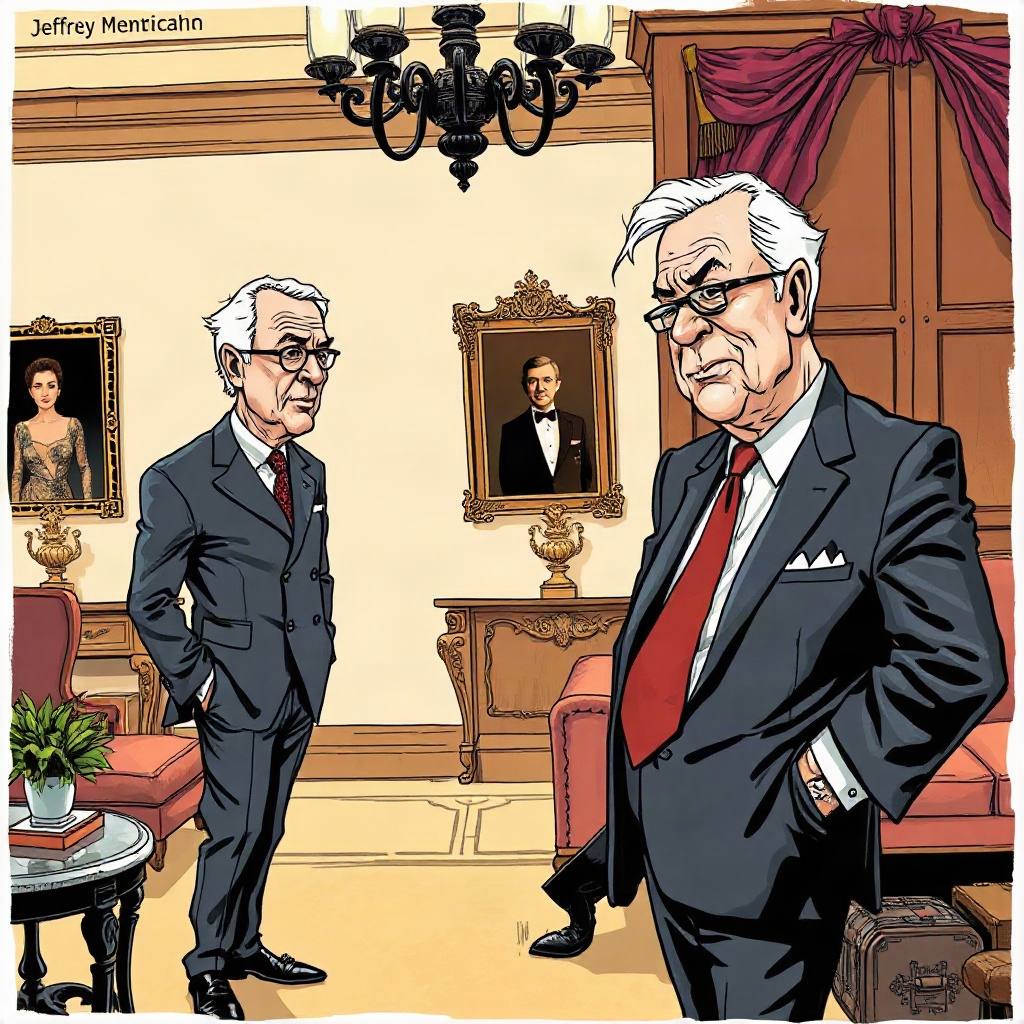
Prince Egon von Fürstenberg · Fashion Designer and German Aristocrat
The intersection of European aristocracy and Jeffrey Epstein’s sprawling network of elite patronage remains one of the most scrutinized aspects of the late financier’s life. Among the hundreds of titled nobles, corporate titans, and entertainment icons documented in Epstein’s private records is Prince Eduard Egon Peter Paul Giovanni Prinz zu Fürstenberg, widely known as Prince Egon von Fürstenberg. A member of the ancient Swabian noble House of Fürstenberg and an heir to the Italian Agnelli industrial dynasty through his mother, Clara Agnelli, Egon occupied a glittering, flamboyant position in the transatlantic social circuit. His appearance in Epstein’s personal contact directories underscores the financier’s relentless campaign to weave his operation into the fabric of international high society, even where direct involvement in criminal misconduct has never been established.
Prince Egon von Fürstenberg first rose to global prominence in the late 1960s, both through his aristocratic heritage and his high-profile marriage to Diane Halfin, later known globally as the fashion designer Diane von Fürstenberg. Although the couple separated in the 1970s and subsequently divorced, Egon forged his own career in the fashion industry. He launched men's fashion lines, authored books on men’s style and manners, and became an enduring fixture in the international party circuits that spanned Manhattan, Paris, and Rome. His charismatic presence was emblematic of the freewheeling, jet-set culture that characterized New York social life from the Studio 54 era through the turn of the twenty-first century. It was precisely this upper echelon of fashion designers, models, and socialites that Epstein systematically targeted as he assembled his social Rolodex.
Epstein’s operational strategy relied heavily on the social currency of established European royalty and Manhattan aristocracy. From the late 1980s onward, Epstein and his longtime associate Ghislaine Maxwell positioned themselves as central figures in high-society hosting, cultivating individuals whose pedigrees conferred an aura of unassailable legitimacy. Prince Egon von Fürstenberg moved in the exact circles where Epstein sought influence. In the fashion capitals of New York and Milan, high-net-worth socialites and aristocratic designers frequently crossed paths at private galas, charity balls, and high-fashion industry events. Epstein used these settings to extract contact information, maintain superficial social ties, and present himself as a peer to genuine global royalty.
Related articles
Jeffrey Epstein and Prince Andrew, Duke of York
An investigative record of Prince Andrew's ties to Jeffrey Epstein, examining flight logs, Virginia Giuffre's allegations, and the royal fallout.
Read article →
Jeffrey Epstein and Sarah Ferguson, Duchess of York
Investigative overview of Sarah Ferguson's ties to Jeffrey Epstein, detailing financial transactions, public admissions, and unsealed records.
Read article →
Jeffrey Epstein and Princess Beatrice of York
Investigative report examining Princess Beatrice of York's documented connections to Jeffrey Epstein through Prince Andrew's social and royal circle.
Read article →
Jeffrey Epstein and Princess Eugenie of York
An investigative review of public records, court filings, and royal finances detailing Princess Eugenie's proximity to Jeffrey Epstein's network.
Read article →