Jeffrey Epstein &
Prince Alfonso de Hohenlohe-Langenburg
Aristocrat and Marbella Club Founder
Key Facts
Prince Alfonso de Hohenlohe and family contacts recorded in Epstein's personal address book
Contact Book Entry
Epstein Address Book Exhibit, Giuffre v. Maxwell
December 21, 2003, predating Epstein's first police investigation
Date of Death
The Daily Telegraph
Founder of the Marbella Club and key figure in Mediterranean café society
Marbella Legacy
El País
No criminal allegations or victim accusations ever leveled against Prince Alfonso
Legal Status
SDNY Indictment (2019)
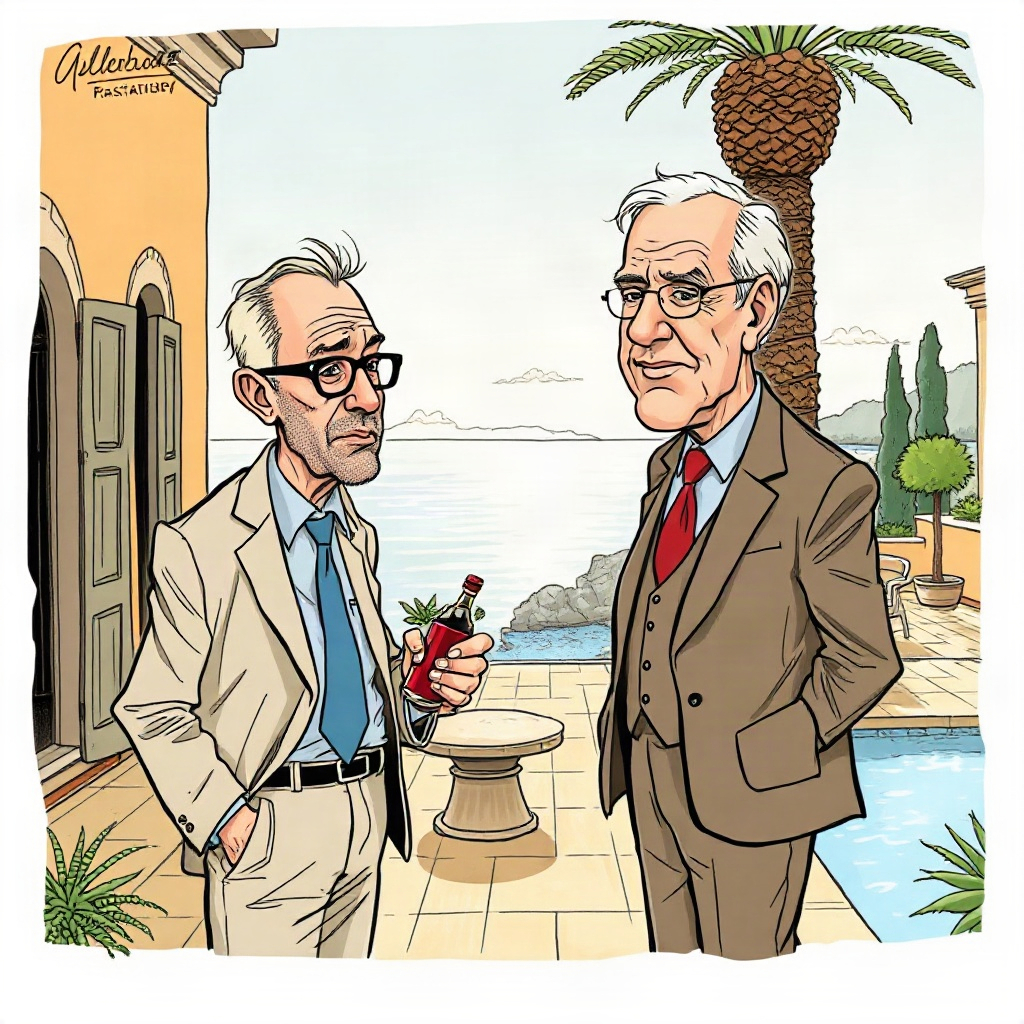
Prince Alfonso de Hohenlohe-Langenburg · Aristocrat and Marbella Club Founder
When investigative reporters and federal prosecutors began unraveling Jeffrey Epstein’s sprawling international web, one recurring motif was his systematic cultivation of European royalty and landed gentry. Among the names recorded in Epstein’s personal address records and social directories is that of Prince Alfonso Maximiliano Victorio Eugenio Alejandro María de Hohenlohe-Langenburg. A fixture of international café society and the founding father of the modern Mediterranean resort culture in Marbella, Prince Alfonso moved in the rarefied social stratosphere that Epstein spent decades attempting to penetrate. Examining the nexus between the disgraced American financier and the German-Spanish prince illuminates how Epstein positioned himself within aristocratic European circles long before his initial arrest in Florida.
Prince Alfonso de Hohenlohe-Langenburg, born in Madrid in 1924, was the scion of a prominent German princely house with deep roots in the Spanish aristocracy. In the mid-twentieth century, Alfonso acquired a modest farmhouse along the Andalusian coast and transformed it into the Marbella Club, an exclusive sanctuary that quickly attracted Hollywood stars, royalty, and billionaire industrialists. Alfonso’s own personal life—marked by early marriages to figures such as Princess Ira von Fürstenberg and extensive ties to European high society—cemented his status as a jet-set patriarch. His world was defined by discretion, private villas, and an unwritten code of exclusivity that insulated wealthy elites from public scrutiny.
Jeffrey Epstein’s entry into this orbit began in earnest during the 1990s, catalyzed by his relationship with British socialite Ghislaine Maxwell. Maxwell, the daughter of disgraced media baron Robert Maxwell, possessed the ancestral and social connections necessary to navigate the highest tiers of European society. Through Maxwell and his own calculated philanthropic overtures, Epstein sought to assemble an address book that functioned as social armor. Public records, including Epstein’s heavily annotated black book that later entered federal court dockets as an exhibit, reveal contact details associated with the Hohenlohe dynasty, including residential numbers and European contact points for Prince Alfonso and his immediate circle.
Related articles
Jeffrey Epstein and Prince Andrew, Duke of York
An investigative record of Prince Andrew's ties to Jeffrey Epstein, examining flight logs, Virginia Giuffre's allegations, and the royal fallout.
Read article →
Jeffrey Epstein and Sarah Ferguson, Duchess of York
Investigative overview of Sarah Ferguson's ties to Jeffrey Epstein, detailing financial transactions, public admissions, and unsealed records.
Read article →
Jeffrey Epstein and Princess Beatrice of York
Investigative report examining Princess Beatrice of York's documented connections to Jeffrey Epstein through Prince Andrew's social and royal circle.
Read article →
Jeffrey Epstein and Princess Eugenie of York
An investigative review of public records, court filings, and royal finances detailing Princess Eugenie's proximity to Jeffrey Epstein's network.
Read article →