Jeffrey Epstein &
Lord Conrad Black
Newspaper Publisher and British Peer
Key Facts
Social acquaintances through Palm Beach society and Ghislaine Maxwell
Nature of Connection
National Post (July 2019)
Listed in Epstein's address book with contact numbers for London, Palm Beach, New York, and Toronto
Address Book Listing
Giuffre v. Maxwell Exhibits (2015)
No record of travel on Epstein's private aircraft in released flight logs
Flight Log Status
FAA Flight Logs (1995–2006)
None; Black has never been accused of illicit conduct or involvement in Epstein's trafficking
Allegations of Misconduct
SDNY Court Records
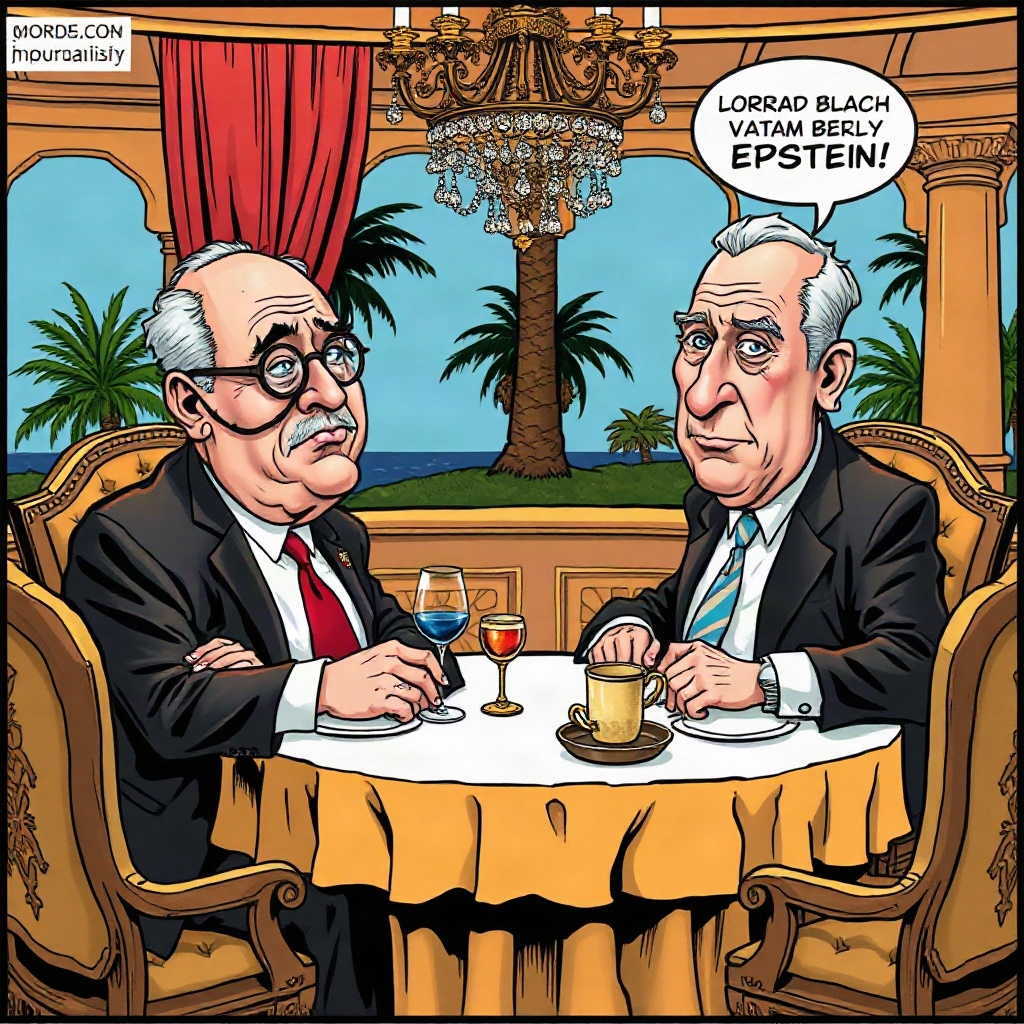
Lord Conrad Black · Newspaper Publisher and British Peer
In the sprawling ecosystem of politicians, royalty, and corporate titans that surrounded Jeffrey Epstein, newspaper publisher Conrad Black represented an archetype the financier assiduously pursued: an influential media proprietor with access to the highest echelons of transatlantic power. Before his fall from corporate grace and subsequent imprisonment for fraud, Black sat atop Hollinger International, the world's third-largest English-language newspaper group, which controlled flagship publications including Britain's Daily Telegraph, the Chicago Sun-Times, and the Jerusalem Post. Elevated to the British peerage in 2001 as Lord Black of Crossharbour, he occupied a rare vantage point at the intersection of international politics, journalism, and high finance. Like many figures within that orbit, Black’s path crossed with Epstein's during the late 1990s and early 2000s, leaving a trail of social encounters documented in private contact directories, published memoirs, and retrospective news commentary.
The relationship between Epstein and Black was primarily forged in the overlapping social enclaves of Palm Beach, Florida, and London. Palm Beach, where Black maintained an expansive oceanfront estate on South Ocean Boulevard and Epstein owned a waterfront mansion on El Brillo Way, served as the primary backdrop for their interactions. During the late 1990s and early 2000s, Epstein was aggressively manufacturing an aura of geopolitical and financial brilliance, utilizing the social machinery of Ghislaine Maxwell to gain access to elite British and Commonwealth circles. Maxwell possessed deep, lifelong ties to the British publishing establishment through her late father, the media tycoon Robert Maxwell. Because Black had acquired many assets and prominence in London publishing following Robert Maxwell’s sudden death in 1991, the social bridge between Black and the Epstein-Maxwell nexus was structurally organic.
Documentary evidence of the acquaintance surfaced when Epstein's private address directory, widely termed the "little black book," was leaked and later entered into the public record via court filings. The directory, assembled by Epstein's staff in the mid-2000s, includes multiple listings for Lord Conrad Black and his wife, the conservative columnist Barbara Amiel. The contact records listed phone numbers for Black's residences in Palm Beach, London, Toronto, and New York, alongside direct office lines and numbers for personal staff. Such entries were standard for Epstein’s Rolodex, which functioned as an inventory of high-society contacts rather than an itemized record of complicity. However, the presence of these detailed numbers confirmed that the two men moved in shared social channels and maintained open conduits for communication during the years preceding Epstein’s first criminal indictment in Florida.
Related articles

Jeffrey Epstein and Prince Andrew, Duke of York
An investigative record of Prince Andrew's ties to Jeffrey Epstein, examining flight logs, Virginia Giuffre's allegations, and the royal fallout.
Read article →
Jeffrey Epstein and Sarah Ferguson, Duchess of York
Investigative overview of Sarah Ferguson's ties to Jeffrey Epstein, detailing financial transactions, public admissions, and unsealed records.
Read article →
Jeffrey Epstein and Princess Beatrice of York
Investigative report examining Princess Beatrice of York's documented connections to Jeffrey Epstein through Prince Andrew's social and royal circle.
Read article →
Jeffrey Epstein and Princess Eugenie of York
An investigative review of public records, court filings, and royal finances detailing Princess Eugenie's proximity to Jeffrey Epstein's network.
Read article →