Key Facts
Affiliated entity within Epstein's network of botanically named shell corporations
Corporate Classification
Delaware and USVI Corporate Filings
Darren K. Indyke (attorney) and Richard D. Kahn (accountant)
Key Associated Officers
USVI Probate Court Disclosures
Examined under the USVI Criminally Influenced and Corrupt Organizations Act lawsuit
Legal Scrutiny
USVI Department of Justice (2020)
Subject to winding down and asset liquidation under the 2022 USVI settlement
Entity Resolution
USVI Settlement Agreement (2022)
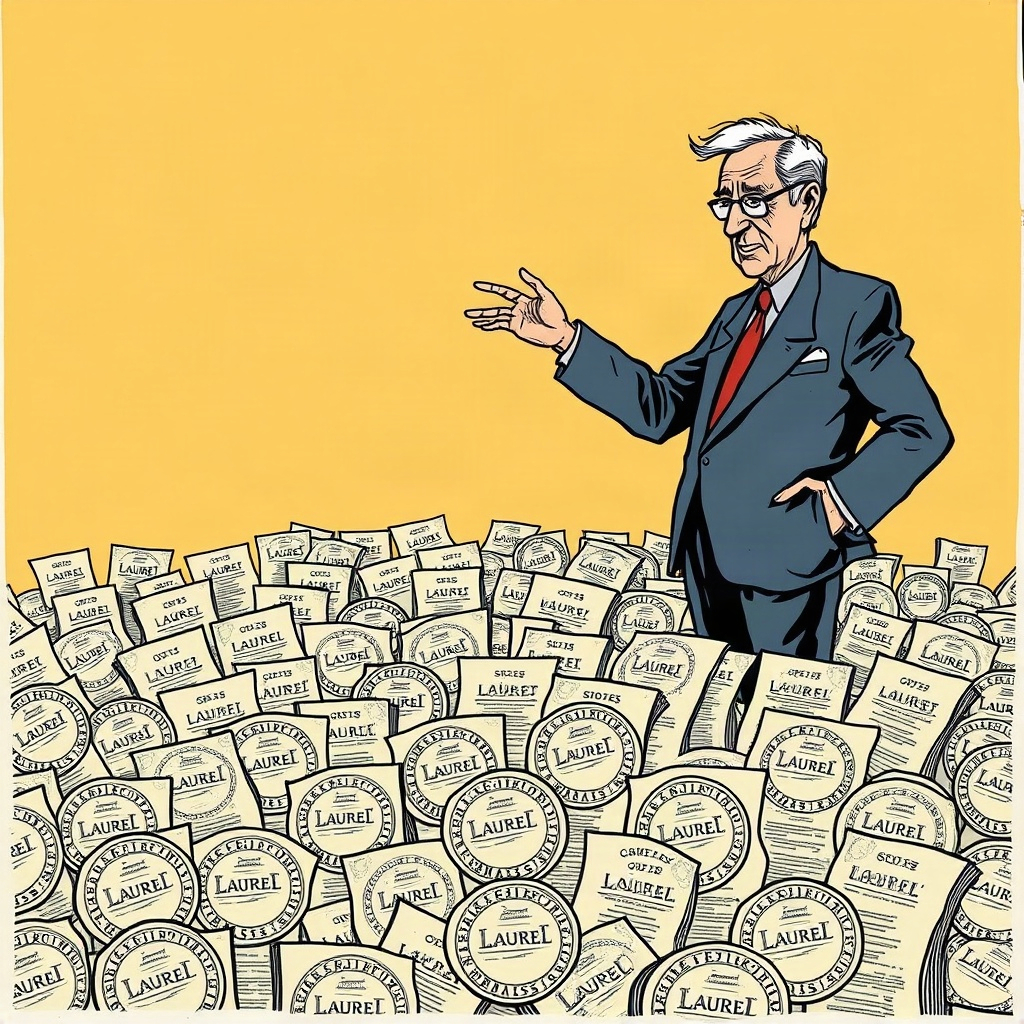
Laurel Inc. · Real estate holding company
In the decades preceding his 2019 arrest and subsequent death, Jeffrey Epstein constructed a labyrinthine network of corporate entities spanning Delaware, New York, Florida, and the U.S. Virgin Islands. Among the dozens of holding companies, trusts, and limited liability corporations identified in public registries and court filings was Laurel Inc., a business entity that operated largely away from public attention until federal prosecutors and civil litigants began untangling the financier's assets. While headline-grabbing entities like the Southern Trust Company and Financial Trust Company formed the engine of Epstein's wealth-management enterprise, smaller corporate vehicles such as Laurel Inc. functioned as cogs in a broader architecture designed to obscure transactions, compartmentalize legal liabilities, and hold physical and financial properties.
Corporate records indicate that Laurel Inc. fit neatly into a recurring naming convention favored by Epstein and his legal advisers. Alongside entities such as Cypress Inc., Maple Inc., and Poplar Inc., Epstein frequently named operational shells after trees and botanical elements. Cypress Inc., for example, served as the primary titleholder for the expansive Zorro Ranch in Stanley, New Mexico. While the precise assets tethered to Laurel Inc. remained shielded behind corporate filings that listed nominee directors and statutory agents rather than direct beneficial owners, filings in Delaware and the U.S. Virgin Islands reveal a familiar cast of personnel managing the entity. Epstein's longtime personal attorney, Darren K. Indyke, and his primary financial accountant, Richard D. Kahn, appeared routinely across paperwork associated with Laurel Inc. and its sister entities, serving as registered officers, corporate secretaries, or authorized signatories.
The strategic value of establishing multiple corporations like Laurel Inc. was dual-layered. Financially, it allowed Epstein to partition his wealth into discrete silos, ensuring that a lawsuit, lien, or tax liability impacting one asset would not immediately compromise the broader portfolio. Culturally and socially, this opaque network enabled him to conduct business transactions—including real estate purchases, aircraft charters, and high-value domestic services—without affixing his own name to deeds, public bills of sale, or local utility registrations. Investigative reporting by outlets such as The Miami Herald and The New York Times, drawing on property deeds and corporate disclosures, established that Epstein rarely owned major assets in a personal capacity; instead, ownership flowed through multi-tiered holding companies where entities like Laurel Inc. occupied key intermediary nodes.
Related articles
Jeffrey Epstein and Great St. James
Investigative report on Jeffrey Epstein's 2016 purchase of Great St. James, illicit island development, regulatory battles, and USVI civil litigation.
Read article →
Jeffrey Epstein and 49 East 66th Street
An investigative review of 49 East 66th Street, examining public records, Epstein contact archives, and Upper East Side real estate connections.
Read article →

Jeffrey Epstein and 22 Avenue Foch
Investigative report on Jeffrey Epstein's luxury apartment at 22 Avenue Foch in Paris, detailing police raids, survivor accounts, and legal fallout.
Read article →

Jeffrey Epstein and American Yacht Harbor
Investigative analysis of American Yacht Harbor in St. Thomas, the primary transit hub and staging ground for Jeffrey Epstein's private island.
Read article →