Jeffrey Epstein &
Khalid bin Salman
Saudi Minister of Defense
Key Facts
Khalid bin Salman served as Saudi Ambassador to the US from April 2017 to February 2019.
Diplomatic Role
US Department of State
Epstein boasted to journalists and associates of informal advisory links to the Saudi royal inner circle, including KBS.
Nature of Allegations
New York Times (2019)
No formal contracts, invoices, or official retainer records verify an advisory role between Epstein and KBS or the Saudi government.
Documentary Evidence
SDNY Court Filings
Saudi representatives denied any official advisory relationship or employment with Epstein.
Official Response
News reports (2019)
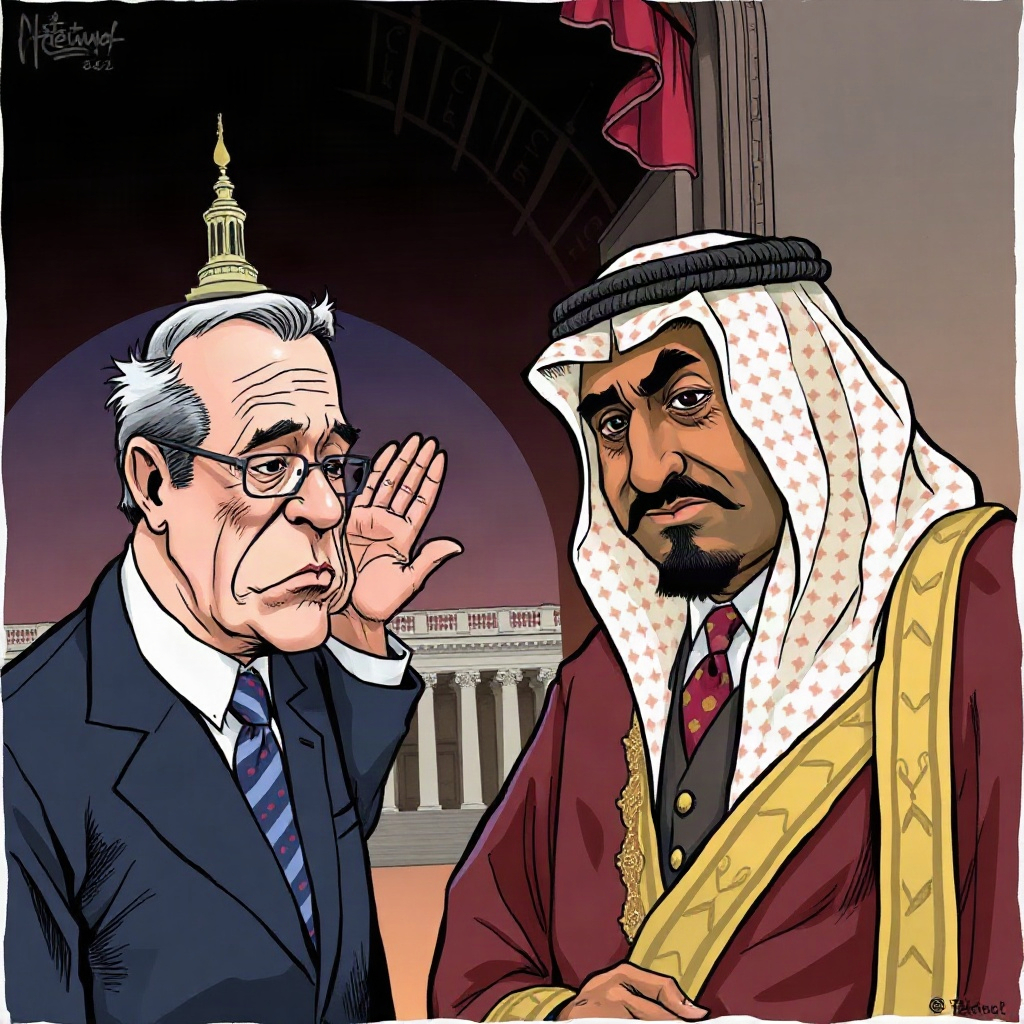
Khalid bin Salman · Saudi Minister of Defense
In the decade following his 2008 conviction for soliciting prostitution from a minor in Florida, Jeffrey Epstein orchestrated a systematic campaign to rehabilitate his public standing and re-enter elite global circles. Central to this strategy was his positioning as an informal geopolitical fixer, financial conduit, and sovereign wealth adviser. As part of this push, Epstein sought to embed himself within the diplomatic and financial networks of the Kingdom of Saudi Arabia during a period of sweeping internal consolidation led by Crown Prince Mohammed bin Salman. Within the public record and investigative reporting that followed Epstein’s July 2019 arrest, references repeatedly surfaced concerning his claimed access to high-ranking Saudi figures, notably Prince Khalid bin Salman, the younger brother of the Crown Prince, former Saudi Ambassador to the United States, and current Minister of Defense.
Prince Khalid bin Salman, commonly referred to in diplomatic circles by his initials KBS, was appointed as the Saudi Ambassador to Washington in April 2017, serving during a volatile period defined by shifting Middle Eastern alliances, major defense acquisitions, and the October 2018 assassination of journalist Jamal Khashoggi. During this exact window, Epstein was actively boasting to journalists, financiers, and high-profile academics that he possessed direct access to the Saudi royal court and was offering informal counsel to its most powerful members. To understand the nexus between Epstein and Khalid bin Salman, investigators and investigative journalists have had to separate verifiable diplomatic encounters from Epstein’s well-documented penchant for self-aggrandizing fabulism.
The most prominent public account detailing Epstein’s purported Saudi ties emerged in August 2019, when New York Times columnist James B. Stewart published an account of an off-the-record interview he conducted with Epstein at his Manhattan townhouse in late 2018. According to Stewart, Epstein claimed that he was actively advising Crown Prince Mohammed bin Salman and asserted that he had met or communicated with key figures in the prince’s inner circle, including Prince Khalid bin Salman during his tenure as ambassador. Epstein allegedly spoke of his familiarity with the Saudi diplomatic apparatus, claiming that he served as a discreet intermediary who could facilitate relationships between the emerging Riyadh leadership and prominent American figures in finance, technology, and academia.
Related articles

Jeffrey Epstein and Thorbjørn Jagland
Investigative report examining the diplomatic meetings between Jeffrey Epstein and former Norwegian Prime Minister Thorbjørn Jagland in 2013.
Read article →
Jeffrey Epstein and Terje Rød-Larsen
Investigative review of Norwegian diplomat Terje Rød-Larsen's ties to Jeffrey Epstein, detailing secret loans, institutional funding, and his resignation.
Read article →

Jeffrey Epstein and Mona Juul
Investigative report examining Norwegian diplomat Mona Juul's documented social ties to Jeffrey Epstein through her husband, Terje Rød-Larsen.
Read article →

Jeffrey Epstein and Andrés Pastrana
Investigative examination of former Colombian President Andrés Pastrana's documented flights on Jeffrey Epstein's aircraft and related unsealed records.
Read article →